CS Fundamentals
459 articles in this topic
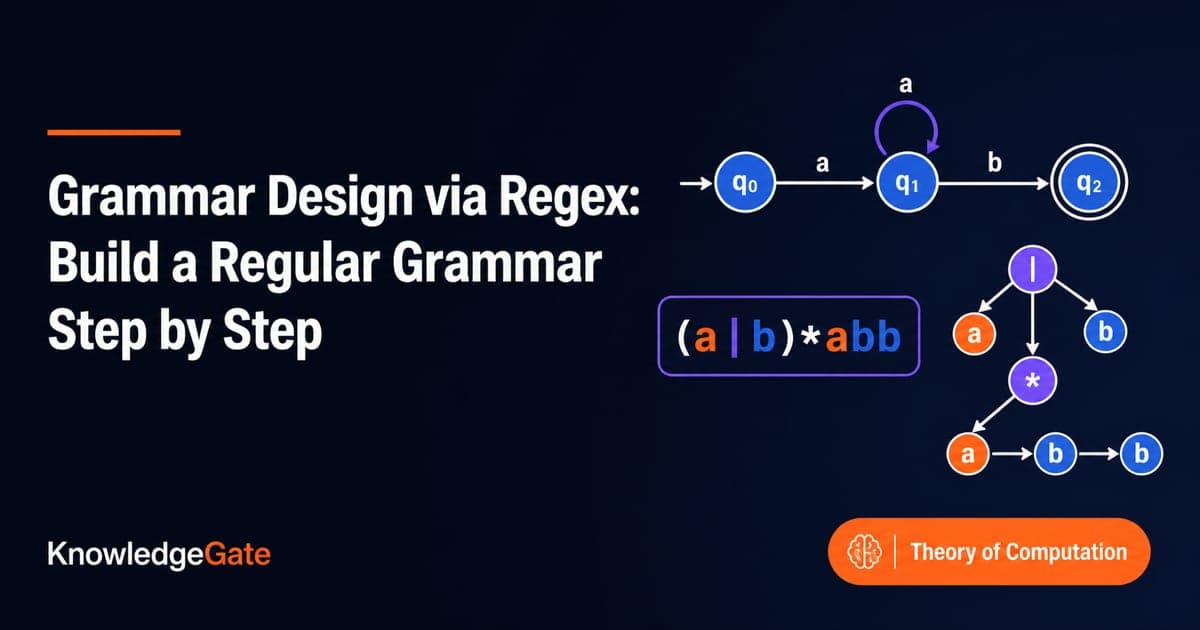
Grammar Design via Regex: Build a Regular Grammar Step by Step
Turn `(a|b)*abb` into a right-linear grammar through a four-state DFA, then check the construction with complete accepted and rejected traces.
Updated 10 Sep 20266 min readTheory of Computation

Disk Access Time and Performance: Formulas, Worked Example and GATE Traps
Learn how seek time, rotational latency and transfer time combine, then apply the formulas to random and contiguous reads without losing track of units.
Updated 10 Sep 20265 min read62 viewsComputer Organization & Architecture
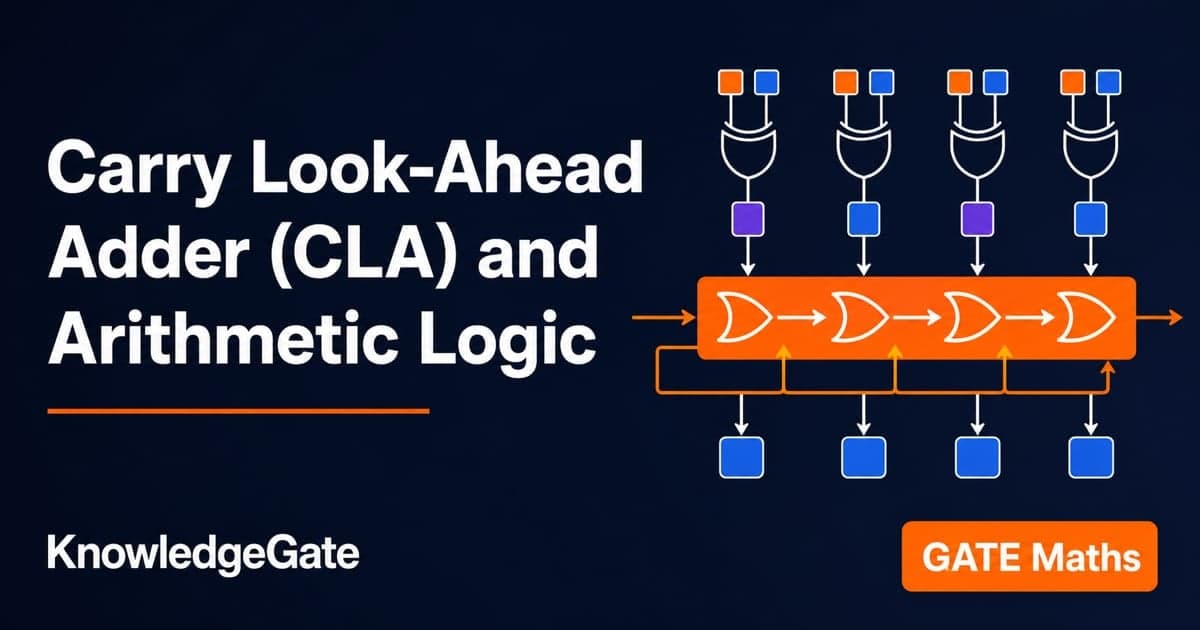
Carry Look-Ahead Adder (CLA) and Arithmetic Logic: Equations, Worked Examples and Exam Questions
Derive CLA carry equations from a full adder, solve a four-bit addition, and separate carry-out from signed overflow with exact add-subtract examples.
Updated 10 Sep 20265 min read57 viewsDigital Logic
C Operators Explained: Precedence, Types and Worked Examples
Learn how C groups and evaluates operators, then trace arithmetic, masks, conditions, and a complete program that prints 4 5 21 1 39.
Updated 9 Sep 20266 min read80 viewsC Programming & Data Structures
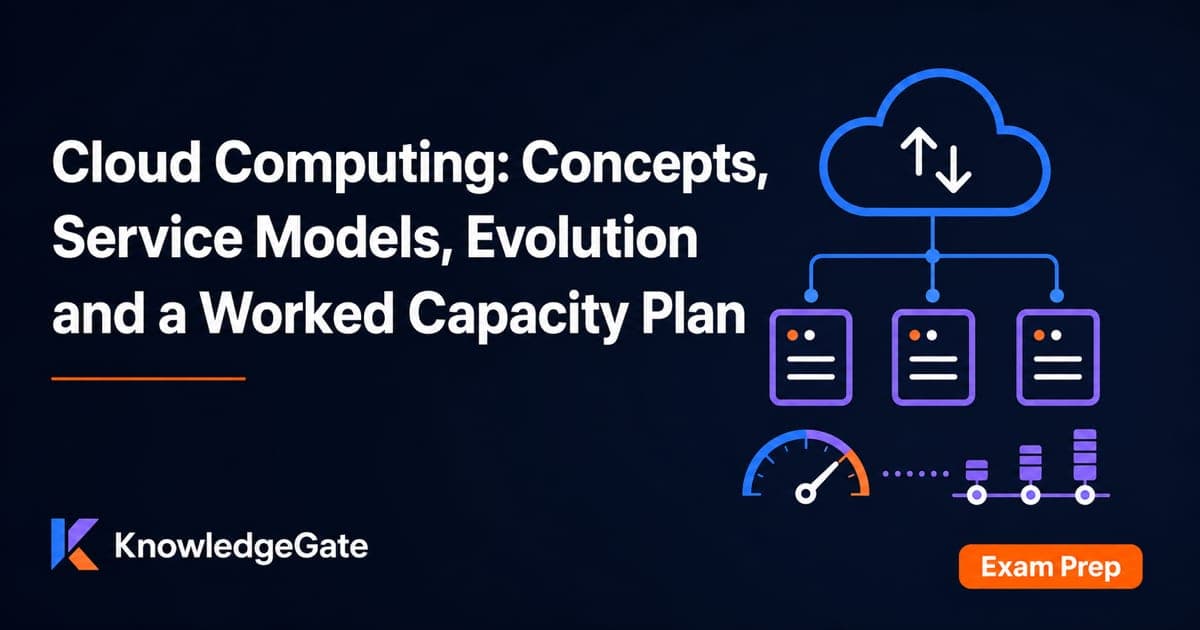
Cloud Computing: Concepts, Service Models, Evolution and a Worked Capacity Plan
Learn what makes a service a cloud, how its two classification axes differ, and how elasticity changes compute and storage capacity.
Updated 9 Sep 20266 min readComputer Networks

Top-Down Parsing in Compiler Design: Parser Basics and a Worked LL(1) Example
Follow one expression grammar from left-recursion removal to a complete LL(1) table. Then trace a valid token stream to acceptance and stop an invalid stream at its first error cell.
Updated 9 Sep 20266 min readCompiler Design
Types of Graphs: Finite, Infinite, Null, Trivial and Complete with Worked Examples
Learn why graph labels can overlap. Classify five fixed examples using order, size, degree, adjacency and complements, then test the method in a speed drill.
Updated 9 Sep 20265 min readEngineering Mathematics
Deadlock in Operating Systems: Four Conditions, Handling Methods and a Worked Banker's Algorithm
Build deadlock reasoning from resource-allocation graphs to safe-state checks. The five-process Banker's example also tests one safe and one unsafe request.
Updated 9 Sep 20266 min readOperating Systems
SQL Datatypes, Operators and NULL: Worked Examples and Three-Valued Logic
Use one four-row Employee table to master SQL type choices, operator precedence, NULL, three-valued logic, COALESCE and aggregate outputs step by step.
Updated 9 Sep 20265 min readDBMS
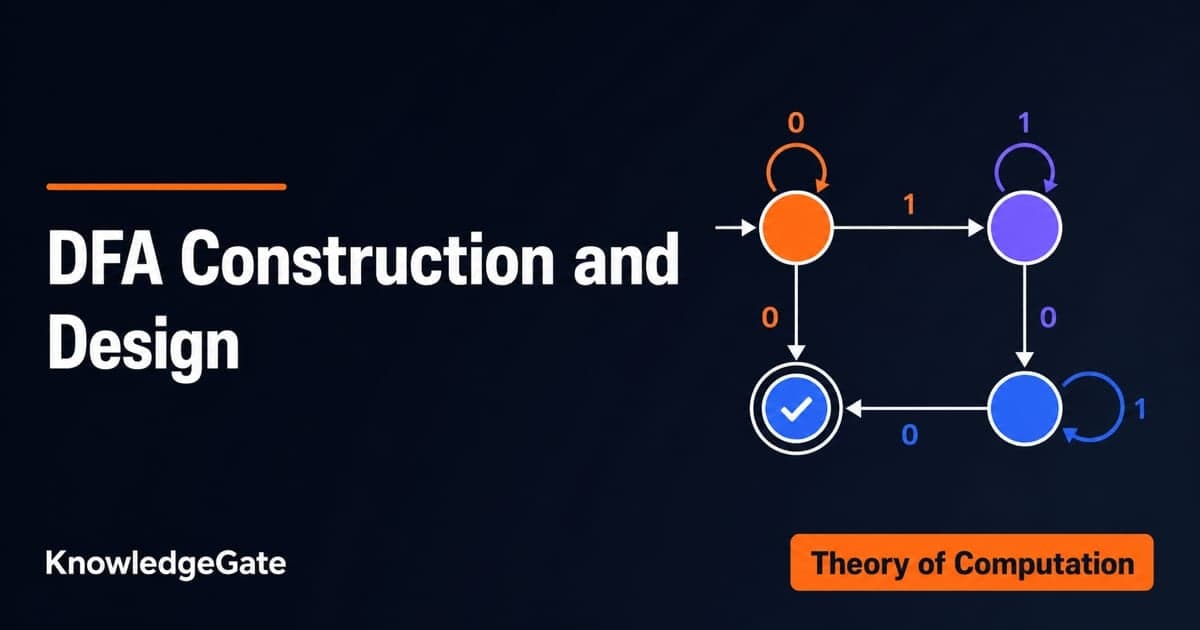
DFA Construction and Design: State Invariants, Worked Examples and Exam Traps
Learn a repeatable method for direct DFA design. Build and verify machines for strings containing 101 and for strings with even parity that end in 0.
Updated 9 Sep 20266 min readTheory of Computation
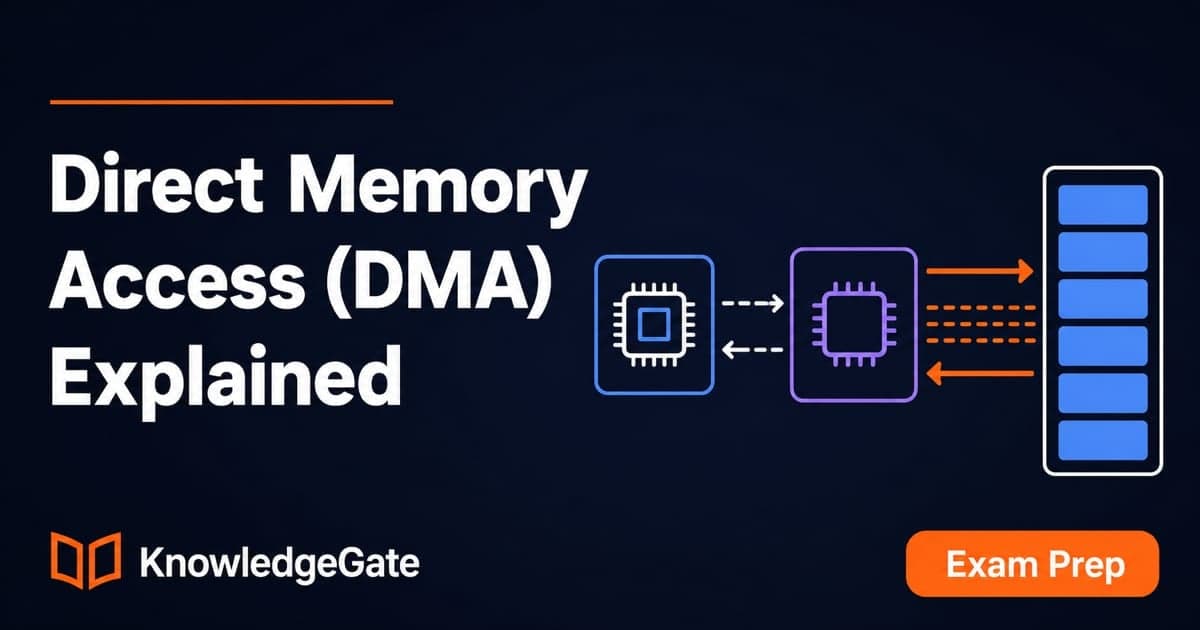
Direct Memory Access (DMA) Explained: Bus Cycles, Transfer Modes and a Worked Example
DMA becomes easier when you trace bus ownership, addresses and timing as one transfer. This guide follows a 6 KiB block through burst, cycle-stealing and transparent modes.
Updated 8 Sep 20266 min readComputer Organization & Architecture
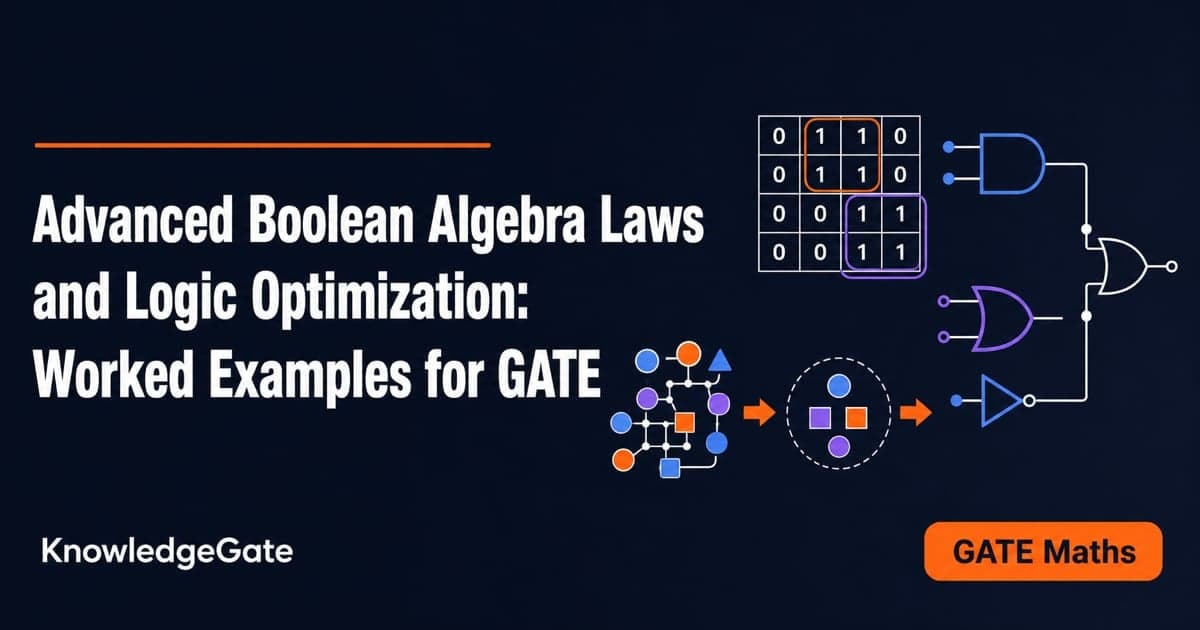
Advanced Boolean Algebra Laws and Logic Optimization: Worked Examples for GATE
Learn when a Boolean term can disappear and when hardware timing may justify keeping it. The worked example is checked by algebra, a truth table, a K-map, and circuit cost.
Updated 8 Sep 20265 min read61 viewsDigital Logic