CS Fundamentals
478 articles in this topic
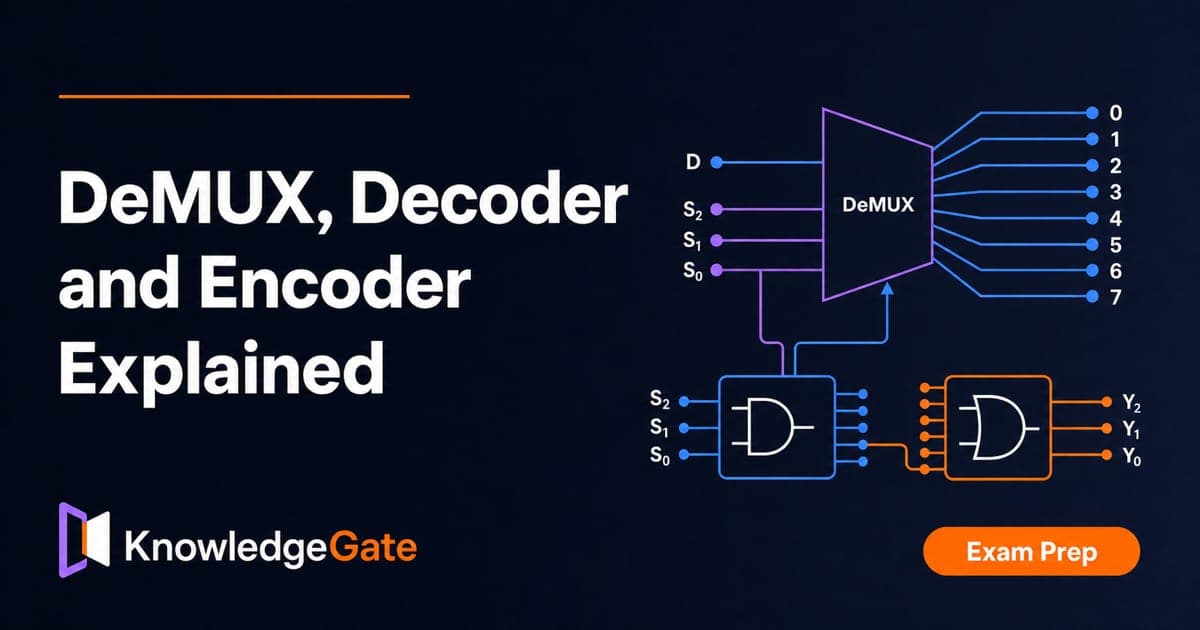
DeMUX, Decoder and Encoder Explained: Truth Tables, Worked Circuits and Exam Traps
Follow binary 101 through a decoder, a DeMUX and an encoder, then use the same logic to realise a Boolean function and solve common exam checks.
Updated 11 Sep 20266 min readDigital Logic
Enums in C Explained: Values, a Worked Output Trace and Exam Traps
Learn how C assigns enum values, how explicit resets and duplicate constants behave, and how to trace enum-based switch output without missing fall-through.
Updated 11 Sep 20266 min readC Programming & Data Structures

Cloud Deployment Models: Public, Private, Community and Hybrid with a 60-VM Worked Example
Learn a four-question method to classify cloud deployment models, then carry one 60-VM workload through public, private, community, and hybrid designs.
Updated 11 Sep 20265 min readComputer Networks
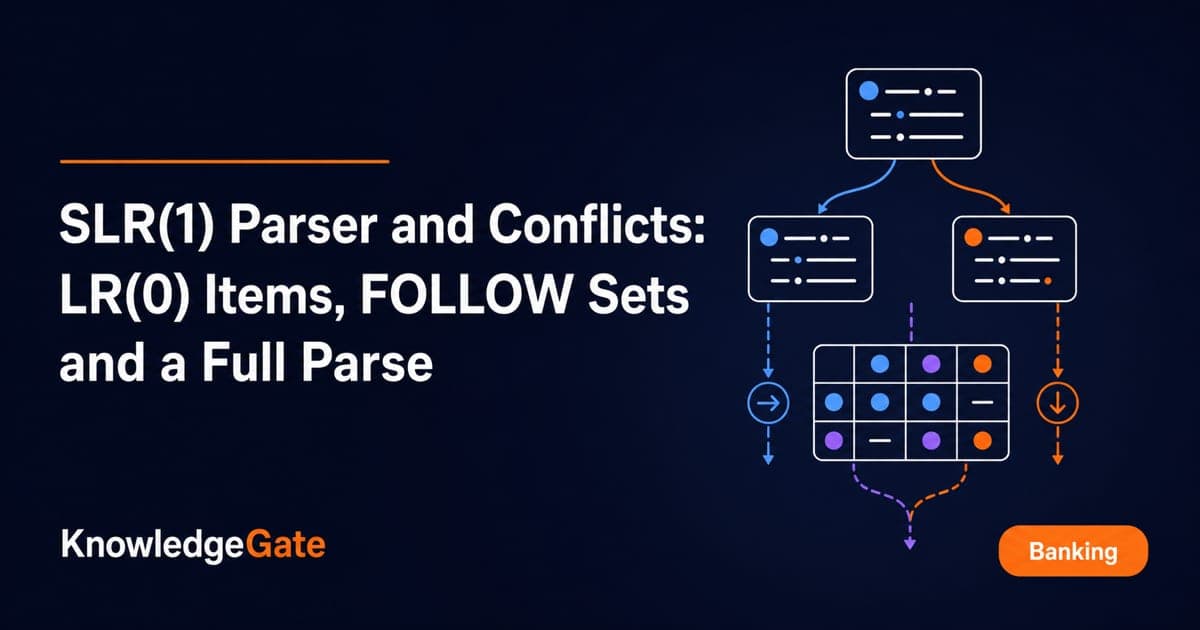
SLR(1) Parser and Conflicts: LR(0) Items, FOLLOW Sets and a Full Parse
Build one SLR(1) parser from augmentation to acceptance. The same grammar exposes an LR(0) conflict, shows how FOLLOW removes it, and traces every move for aab$.
Updated 11 Sep 20266 min readCompiler Design
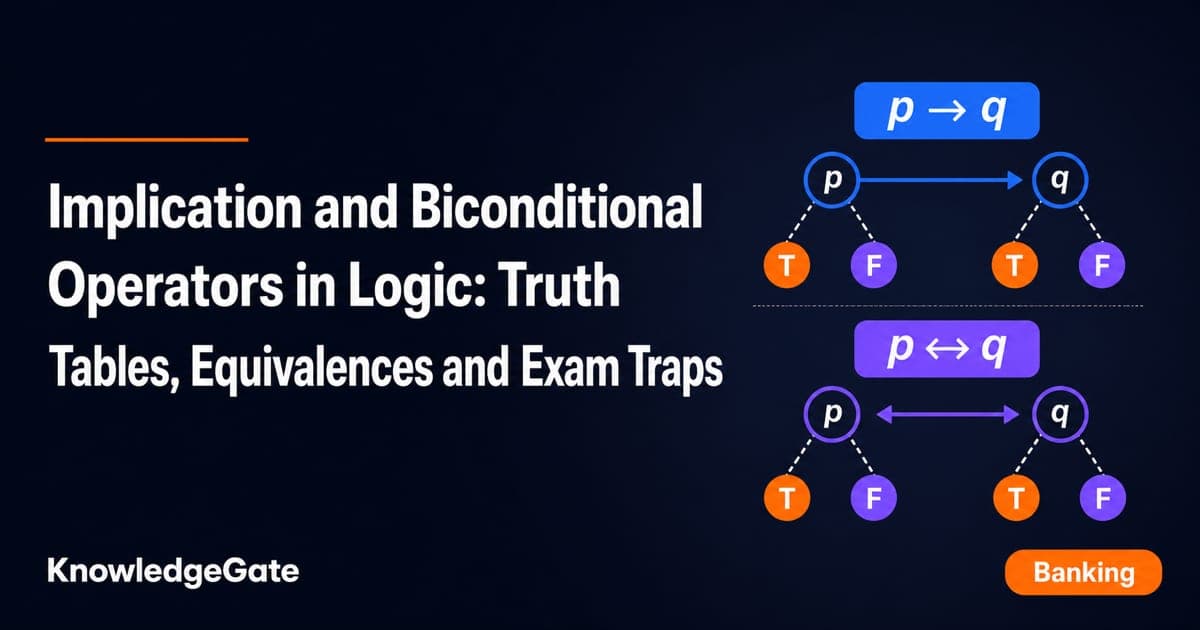
Implication and Biconditional Operators in Logic: Truth Tables, Equivalences and Exam Traps
Learn why implication fails only at T to F, how biconditional checks matching values, and how to translate if, only if, necessary and sufficient. Includes a full contrapositive proof and fast exam checks.
Updated 10 Sep 20265 min read86 viewsEngineering Mathematics
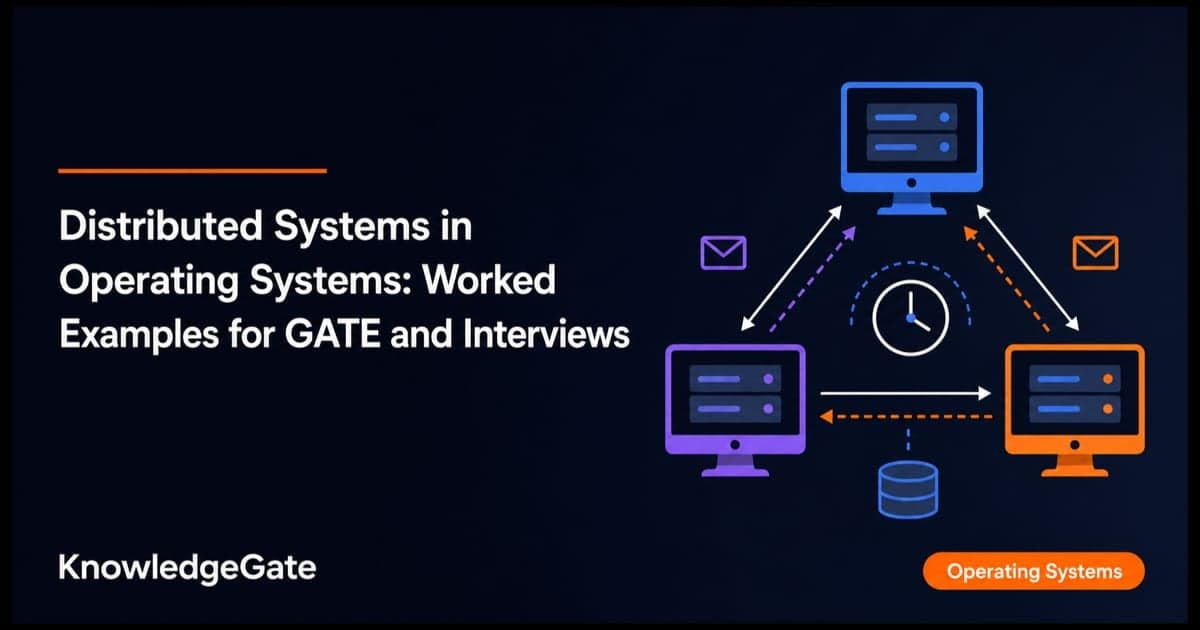
Distributed Systems in Operating Systems: Worked Examples for GATE and Interviews
Learn how distributed operating systems reason about messages, causality, coordination, consistency, replication, and partial failure. Follow exact RPC, clock, quorum, and file-replication examples built for exam and interview practice.
Updated 10 Sep 20266 min readOperating Systems
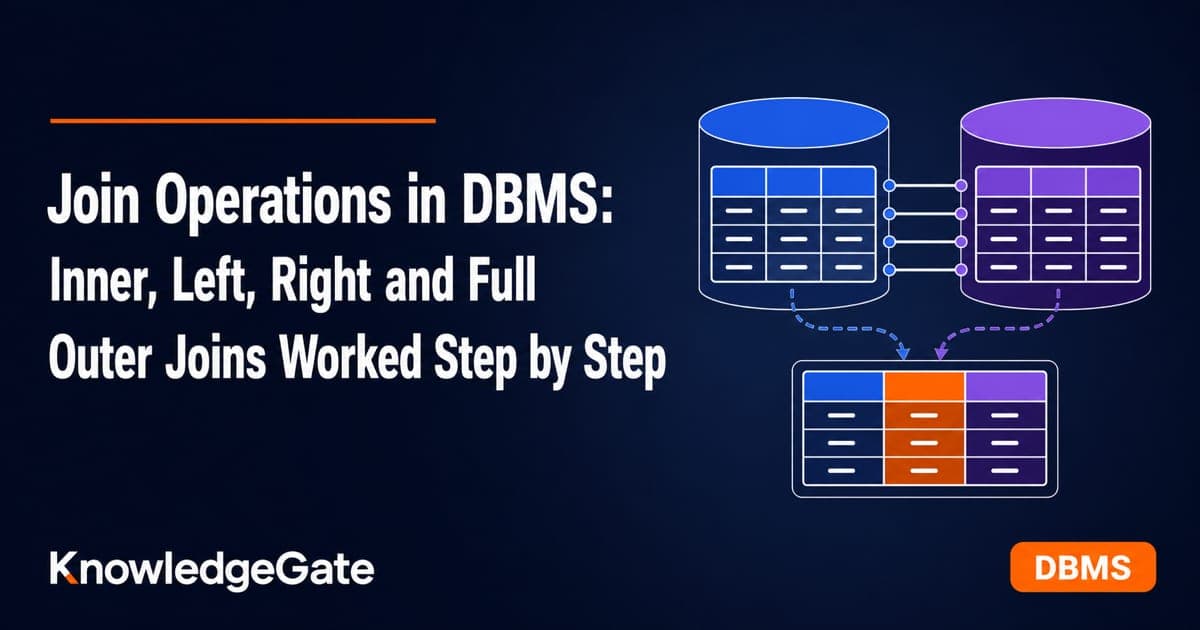
Join Operations in DBMS: Inner, Left, Right and Full Outer Joins Worked Step by Step
Trace one pair of small tables through INNER, LEFT, RIGHT and FULL OUTER JOIN. See which unmatched rows survive, where NULL appears and how duplicate keys change counts.
Updated 10 Sep 20266 min readDBMS
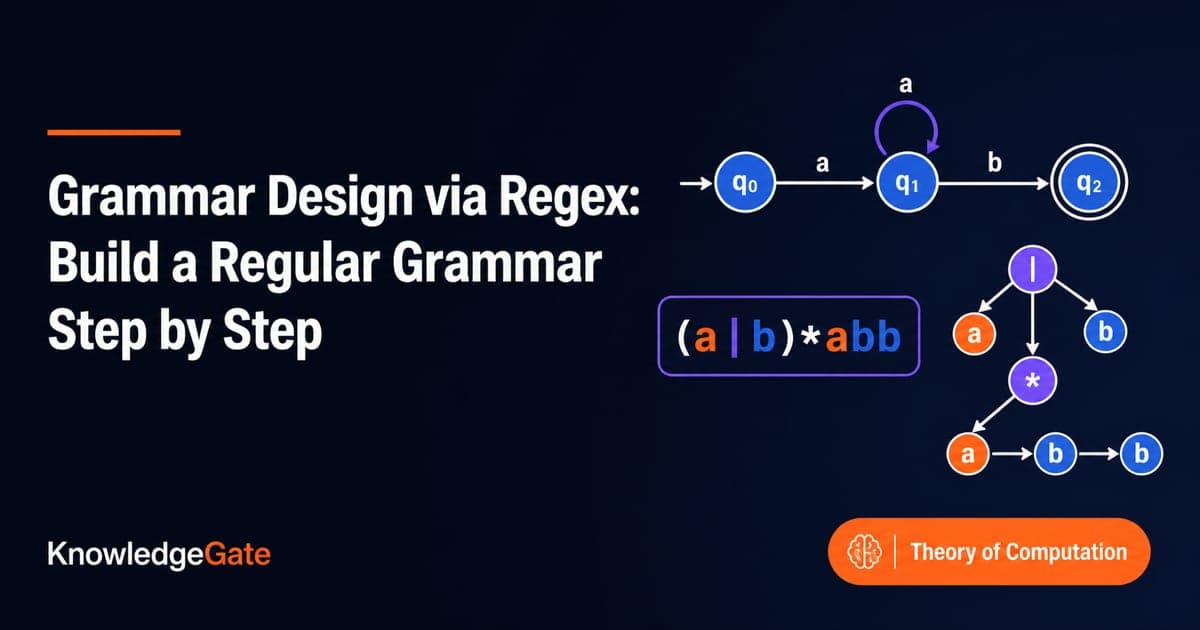
Grammar Design via Regex: Build a Regular Grammar Step by Step
Turn `(a|b)*abb` into a right-linear grammar through a four-state DFA, then check the construction with complete accepted and rejected traces.
Updated 10 Sep 20266 min readTheory of Computation
Disk Access Time and Performance: Formulas, Worked Example and GATE Traps
Learn how seek time, rotational latency and transfer time combine, then apply the formulas to random and contiguous reads without losing track of units.
Updated 10 Sep 20265 min read67 viewsComputer Organization & Architecture
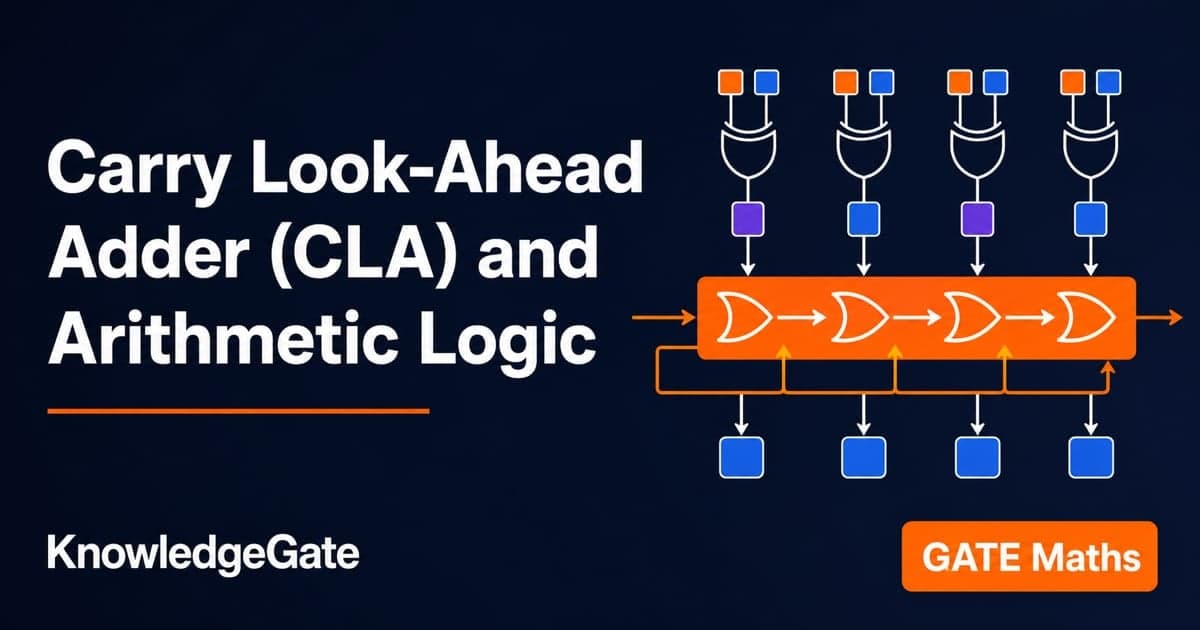
Carry Look-Ahead Adder (CLA) and Arithmetic Logic: Equations, Worked Examples and Exam Questions
Derive CLA carry equations from a full adder, solve a four-bit addition, and separate carry-out from signed overflow with exact add-subtract examples.
Updated 10 Sep 20265 min read59 viewsDigital Logic
C Operators Explained: Precedence, Types and Worked Examples
Learn how C groups and evaluates operators, then trace arithmetic, masks, conditions, and a complete program that prints 4 5 21 1 39.
Updated 9 Sep 20266 min read85 viewsC Programming & Data Structures
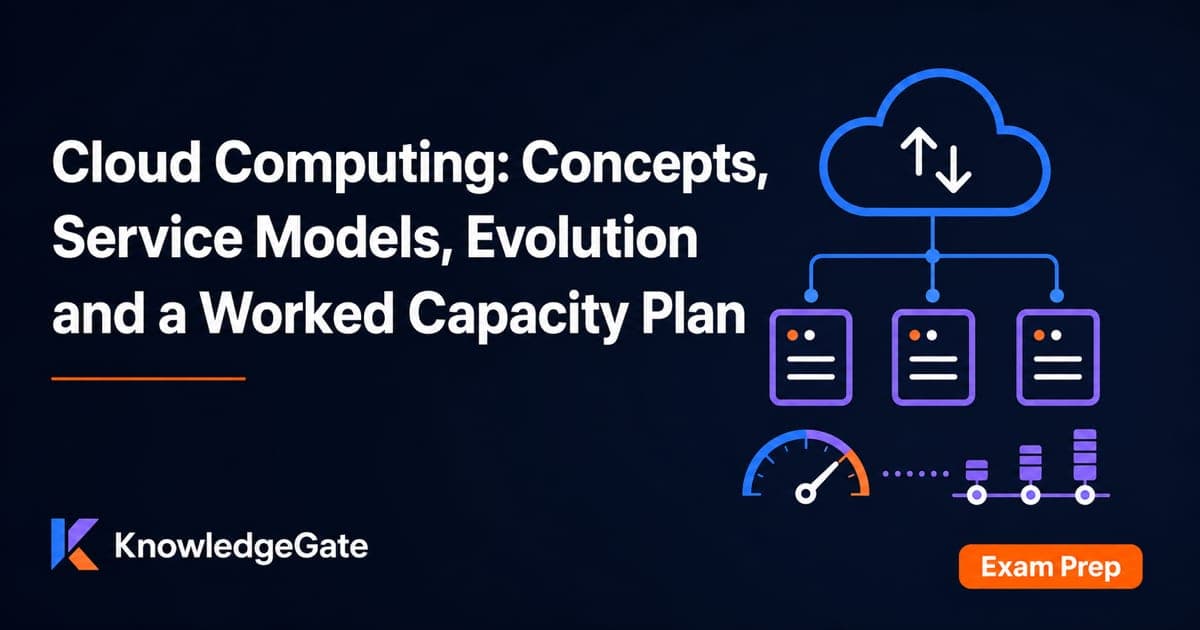
Cloud Computing: Concepts, Service Models, Evolution and a Worked Capacity Plan
Learn what makes a service a cloud, how its two classification axes differ, and how elasticity changes compute and storage capacity.
Updated 9 Sep 20266 min readComputer Networks