Computer Networks
51 articles in this topic
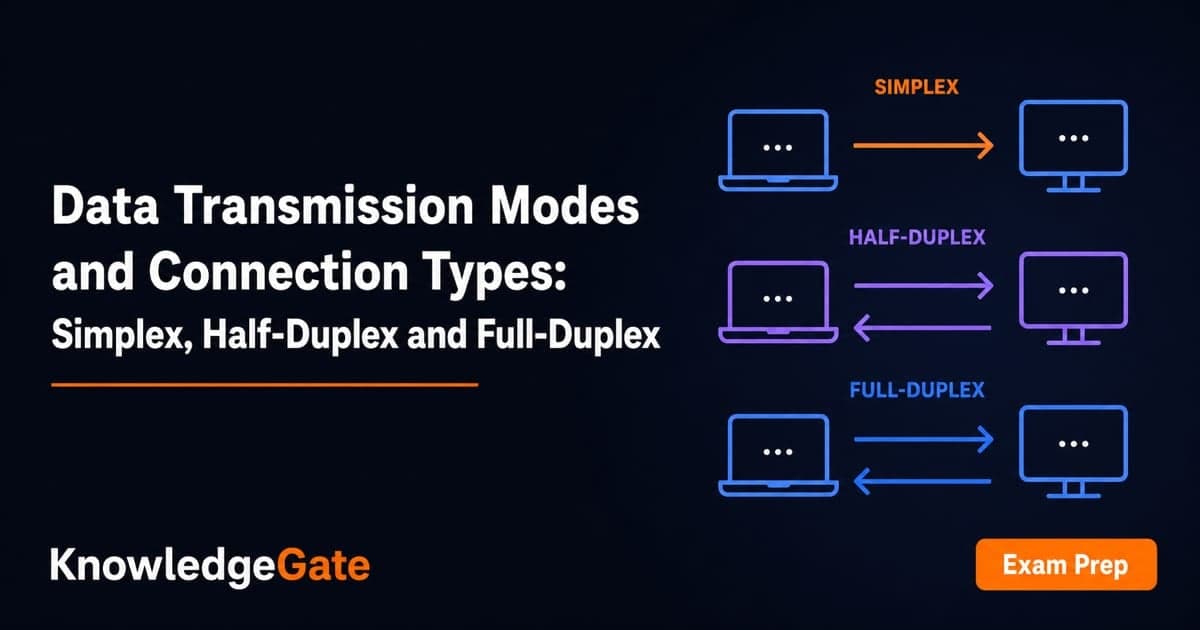
Data Transmission Modes and Connection Types: Simplex, Half-Duplex and Full-Duplex
Learn to classify simplex, half-duplex, full-duplex, point-to-point and multipoint links, then calculate completion time without relying on memorised examples.
Updated 22 Oct 20265 min readComputer Networks
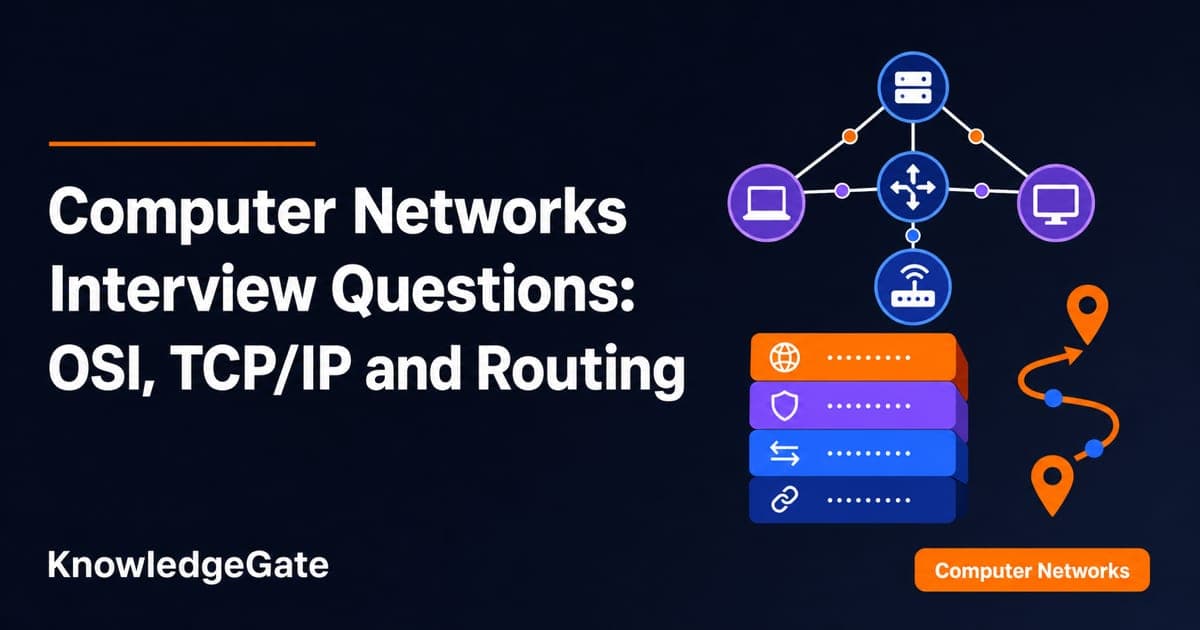
Computer Networks Interview Questions: Trace OSI, TCP/IP and Routing Step by Step
Follow one synthetic web request across DNS, ARP, TCP, NAT and longest-prefix routing, then turn each step into a strong interview answer.
Updated 18 Oct 20266 min readComputer Networks

Basics of Cyber Security: CIA Triad, Risks and a Worked Defence
Learn a consistent security vocabulary, connect common attack paths to suitable controls, and calculate how two defensive layers reduce account takeovers.
Updated 14 Oct 20266 min readComputer Networks

Cyber Threats and Attacks Explained: Types, Worked DDoS Example and Exam Traps
Learn to separate threats, vulnerabilities, vectors and attacks, then apply the distinctions to a calculated DDoS scenario and exam-style questions.
Updated 10 Oct 20266 min readComputer Networks
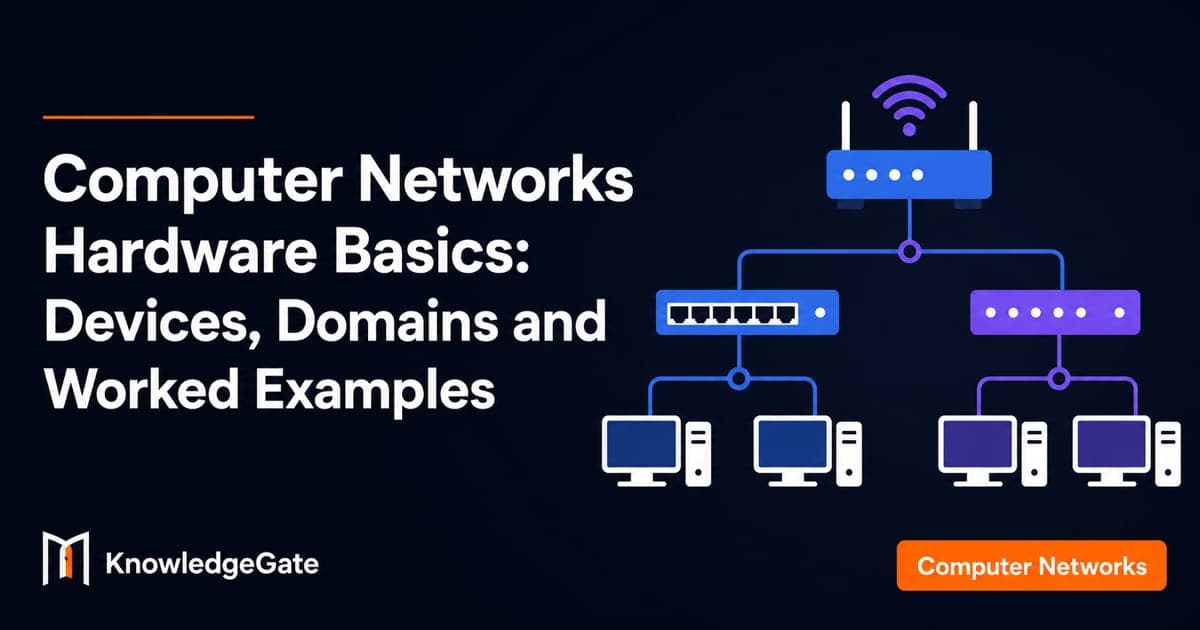
Computer Networks Hardware Basics: Devices, Domains and Worked Examples
Learn what hubs, switches, routers, gateways and access points actually do, then count network domains and trace frames through a two-LAN topology.
Updated 6 Oct 20266 min readComputer Networks
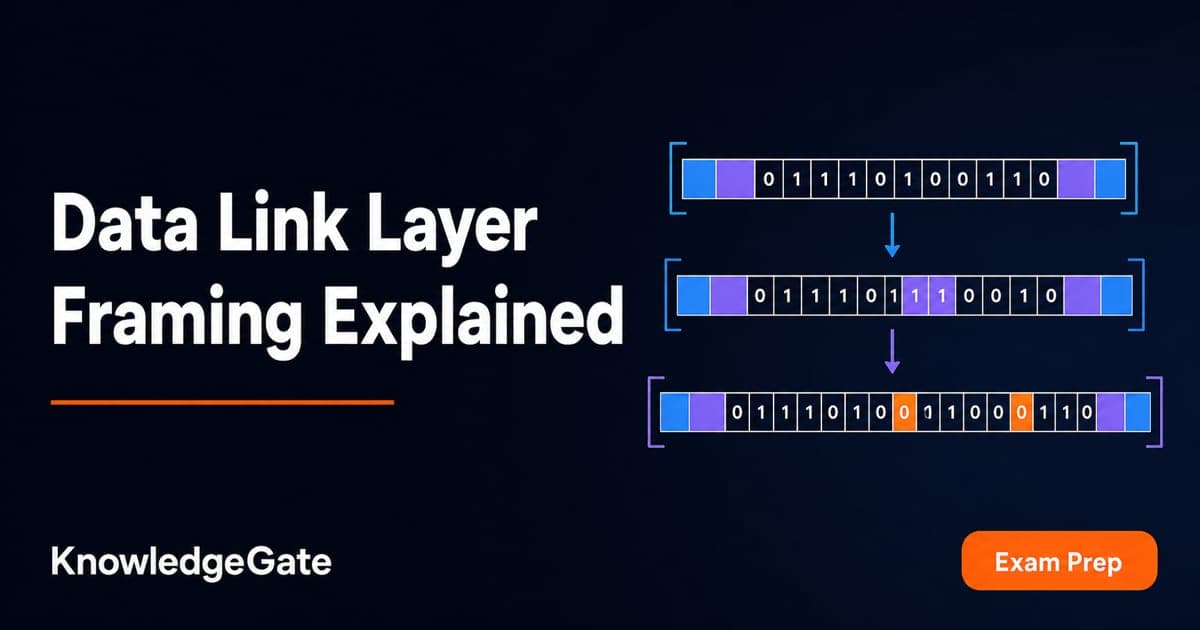
Data Link Layer Framing Explained: Byte Stuffing, Bit Stuffing and a Cross-Concept Numerical
Frame one four-byte payload in two ways, decode it, and then reuse the verified frame sizes in link-load and Stop-and-Wait calculations.
Updated 1 Oct 20266 min read59 viewsComputer Networks
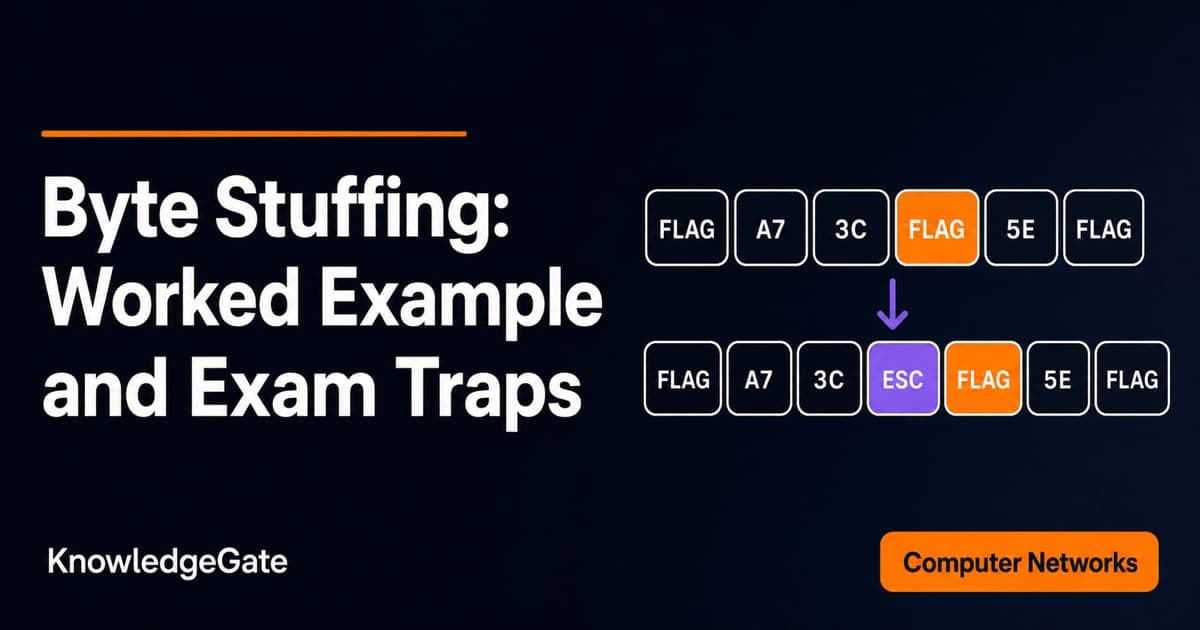
Byte Stuffing in Computer Networks: Worked Framing Example and Exam Traps
Learn a precise byte-stuffing convention, trace a payload containing both FLAG and ESC, reverse it safely, and calculate frame overhead and transmission time.
Updated 26 Sep 20266 min readComputer Networks
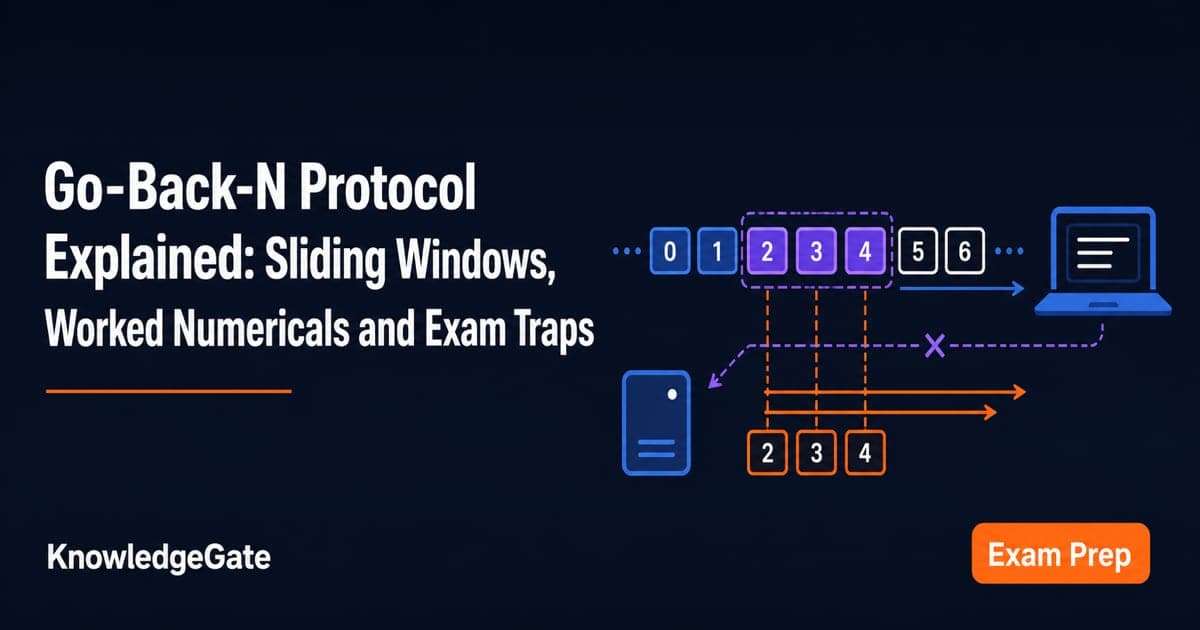
Go-Back-N Protocol Explained: Sliding Windows, Worked Numericals and Exam Traps
Trace Go-Back-N through a lost frame, calculate its legal window and link utilisation, and avoid the ACK and wrap-around traps that spoil numericals.
Updated 24 Sep 20266 min readComputer Networks
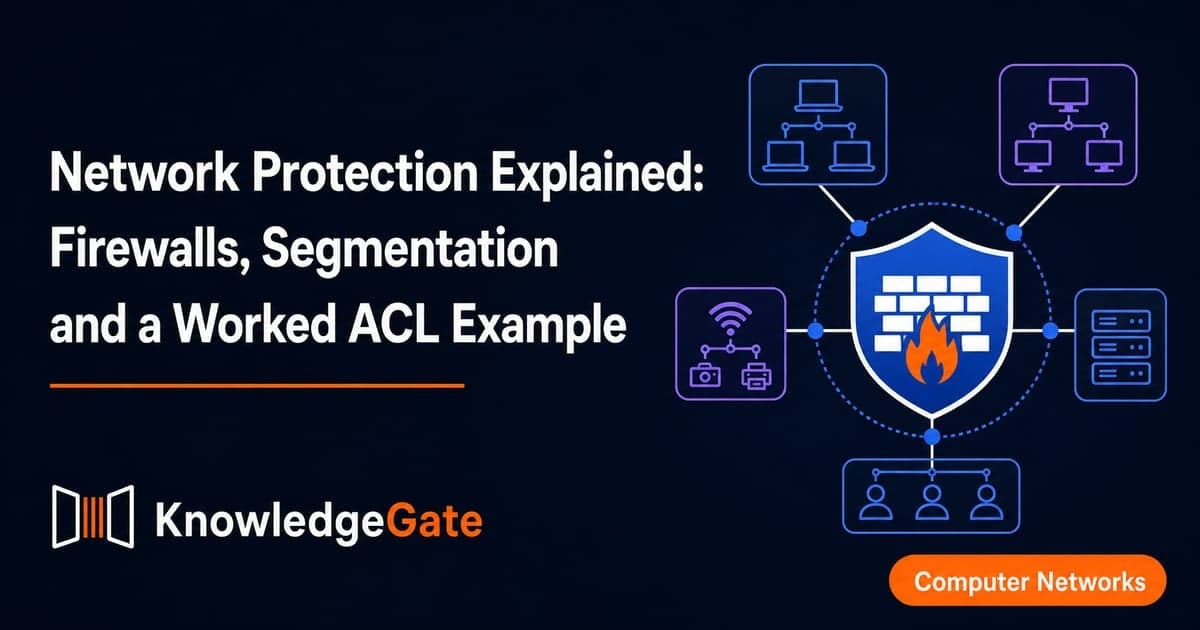
Network Protection Explained: Firewalls, Segmentation and a Worked ACL Example
Learn a reusable trust-boundary model for network protection, then trace allowed and blocked traffic through a five-zone web service and its ordered firewall rules.
Updated 23 Sep 20265 min readComputer Networks
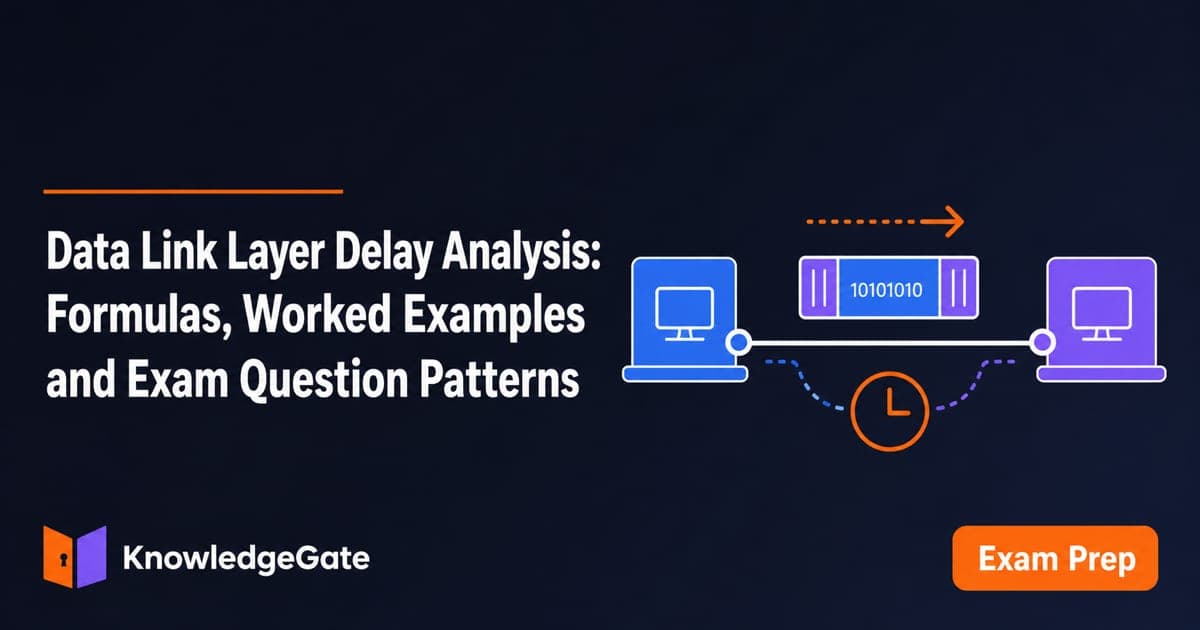
Data Link Layer Delay Analysis: Formulas, Worked Examples and Exam Question Patterns
Learn to separate transmission and propagation delay, calculate a complete stop-and-wait cycle, and choose the minimum sliding-window size without unit traps.
Updated 22 Sep 20265 min readComputer Networks

Application and Data Security: Controls, Worked Examples and Exam Traps
Follow one refund request through transport, identity, policy, validation, database, and audit controls. Then work through toy RSA arithmetic and key exam traps.
Updated 20 Sep 20265 min readComputer Networks
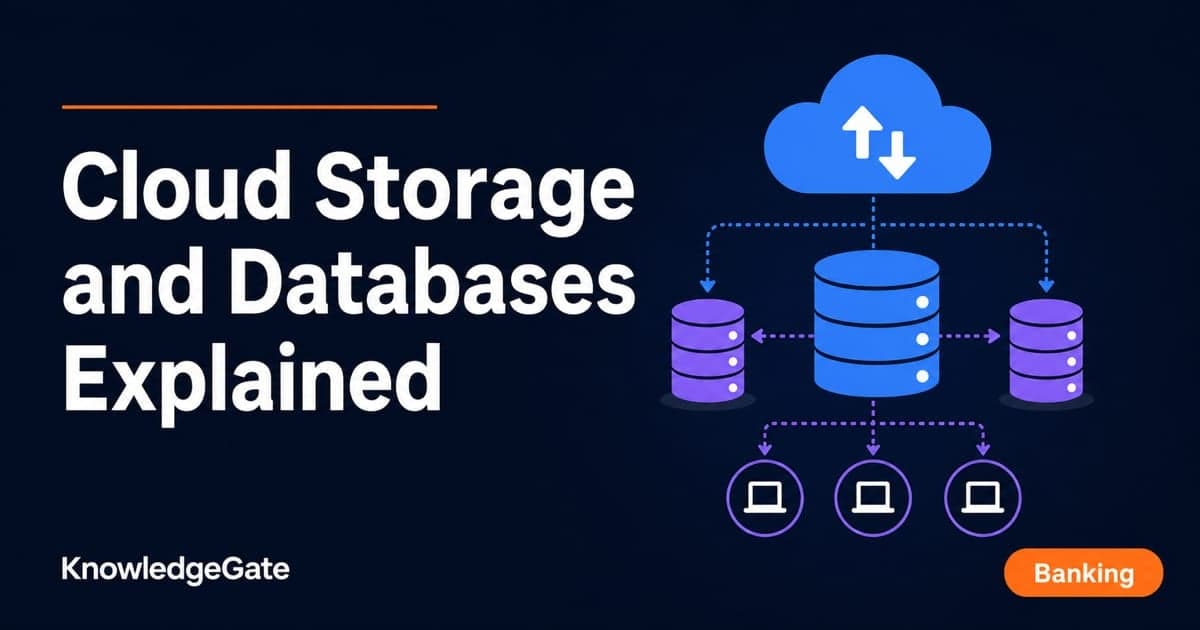
Cloud Storage and Databases Explained: Models, Replication and Worked Examples
Understand when to use object, block or file storage and when a database fits better. Follow two reproducible examples for IoT capacity and replica quorums.
Updated 19 Sep 20266 min readComputer Networks