CS Fundamentals
469 articles in this topic
RISC vs CISC Architecture: Control Units, CPI Worked Example and Exam Patterns
Understand what RISC and CISC actually classify, then compare code size and performance with step-by-step instruction and CPU-time examples.
Updated 26 Oct 20266 min readComputer Organization & Architecture
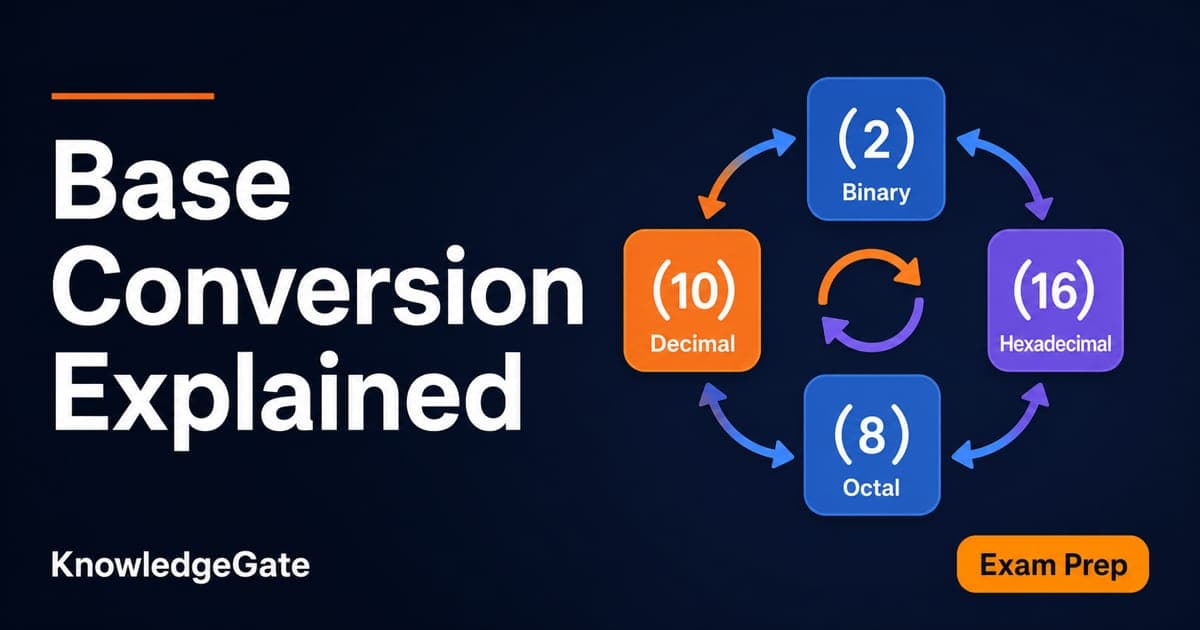
Base Conversion Explained: Binary, Octal, Decimal and Hexadecimal Worked Examples
Learn one reliable workflow for converting integers and fractions across bases, with checked examples, shortcut rules and quick questions for practice.
Updated 26 Oct 20267 min readDigital Logic
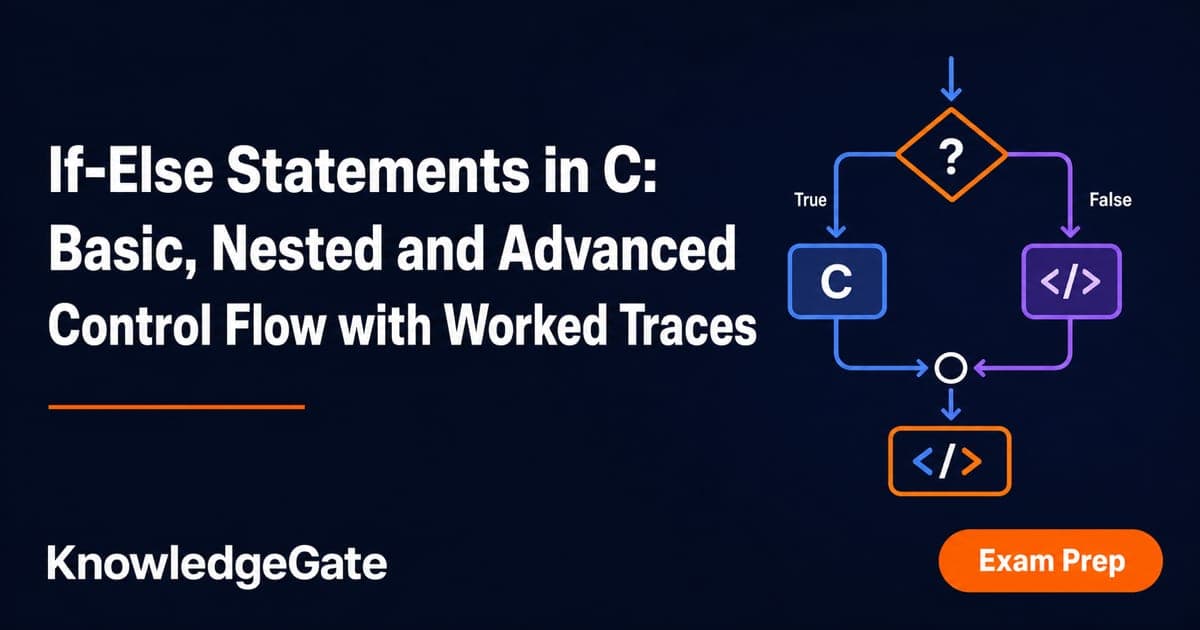
If-Else Statements in C: Basic, Nested and Advanced Control Flow with Worked Traces
Learn how C chooses a branch, then trace ladders, nested decisions, short-circuit expressions and common output traps with exact values.
Updated 26 Oct 20266 min readC Programming & Data Structures
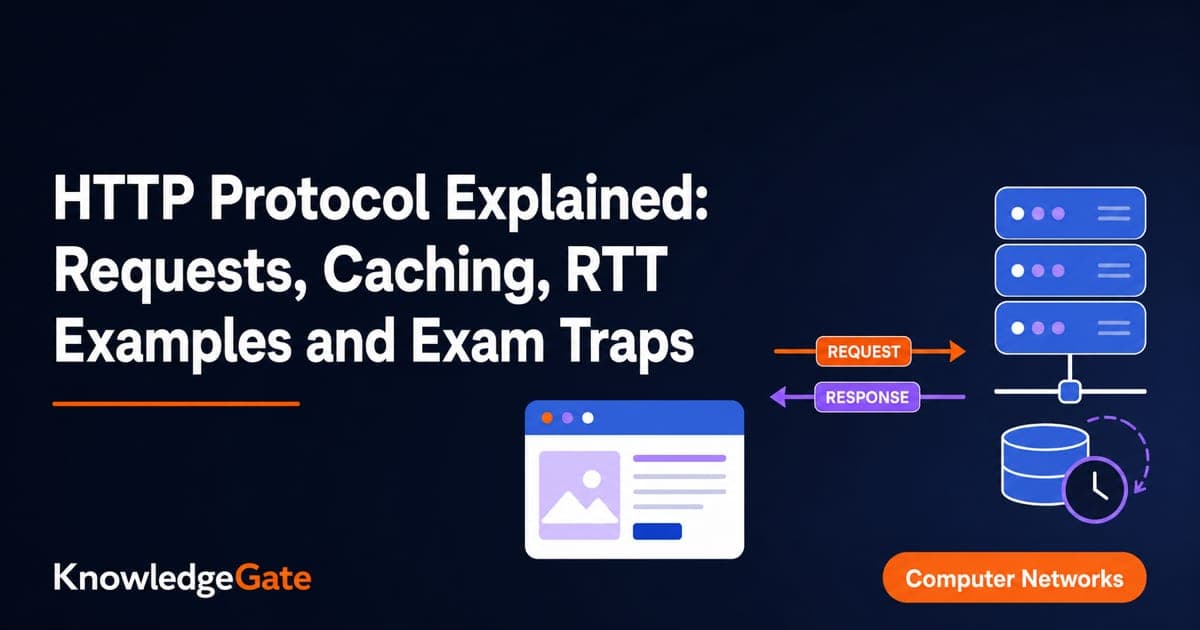
HTTP Protocol Explained: Requests, Caching, RTT Examples and Exam Traps
Build a clear HTTP mental model, read an HTTP/1.1 exchange byte by byte, and calculate non-persistent, persistent and pipelined timings correctly.
Updated 26 Oct 20266 min readComputer Networks
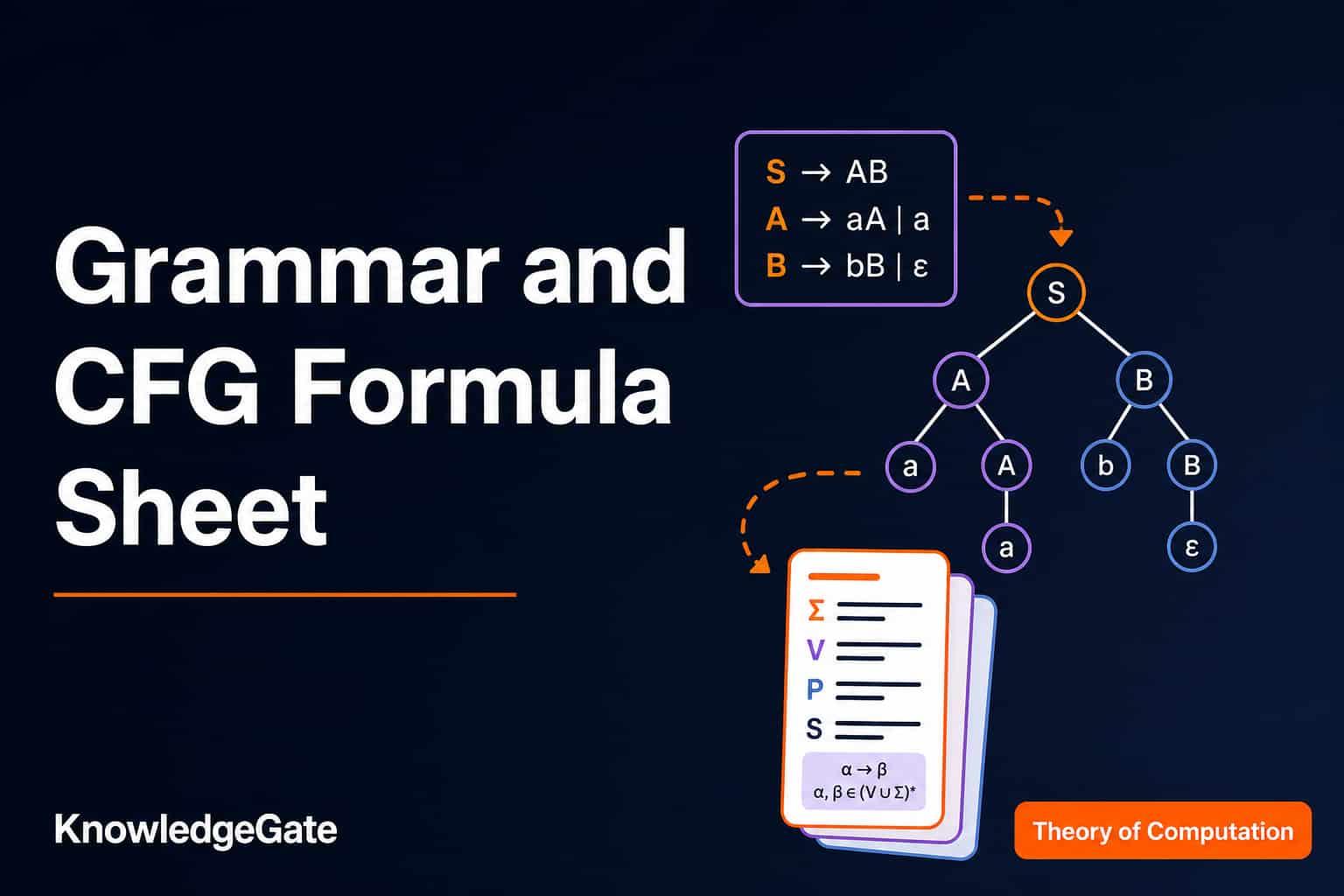
Grammar and CFG Formula Sheet: Rules, Worked Example and GATE Revision Notes
Revise CFGs in problem-solving order through precise rules, use cues, one consistent worked grammar, an LL(1) table, normal forms and a final audit routine.
Updated 26 Oct 20266 min readCompiler Design
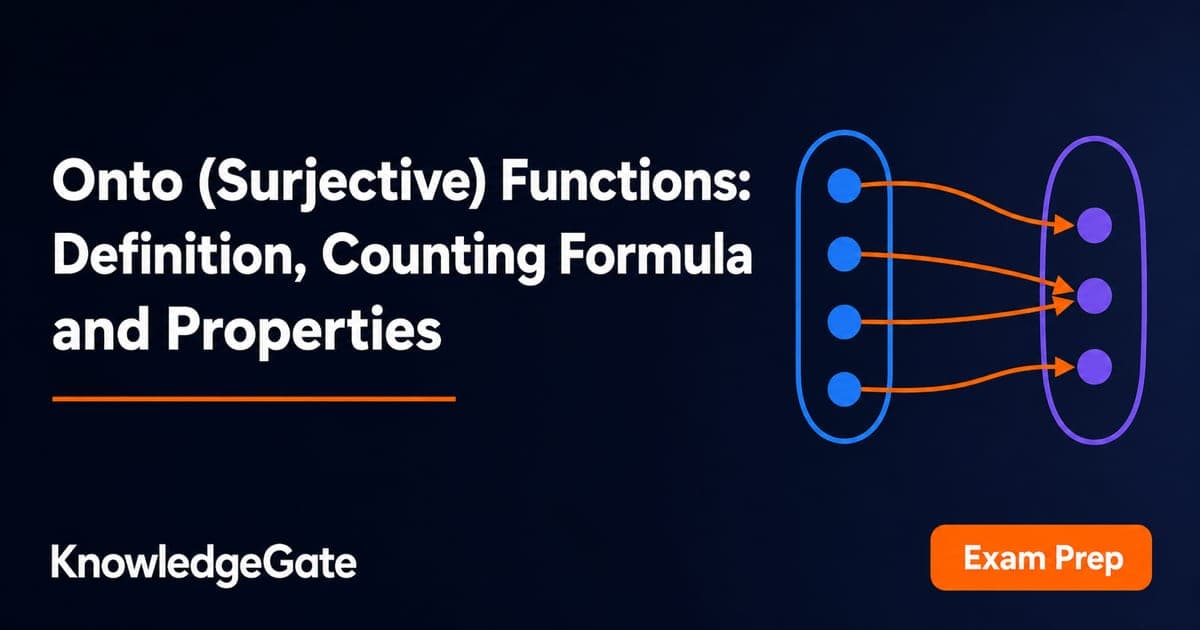
Onto (Surjective) Functions: Definition, Counting Formula and Properties
Learn how to test whether a function is onto, count finite surjections, handle boundary cases and apply the main properties through one consistent worked example.
Updated 25 Oct 20266 min readEngineering Mathematics
Operating System for GATE: An 8-Week Topic-by-Topic Preparation Plan
Build OS preparation around dependencies, visible calculations and an error log. This eight-week timetable includes weekly hour splits, worked checks and a practical recovery rule.
Updated 25 Oct 20265 min readOperating Systems
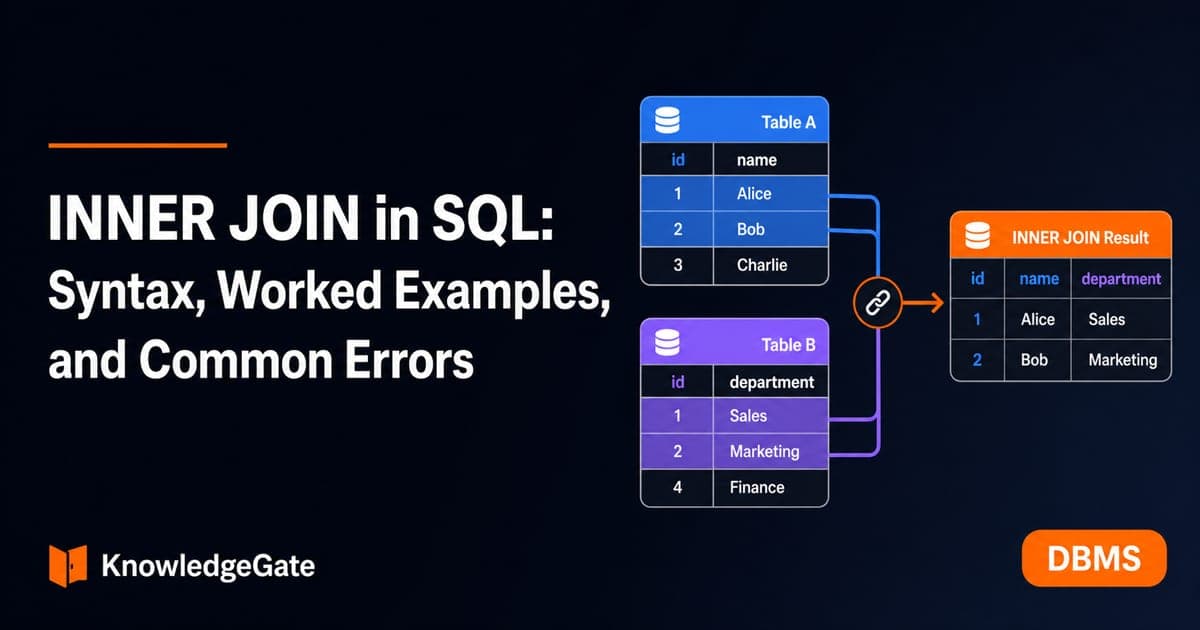
INNER JOIN in SQL: Syntax, Worked Examples, and Common Errors
Build INNER JOIN intuition with a customer-order dataset. Trace exact row matches, handle one-to-many results, extend to payments, and practise common interview patterns.
Updated 25 Oct 20266 min readDBMS
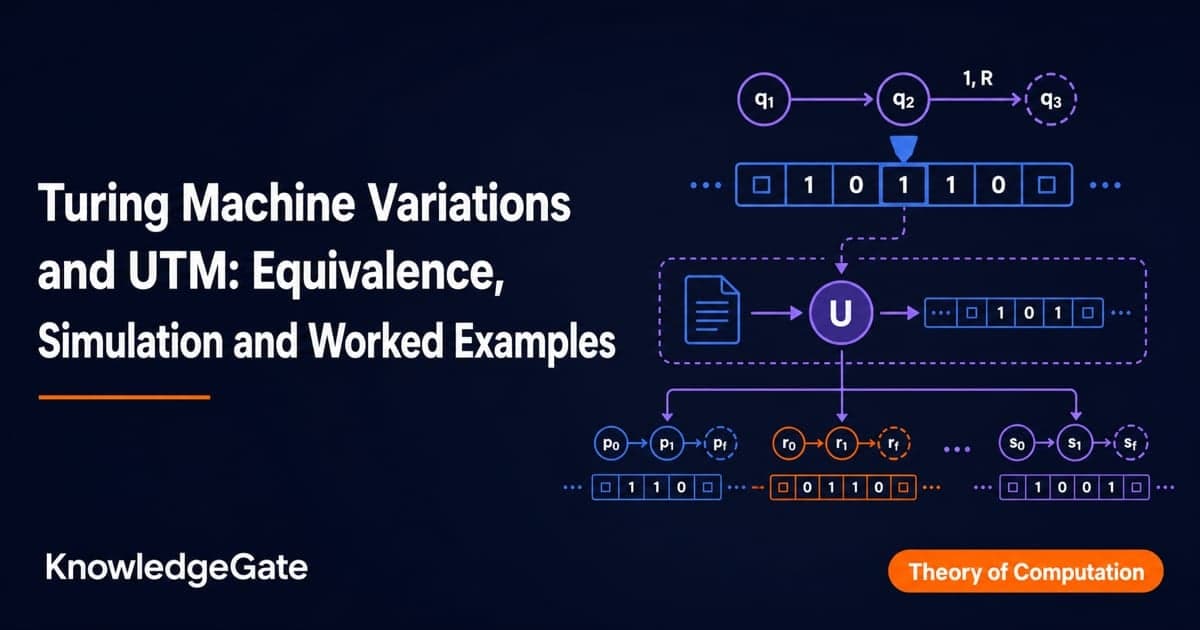
Turing Machine Variations and UTM: Equivalence, Simulation and Worked Examples
Compare major Turing machine variants, trace a two-tape decider, and decode one transition of a universal Turing machine without confusing simulation with decidability.
Updated 25 Oct 20265 min readTheory of Computation
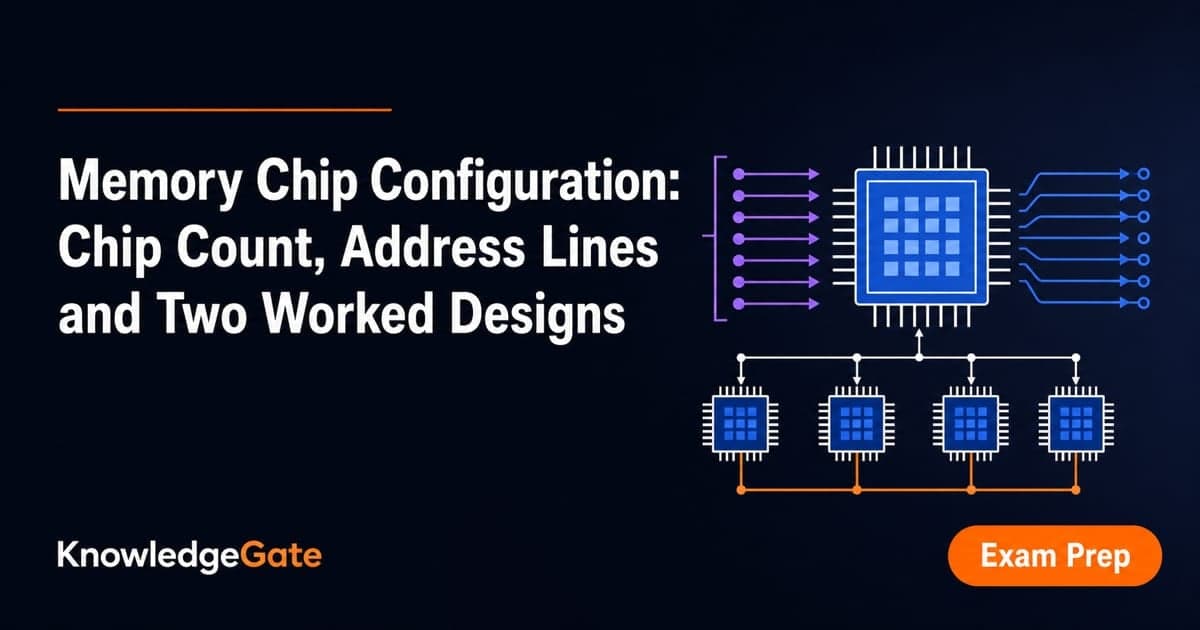
Memory Chip Configuration: Chip Count, Address Lines and Two Worked Designs
Learn to separate depth expansion from width expansion, wire chip banks, derive address pins and check hexadecimal ranges with two complete examples.
Updated 25 Oct 20265 min readComputer Organization & Architecture
Flip-Flop Conversion Explained: Tables, K-Maps and a Worked D-to-JK Design
Learn a repeatable flip-flop conversion method, then derive and verify the combinational logic that makes a D flip-flop behave exactly like a JK flip-flop.
Updated 25 Oct 20265 min readDigital Logic
File Handling in C: Modes, Streams, a Worked File-Position Trace and Exam Traps
Learn how C streams, fopen modes, EOF checks and file positions work, then follow a five-byte trace that makes common output questions predictable.
Updated 24 Oct 20266 min readC Programming & Data Structures