CS Fundamentals
460 articles in this topic
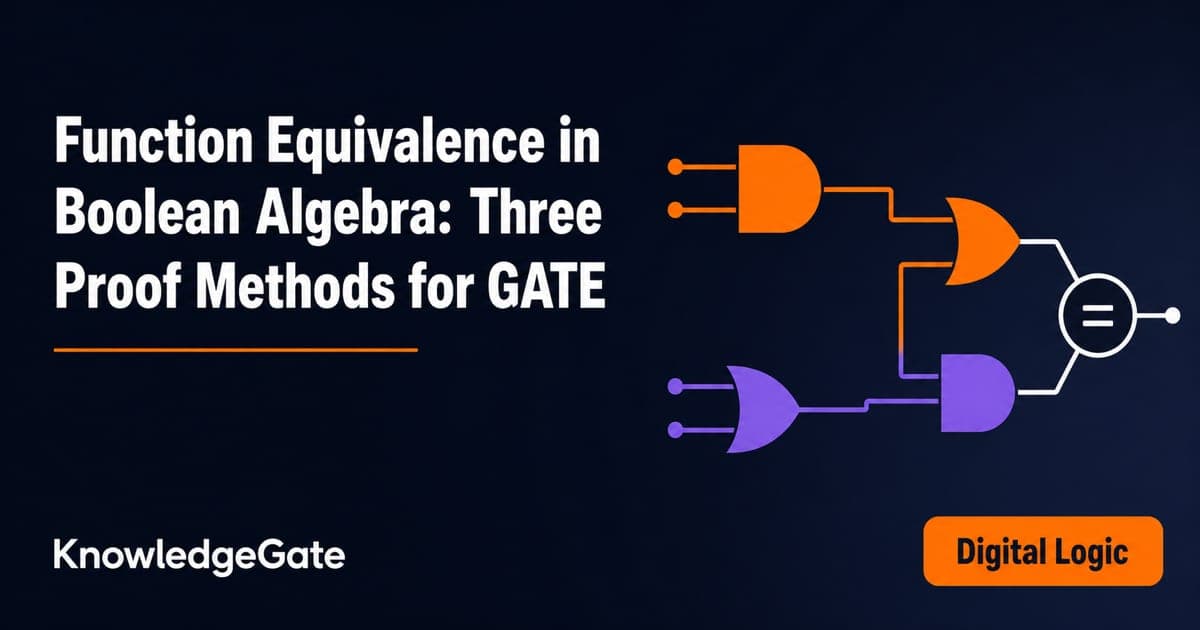
Function Equivalence in Boolean Algebra: Three Proof Methods for GATE
Two Boolean expressions can look different yet describe the same function. Prove equivalence exactly with a truth table, Boolean algebra, a K-map, or an XOR miter.
Updated 14 Sep 20265 min readDigital Logic
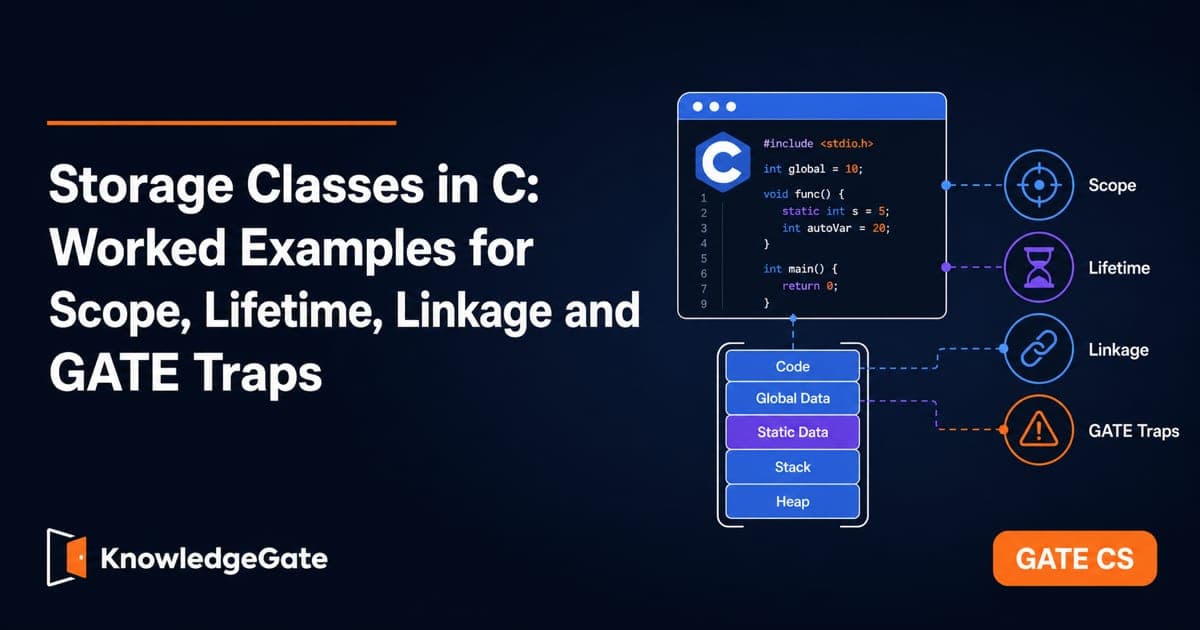
Storage Classes in C: Worked Examples for Scope, Lifetime, Linkage and GATE Traps
Learn what auto, register, static and extern actually control. Classification tables, two-file code and exact traces turn similar-looking declarations into predictable C behaviour.
Updated 14 Sep 20266 min readC Programming & Data Structures
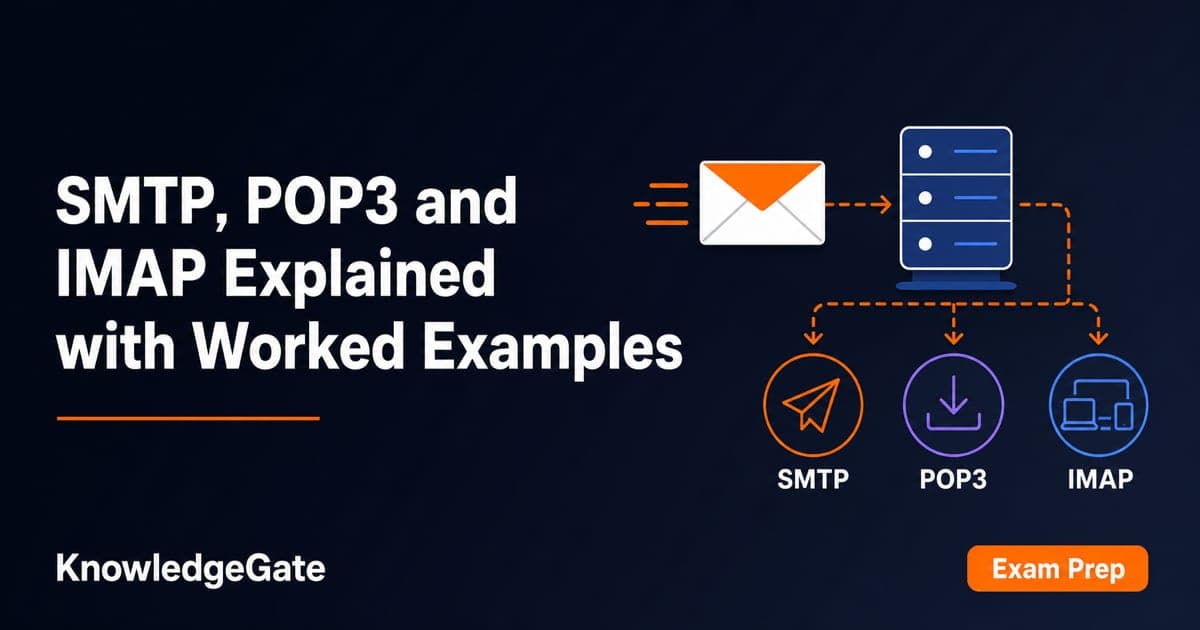
SMTP, POP3 and IMAP Explained with Worked Examples
Follow one email from sender to mailbox, then compare SMTP dialogue, POP3 deletion, IMAP synchronisation, timing and bandwidth through closed examples.
Updated 14 Sep 20266 min readComputer Networks
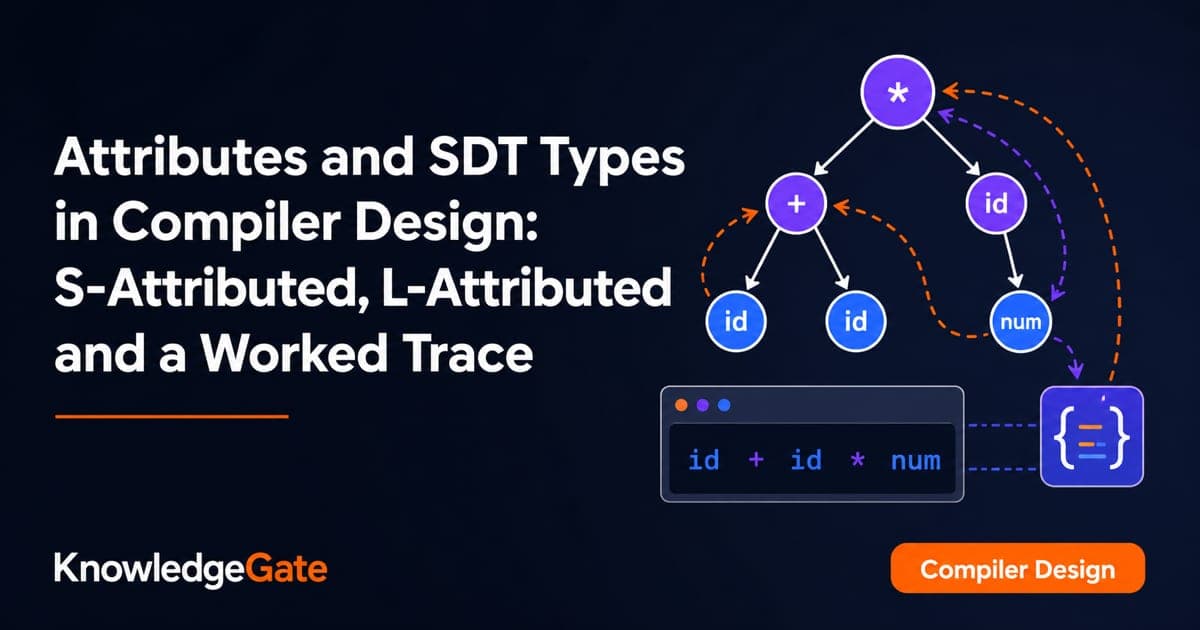
Attributes and SDT Types in Compiler Design: S-Attributed, L-Attributed and a Worked Trace
See how attributes add meaning to a parse tree, how S-attributed and L-attributed definitions differ, and how one expression becomes both a value and postfix output.
Updated 13 Sep 20266 min read55 viewsCompiler Design
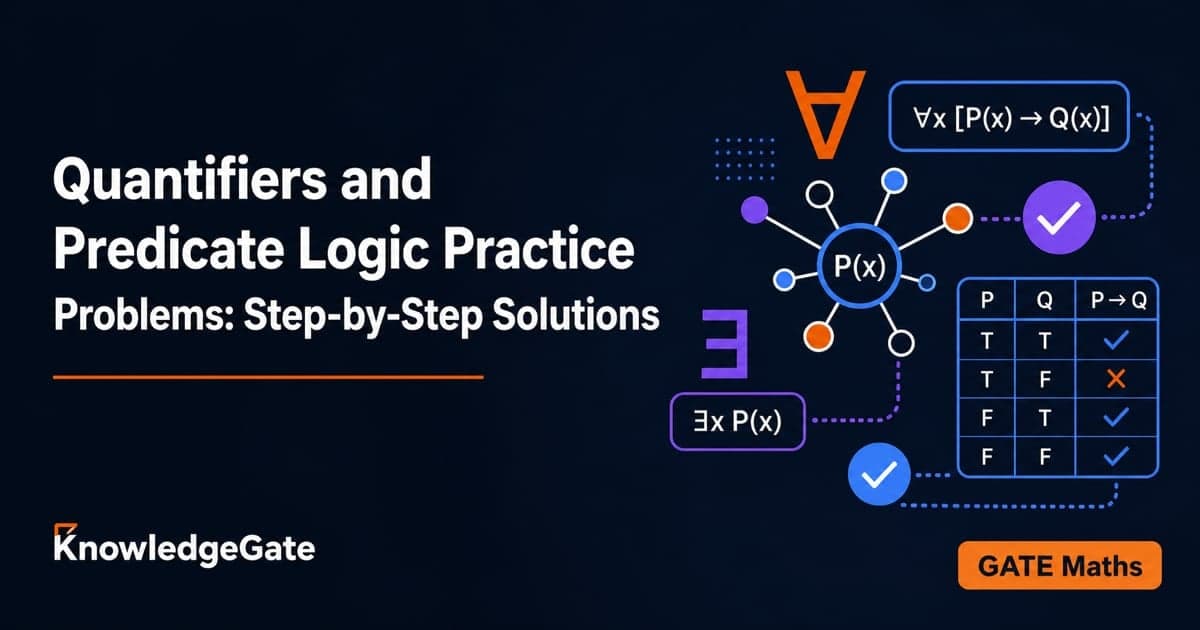
Quantifiers and Predicate Logic Practice Problems: Step-by-Step Solutions
Solve quantifier problems with a fixed routine, then test it on complete predicate tables, nested relations, negations and five rapid checks.
Updated 13 Sep 20265 min read54 viewsEngineering Mathematics
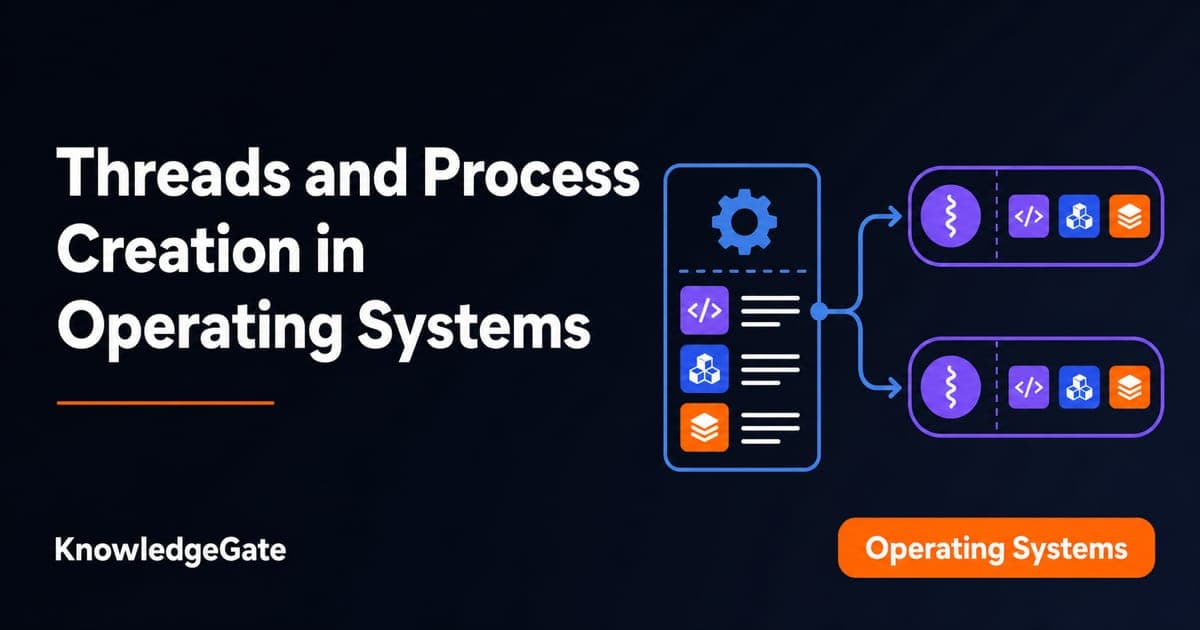
Threads and Process Creation in Operating Systems: fork(), Thread Models and Worked Examples
Build a reliable model of processes and threads, then trace conditional fork() calls across six named process paths without losing track of return values.
Updated 13 Sep 20266 min readOperating Systems
SQL DML: INSERT, UPDATE, and DELETE with Transaction-Safe Examples
Follow one employees table through deliberate inserts, a calculated update, a targeted delete, and a savepoint rollback in PostgreSQL.
Updated 13 Sep 20265 min readDBMS
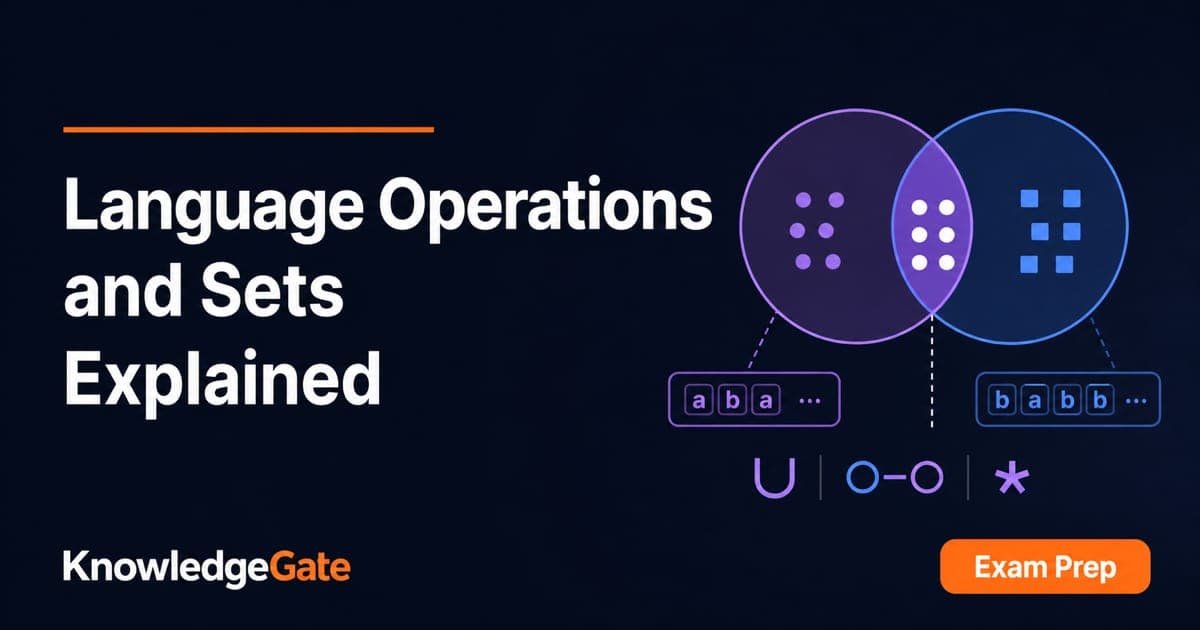
Language Operations and Sets Explained: Union, Concatenation, Kleene Star and Exam Problems
Learn why epsilon differs from the empty language, how order changes concatenation, and how small counterexamples expose false identities. Two worked languages carry every result.
Updated 13 Sep 20266 min readTheory of Computation
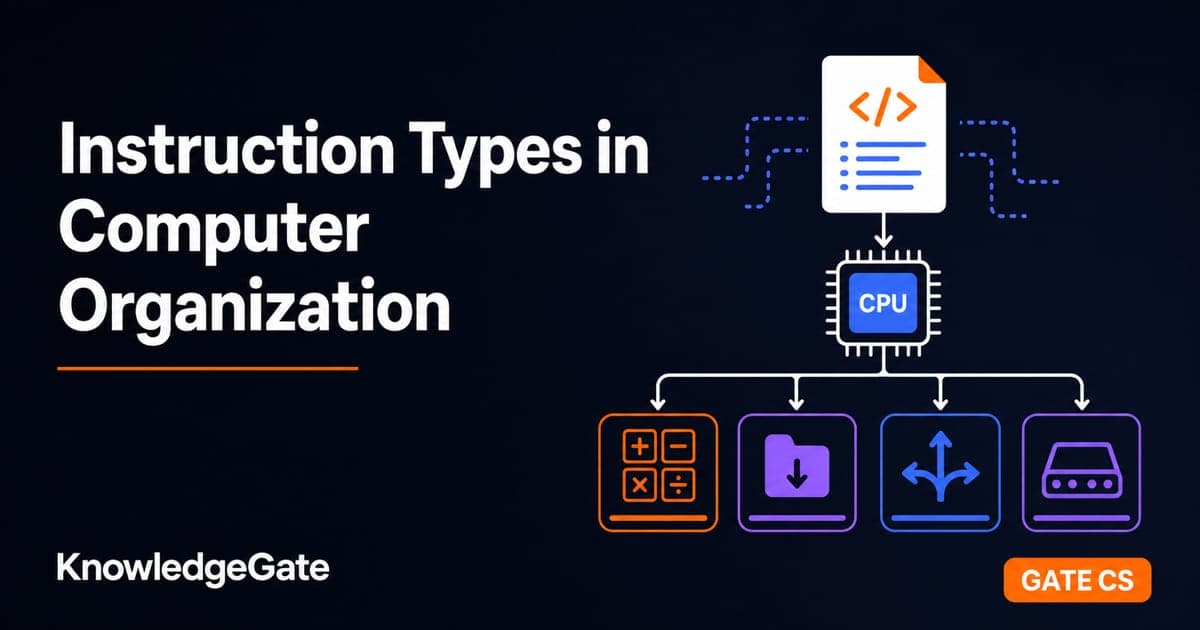
Instruction Types in Computer Organization: Concepts, Worked Trace and GATE Question Patterns
Classify instructions by the state they change, then trace a toy CPU across registers, flags, memory, a branch, an output port, and the program counter.
Updated 12 Sep 20266 min readComputer Organization & Architecture
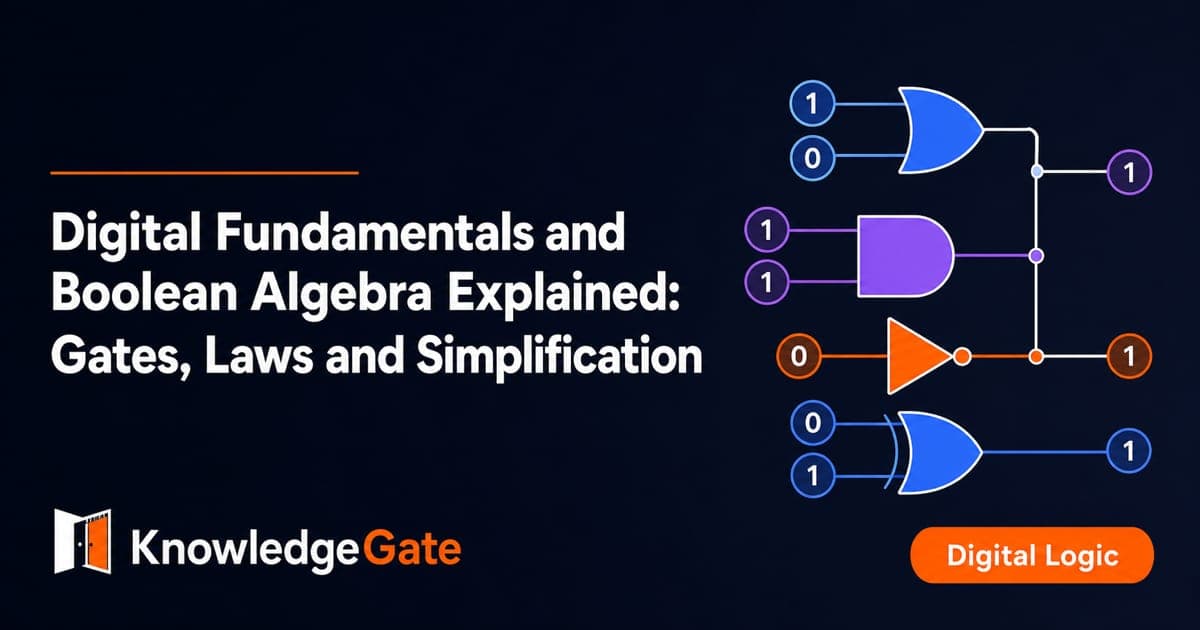
Digital Fundamentals and Boolean Algebra Explained: Gates, Laws and Simplification
Connect bits, gates, truth tables and Boolean expressions, then simplify a three-input majority function and verify that the reduced circuit is equivalent.
Updated 12 Sep 20265 min read86 viewsDigital Logic
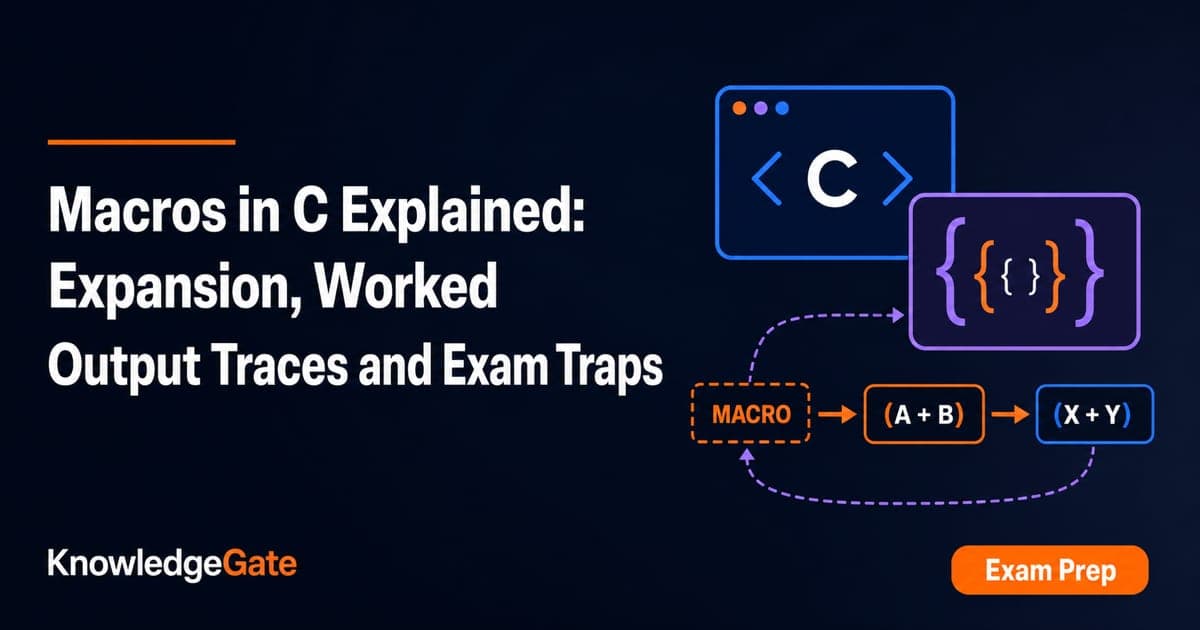
Macros in C Explained: Expansion, Worked Output Traces and Exam Traps
Learn a reliable expand-first method for C macros. Follow exact traces for nested macros, unsafe SQUARE calls, repeated evaluation, token operators and header guards.
Updated 12 Sep 20266 min readC Programming & Data Structures
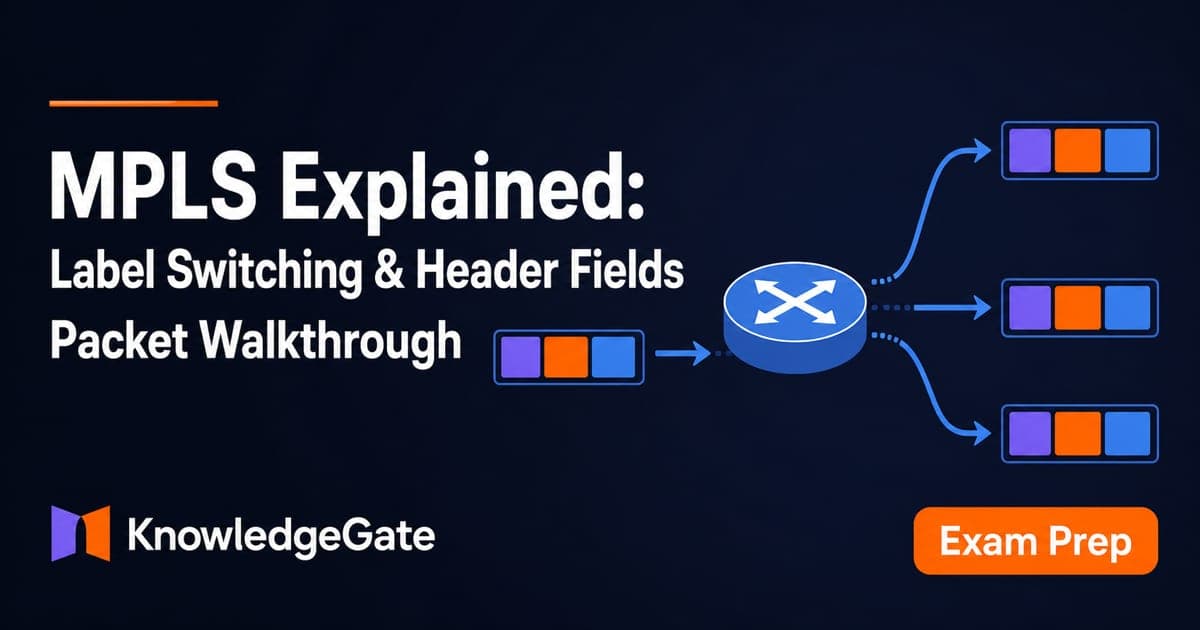
MPLS Explained: Label Switching, Header Fields and a Packet Walkthrough
See where an MPLS label comes from, why it changes at each hop, how the shim header is encoded, and when ordinary IP forwarding resumes.
Updated 12 Sep 20266 min read50 viewsComputer Networks