Computer Organization & Architecture
50 articles in this topic
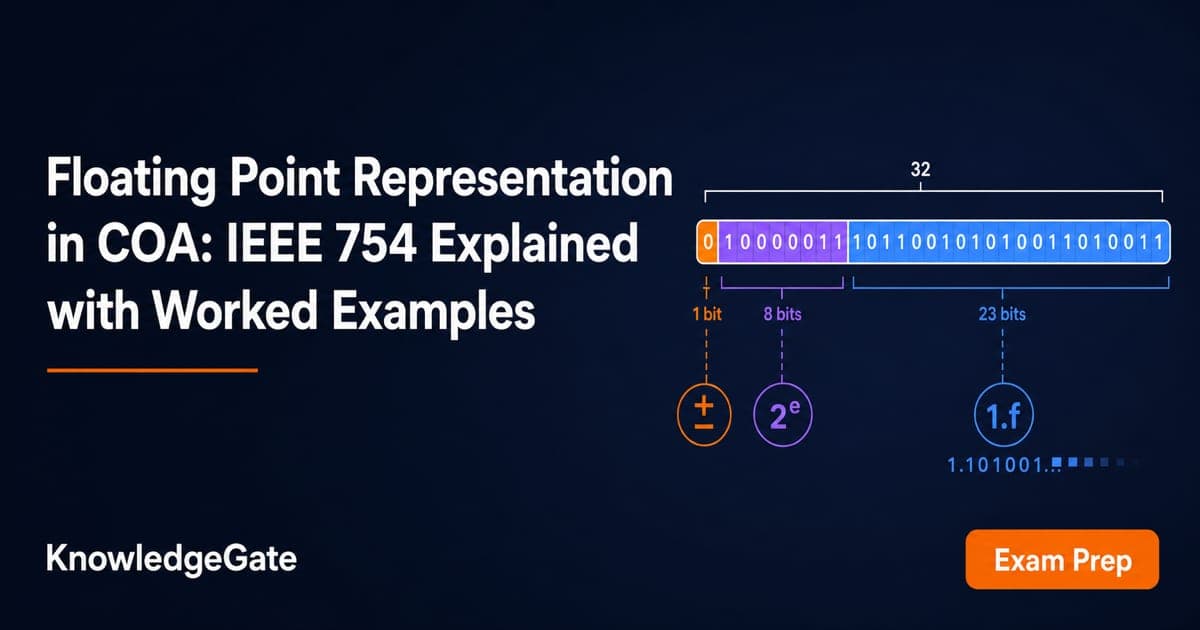
Floating Point Representation in COA: IEEE 754 Explained with Worked Examples
Learn the IEEE 754 single-precision layout through two complete conversions, then understand hidden bits, biased exponents, special values, and rounding errors.
Updated 7 Aug 20266 min read67 viewsComputer Organization & Architecture
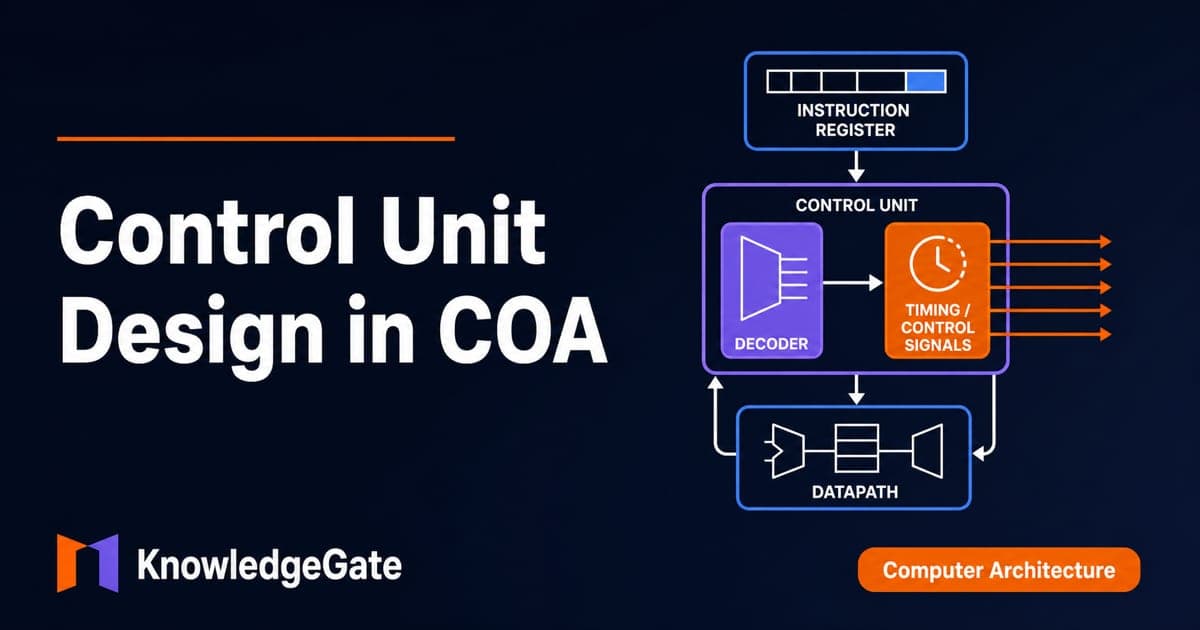
Control Unit Design in COA: Hardwired vs Microprogrammed, with Worked Examples
Build control unit design from timed micro-operations. Work through a fetch and LOAD sequence, derive control signals, and size horizontal and vertical microcode.
Updated 4 Aug 20266 min readComputer Organization & Architecture
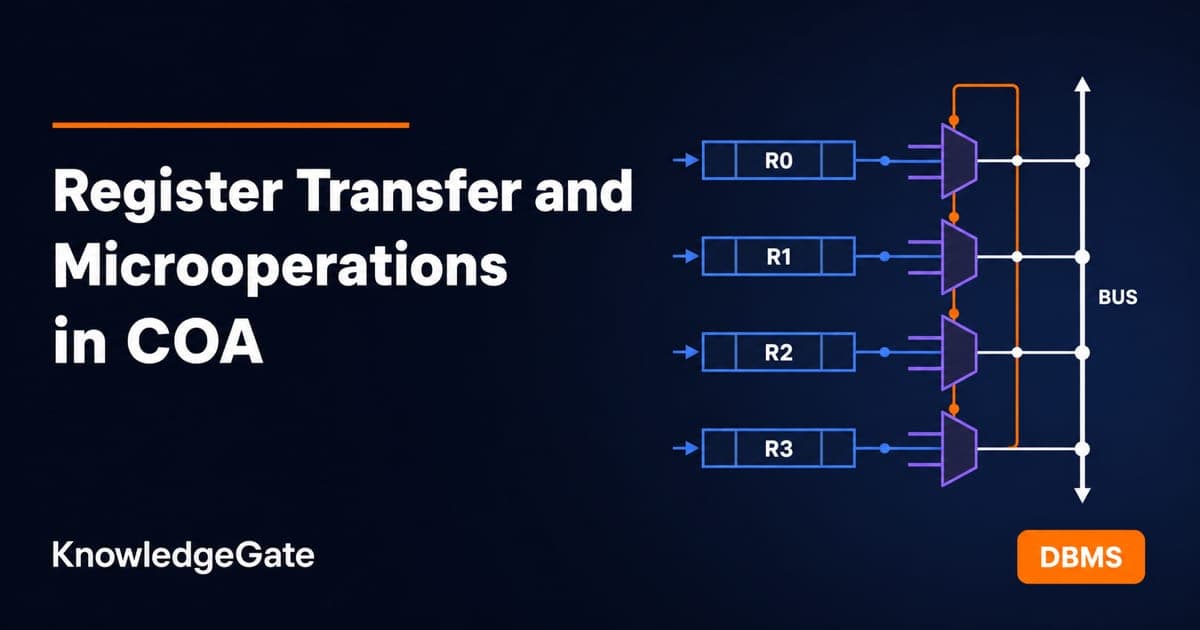
Register Transfer and Microoperations in COA: RTL Notation, Bus Design, and Every Microoperation Type with Worked Examples
RTL becomes easy when you treat every statement as parallel hardware action at one clock edge. This guide works through buses, subtraction, bit masks, insertion, and signed shifts.
Updated 2 Aug 20266 min read75 viewsComputer Organization & Architecture
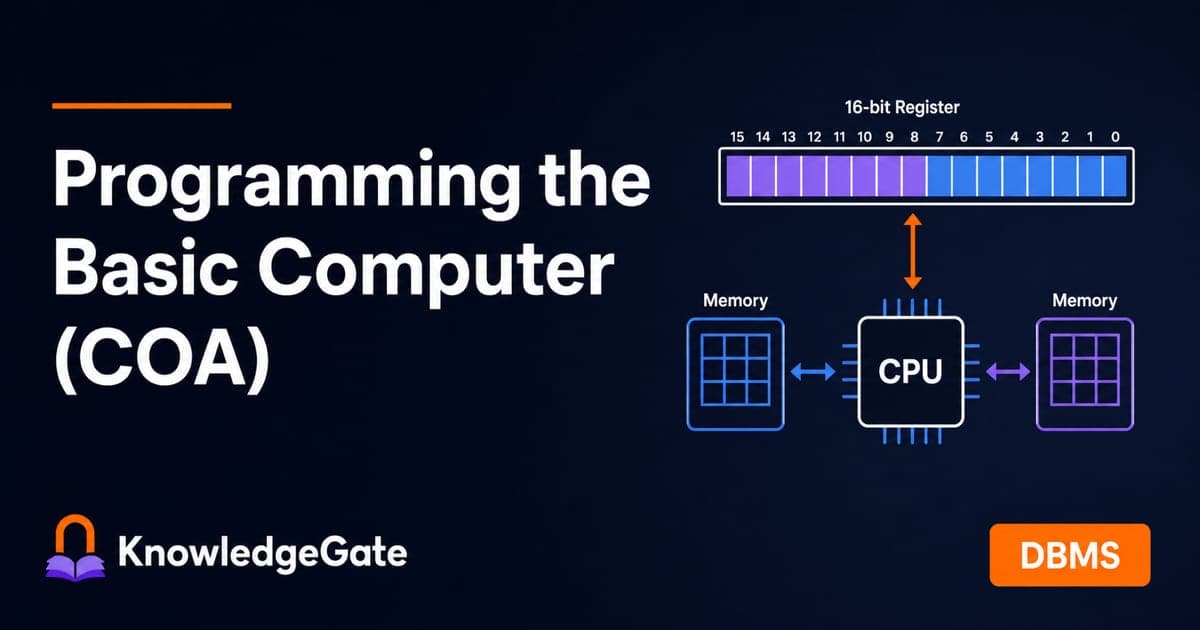
Programming the Basic Computer (COA): Instruction Set, Assembly Language and Worked Examples
Learn the Morris Mano Basic Computer by decoding an indirect instruction and assembling a subtraction program from source to final memory values.
Updated 30 Jul 20266 min readComputer Organization & Architecture

Coal India Management Trainee (Systems) Syllabus Decoded: the Technical and Aptitude Split
The MT Systems paper is two preparation jobs: a CS core revised for recall speed, and an aptitude half built beside it. The notification settles the numbers.
Updated 27 Jul 20265 min readComputer Organization & Architecture

Coal India MT Systems Preparation Strategy: How Much of Your GATE CS Prep Transfers
Reuse your GATE CS foundation instead of rebuilding it. Most of the technical core transfers to MT Systems. The aptitude half is what you add, over ten weeks.
Updated 25 Jul 20265 min readComputer Organization & Architecture
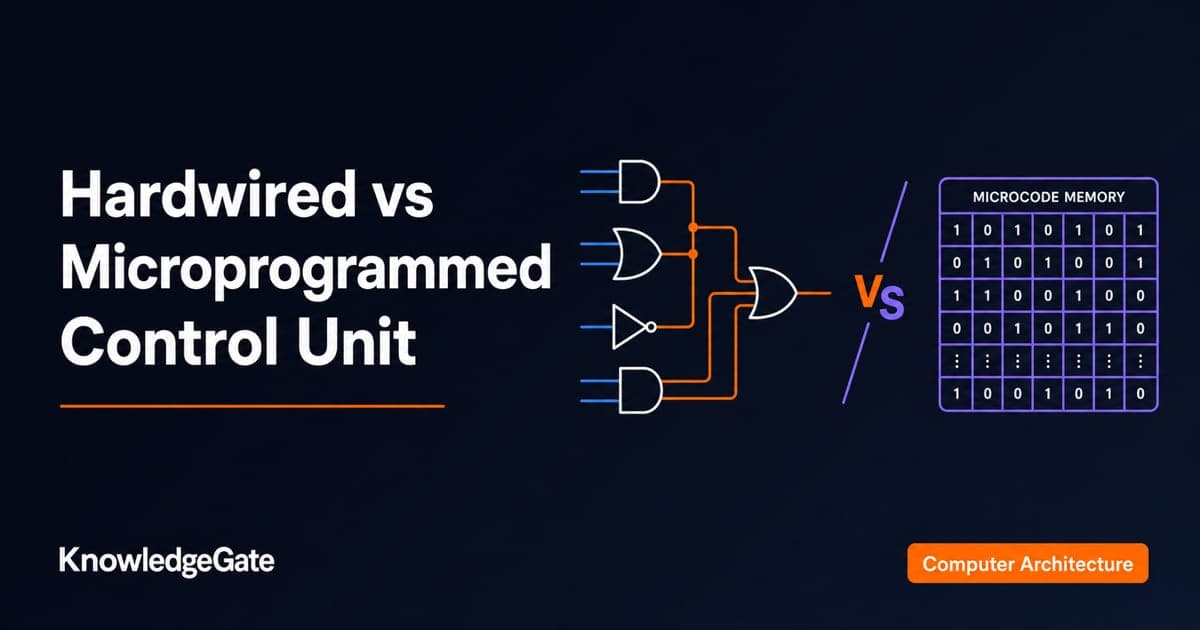
Hardwired vs Microprogrammed Control Unit for GATE: Microinstruction Sizing Numericals Solved
Separate the qualitative comparison from the sizing numerical. Two worked control-store examples show exactly where every microinstruction bit comes from.
Updated 22 Jul 20267 min readComputer Organization & Architecture
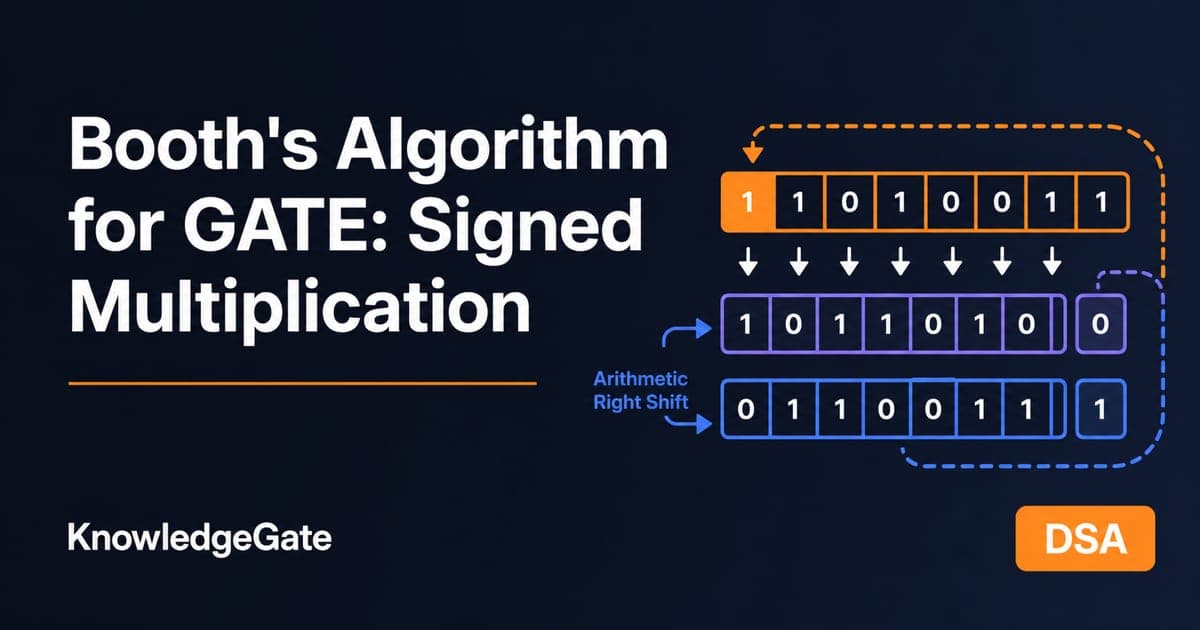
Booth's Algorithm for GATE: Signed Multiplication Traced Step by Step
Trace Booth multiplication through A, Q and Q-1, preserve the sign during every shift, and count additions and subtractions from bit transitions.
Updated 20 Jul 20265 min read59 viewsComputer Organization & Architecture
Cache Write Policies and Multi-Level Cache Numericals for GATE: AMAT Solved Step by Step
Write-through vs write-back traffic arithmetic and the hierarchical vs simultaneous AMAT formulas, derived once and drilled on L1/L2 GATE-pattern numericals solved step by step.
Updated 18 Jul 20267 min readComputer Organization & Architecture
IBPS SO IT Officer Computer Organization: professional knowledge topics
IBPS SO IT Officer Computer Organization: number systems, Boolean logic, CPU and memory organization, addressing modes and I/O for the Mains PK paper.
Updated 18 Jul 20265 min read163 viewsComputer Organization & Architecture
Addressing modes and instruction formats in computer architecture explained
Addressing modes and instruction formats explained: immediate, direct, indirect, indexed and PC-relative effective addresses, and 0/1/2/3-address machines.
Updated 16 Jul 20267 min read317 viewsComputer Organization & Architecture
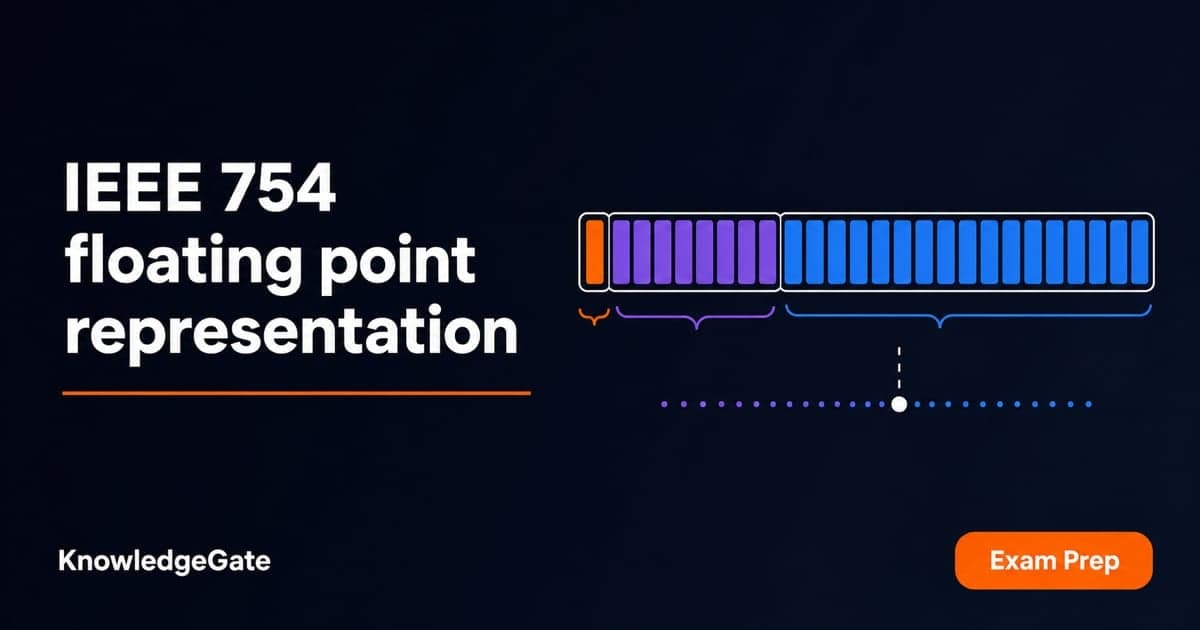
Floating point representation: IEEE 754 format and arithmetic explained
Computers store real numbers in a fixed number of bits, so they cannot store every real number exactly. Floating point packs a huge range of magnitudes into 32 or 64 bits by trading away some precision, and IEEE 754 is the standard almost every processor follows. This topic is a dependable source of encoding and precision questions, all resting on the same field layout and normalization rule.
Updated 16 Jul 20266 min read318 viewsComputer Organization & Architecture