Computer Organization & Architecture
50 articles in this topic
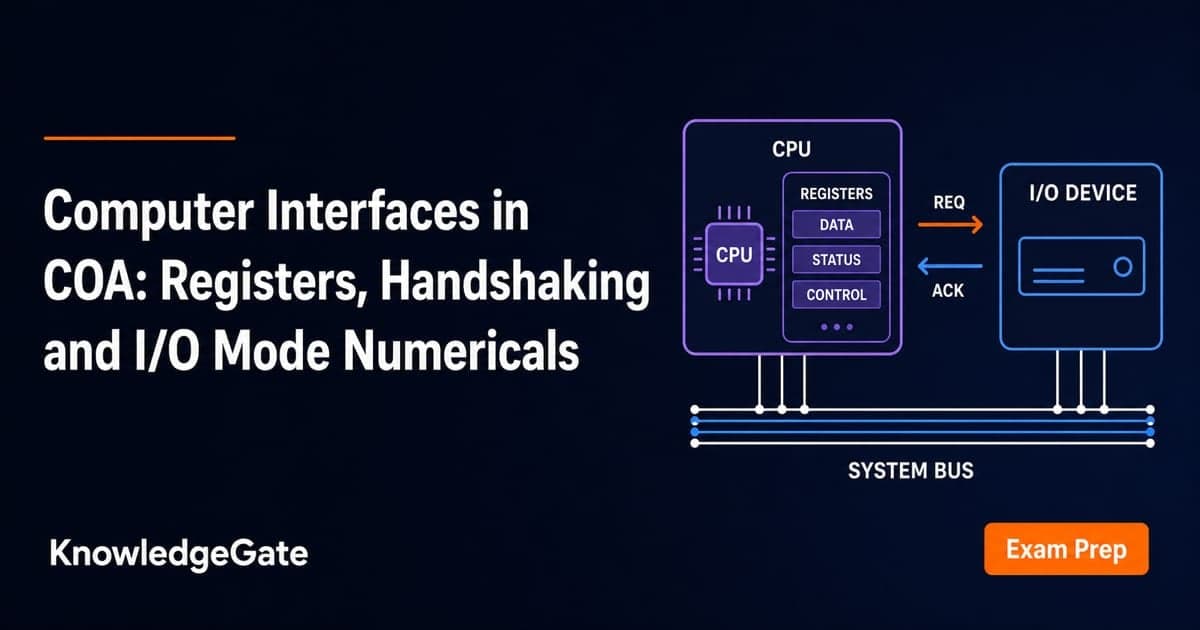
Computer Interfaces in COA: Registers, Handshaking and I/O Mode Numericals
Learn how an I/O interface decodes addresses, uses data, status and control registers, coordinates handshakes, and changes CPU occupancy across polling, interrupts and DMA.
Updated 30 Aug 20267 min readComputer Organization & Architecture
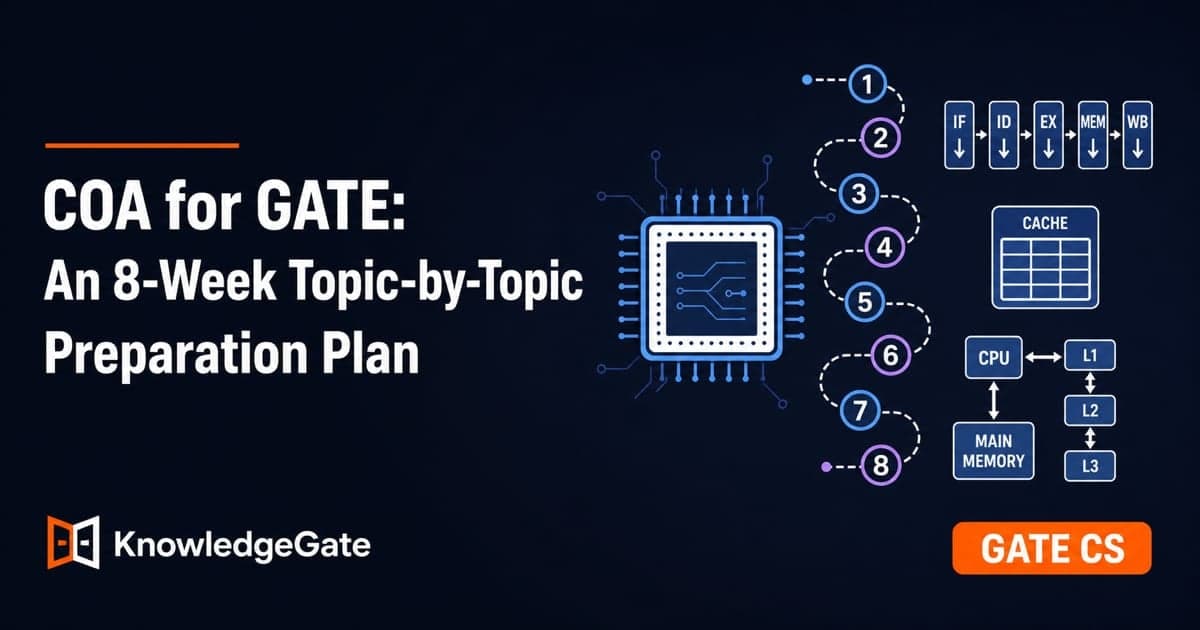
COA for GATE: An 8-Week Topic-by-Topic Preparation Plan
Study Computer Organization and Architecture in prerequisite order with an adjustable 80-hour plan, checked numericals, timed practice, and a practical recovery rule.
Updated 29 Aug 20265 min read73 viewsComputer Organization & Architecture
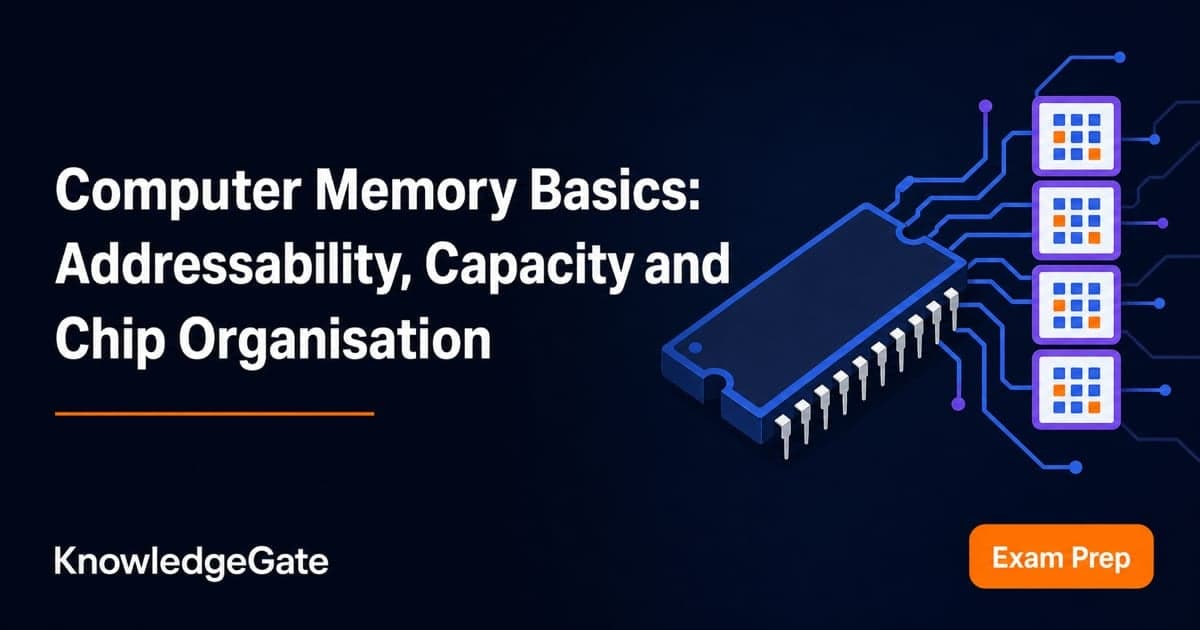
Computer Memory Basics: Addressability, Capacity and Chip Organisation with Worked Examples
Learn to separate addresses, bytes, words, address lines and data lines. Worked examples cover a 256 KiB byte-addressable memory, chip organisation, and a 16K x 16 expansion.
Updated 26 Aug 20266 min readComputer Organization & Architecture
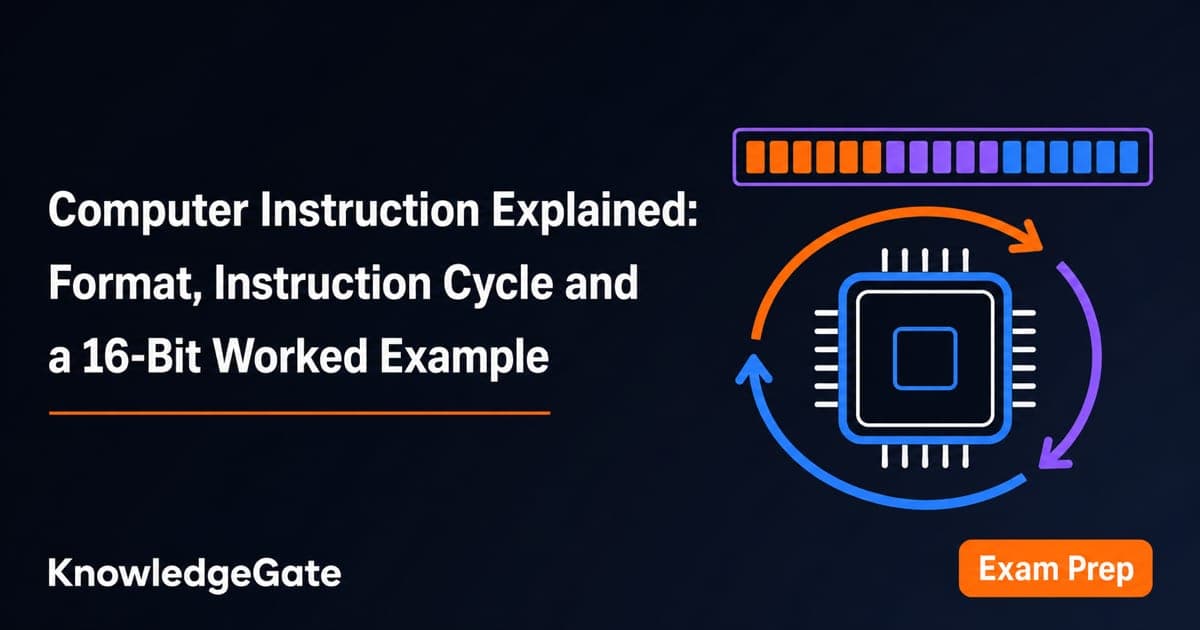
Computer Instruction Explained: Format, Instruction Cycle and a 16-Bit Worked Example
Decode an illustrative 16-bit load instruction, calculate its effective address, trace fetch through write-back, and learn the errors that change answers.
Updated 25 Aug 20265 min readComputer Organization & Architecture
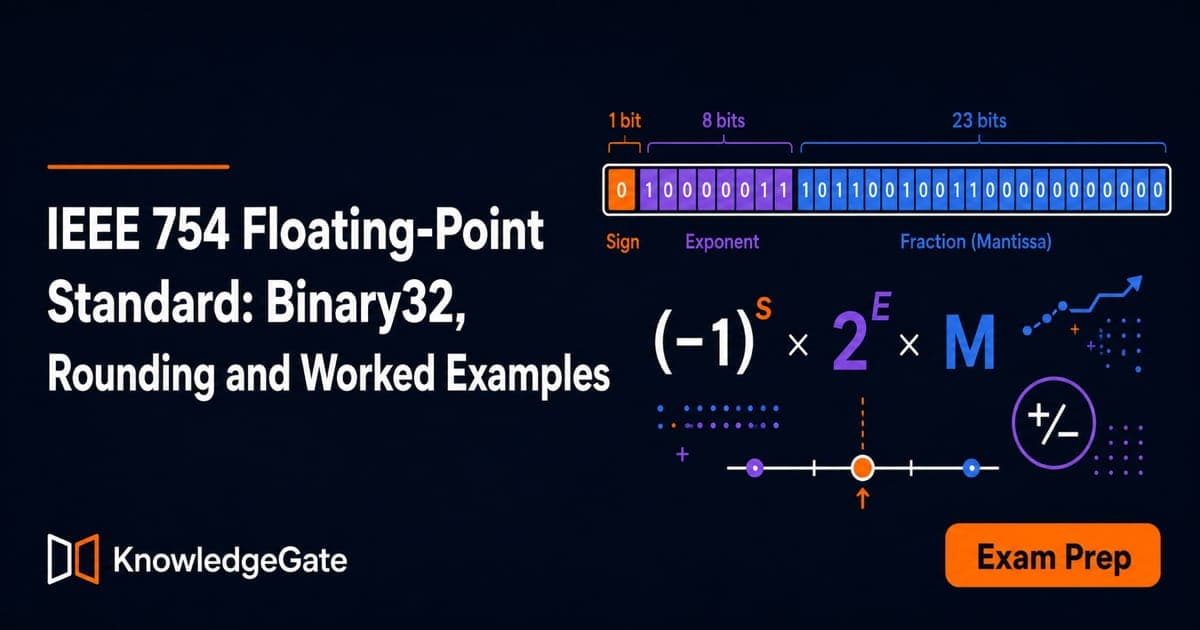
IEEE 754 Floating-Point Standard: Binary32, Rounding and Worked Examples
Learn how IEEE 754 stores floating-point values, then encode -13.25, decode 0x3F400000, classify special values and reason about rounding errors.
Updated 23 Aug 20266 min read57 viewsComputer Organization & Architecture
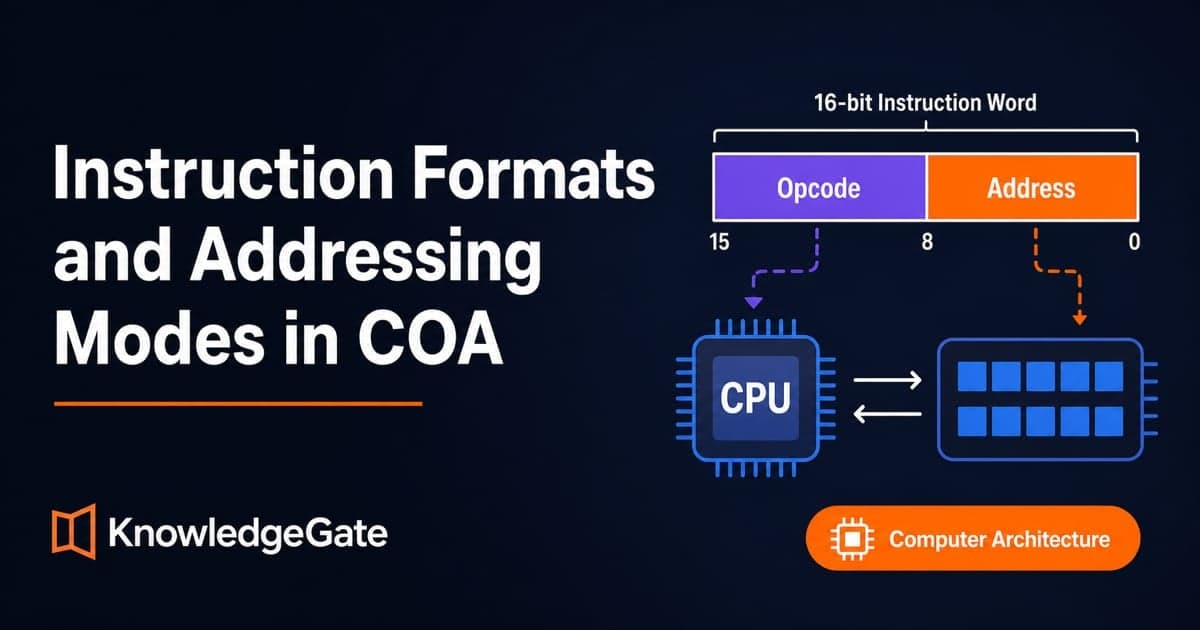
Instruction Formats and Addressing Modes in COA: Complete Guide with Worked Examples
Learn how zero, one, two, and three-address instructions change a program, then solve expanding-opcode and effective-address questions step by step.
Updated 21 Aug 20266 min read55 viewsComputer Organization & Architecture
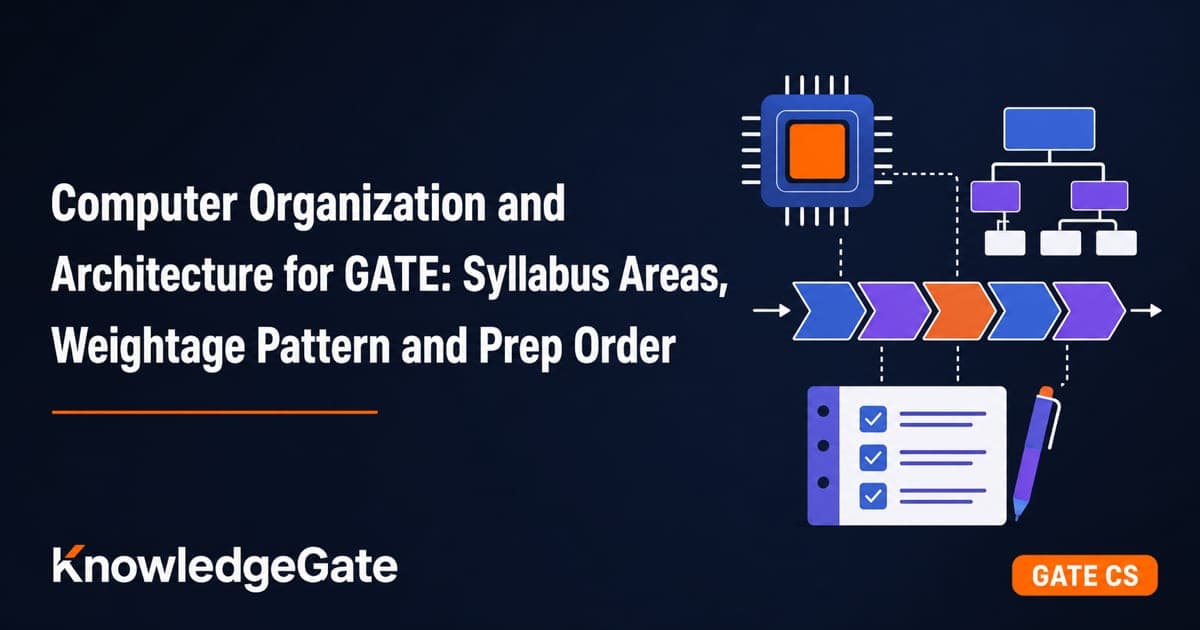
Computer Organization and Architecture for GATE: Syllabus Areas, Weightage Pattern and Prep Order
See what COA covers in GATE CS, where recent-paper questions concentrate, and how to sequence pipelining, cache, control and I/O preparation.
Updated 19 Aug 20265 min read112 viewsComputer Organization & Architecture
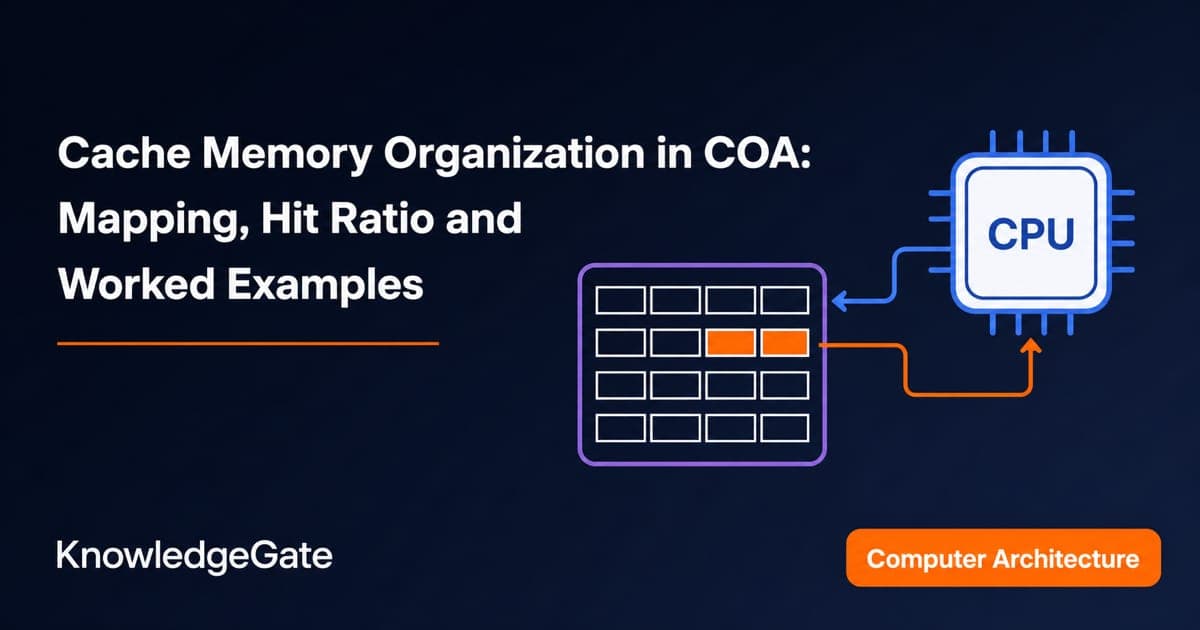
Cache Memory Organization in COA: Mapping, Hit Ratio and Worked Examples
Learn cache organization through one 64 KB memory and 1 KB cache example, carried from address fields and mapping to AMAT, writes, replacement and directory size.
Updated 18 Aug 20267 min readComputer Organization & Architecture
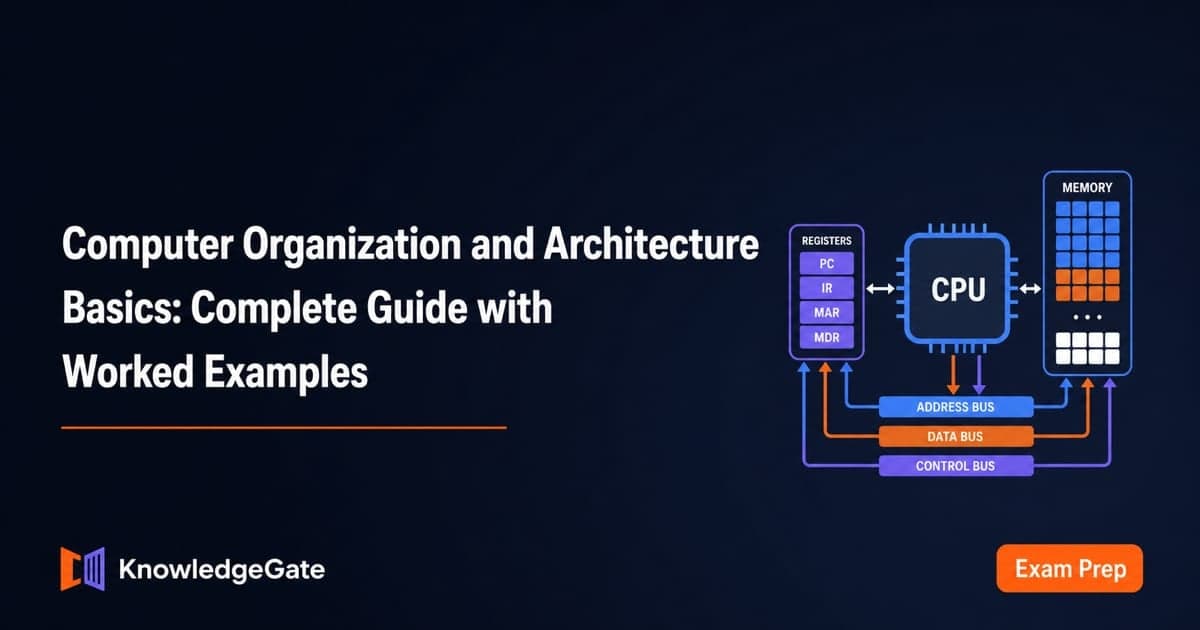
Computer Organization and Architecture Basics: Complete Guide with Worked Examples
Follow an instruction from bits through the CPU, memory and I/O, then solve exact examples on overflow, CPI, pipelines, cache fields, AMAT and interrupts.
Updated 15 Aug 20266 min read71 viewsComputer Organization & Architecture
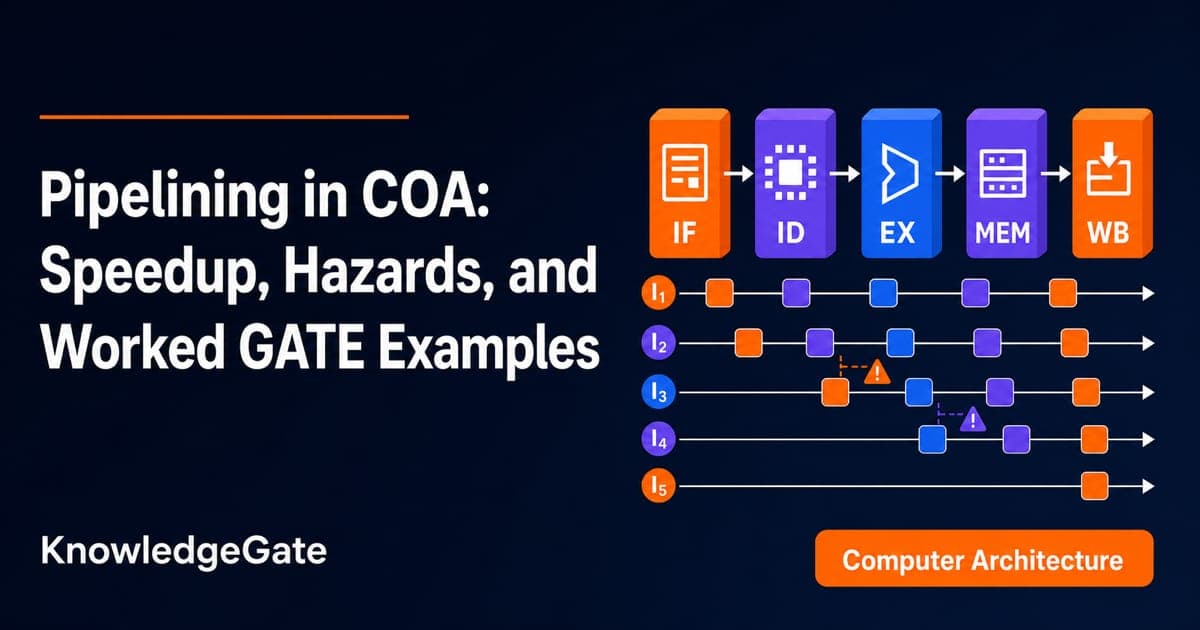
Pipelining in COA: Speedup, Hazards, and Worked GATE Examples
Build a clear mental model of pipelining, then use it to solve clock-period, speedup, throughput, efficiency, and hazard questions step by step.
Updated 13 Aug 20266 min read52 viewsComputer Organization & Architecture
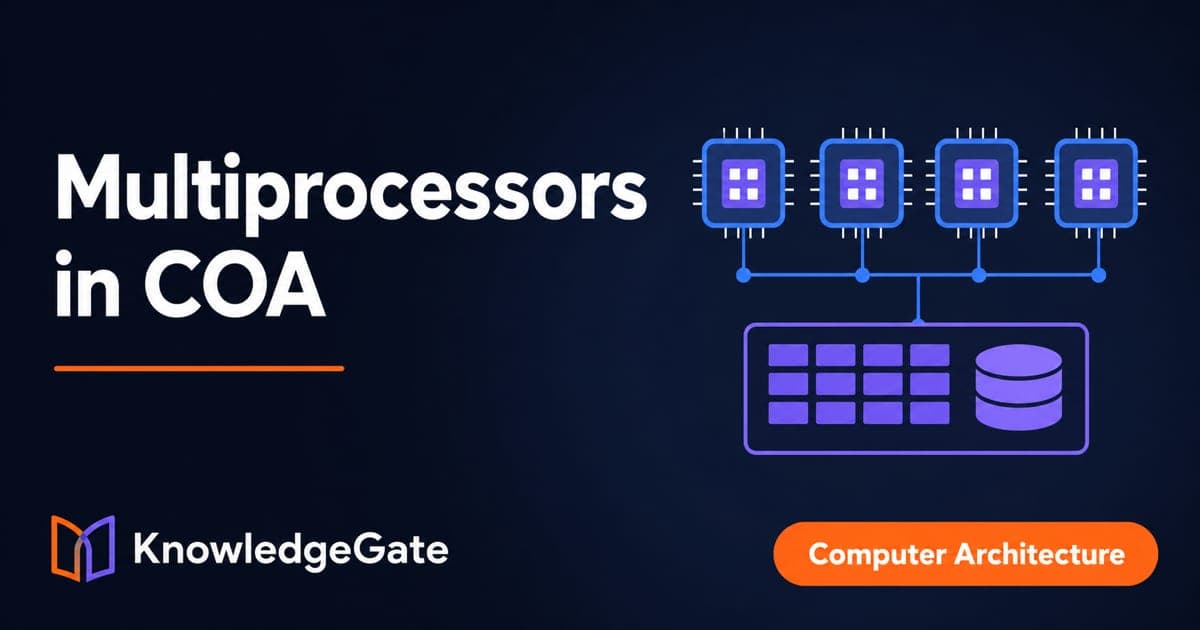
Multiprocessors in COA: Concepts, Amdahl's Law and Cache Coherence Worked Examples
Connect multiprocessor classifications, interconnects, memory models, speedup and cache coherence. Then solve the Amdahl and MESI patterns GATE questions rely on.
Updated 11 Aug 20266 min read377 viewsComputer Organization & Architecture
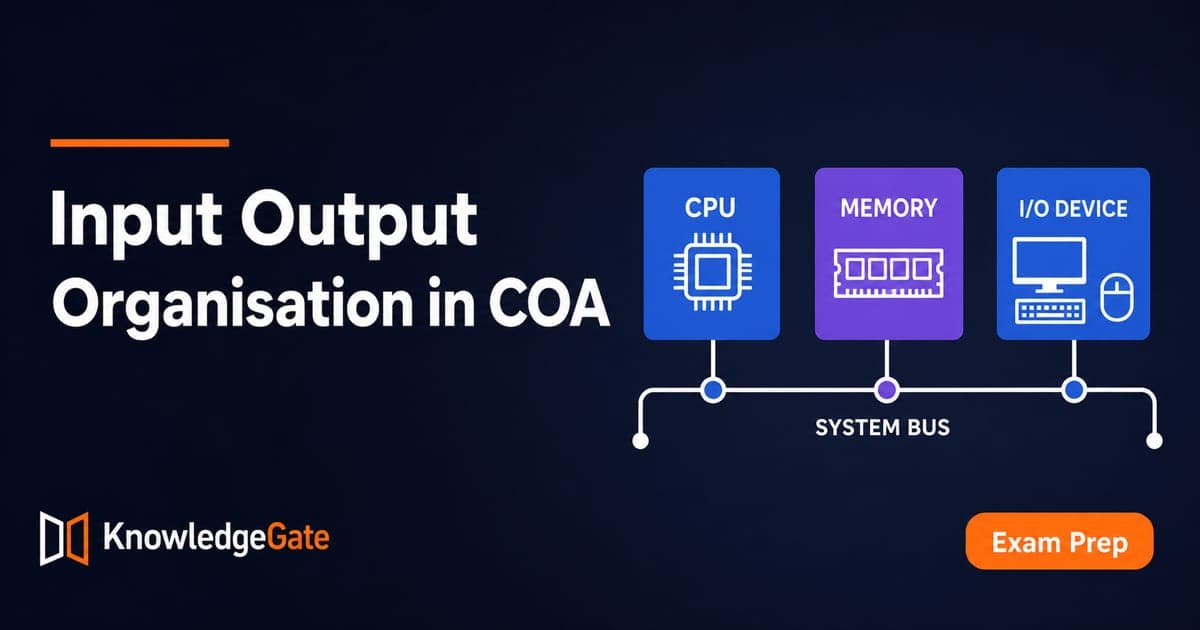
Input Output Organisation in COA: Programmed I/O, Interrupts and DMA, with Worked Examples
See how Data, Status and Control registers support programmed I/O, interrupts and DMA. Then solve a complete cycle-stealing bandwidth calculation.
Updated 9 Aug 20266 min read51 viewsComputer Organization & Architecture