

Teaching Recruitment (Computer Science)
DSSSB, KVS, NVS, EMRS, RSSB and state PGT/TGT Computer Science exam strategy and explainers.
71 articles in this topic

Cyber Threats and Malware Explained: Types, Attack Flow and a Worked Example
Learn how threats, vulnerabilities, exploits, attack vectors and malware differ. Then classify malware by behaviour and solve a simplified InvoiceSync spread scenario.
Updated 10 Nov 20265 min readTeaching Recruitment (Computer Science)

PowerPoint Slides & Views MCQs: 12 Solved Questions with Explanations
Test yourself on 12 PowerPoint questions covering Master views, Slide Sorter, templates, effects, file formats and slideshow shortcuts.
Updated 9 Nov 20267 min readTeaching Recruitment (Computer Science)

Office Mixed Concepts MCQs: 12 Solved Questions with Explanations
Solve 12 mixed MS Office questions by identifying the task, choosing the application and separating similar features, from OLE and mail merge to Access field types.
Updated 8 Nov 20267 min readTeaching Recruitment (Computer Science)
Excel Functions & Charts MCQs: 12 Solved Questions with Explanations
Solve 12 Excel MCQs covering functions, copied references, row and column ranges, SUMIF, and chart vocabulary, with worked explanations.
Updated 7 Nov 20267 min readTeaching Recruitment (Computer Science)

Physical Security and Disaster Control: Layered Controls, RPO and RTO Worked Example
Learn how physical controls, disaster planning and recovery targets work together. Follow an exact incident timeline to test RPO, RTO and a warm standby.
Updated 6 Nov 20266 min readTeaching Recruitment (Computer Science)
Digital Footprint Explained: Active vs Passive Traces with a Worked Audit
Learn how active and passive digital traces differ, then audit Nisha's 30 known records and see why a later count of 31 uses a wider boundary.
Updated 5 Nov 20265 min readTeaching Recruitment (Computer Science)

File Formats and Multimedia Explained: Extensions, Codecs and Worked Size Calculations
Build a precise file-to-format mental model, then calculate the size of a 90-second lesson package from image, audio and video specifications.
Updated 4 Nov 20266 min readTeaching Recruitment (Computer Science)

Common Software and Tools Explained: Types, Worked Example and Exam Traps
Learn to classify system, application, utility, and development software by function. Then follow one result-processing workflow from spreadsheet formula to PDF, ZIP, and backup.
Updated 2 Nov 20266 min readTeaching Recruitment (Computer Science)
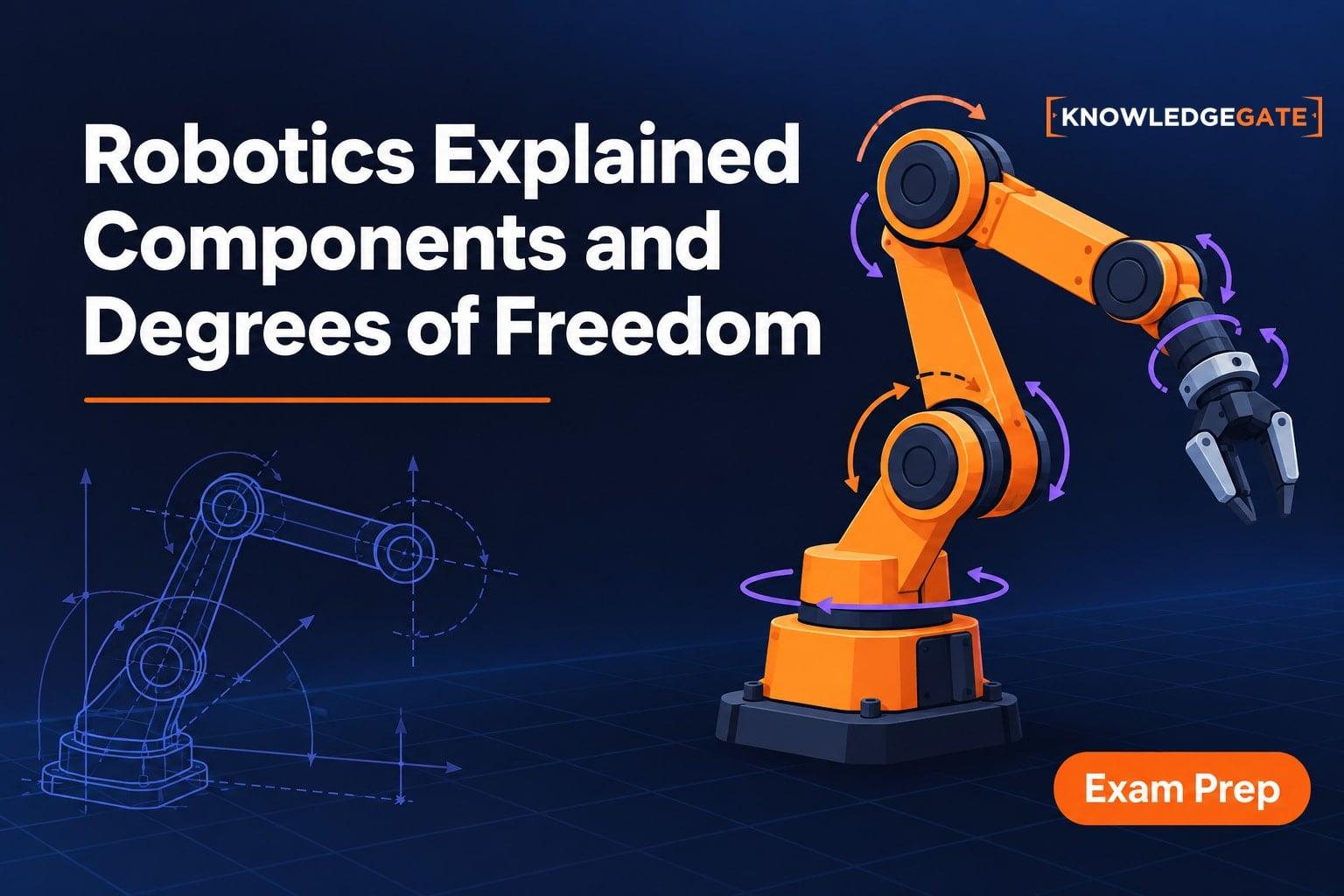
Robotics Explained: Components, Degrees of Freedom, Worked Numericals and Exam Patterns
A robot is a complete sense-plan-act-feedback system, not merely an AI model or a moving machine. Learn its components, calculate a 2R arm endpoint and a differential-drive pose, then avoid common exam traps.
Updated 1 Nov 20266 min readTeaching Recruitment (Computer Science)
IoT, Sensors and Smart Cities Explained: Architecture, Numericals and Exam Traps
Learn the role of every IoT block, separate common sensor terms, and solve a 120-node streetlighting numerical covering data, energy and hysteresis.
Updated 31 Oct 20266 min readTeaching Recruitment (Computer Science)

Grid Computing and Blockchain Explained: Worked Scheduling, Hash Chains and Exam Traps
Separate grid computing from blockchain, then practise capacity-aware scheduling and trace how an altered block breaks a toy hash chain.
Updated 30 Oct 20266 min readTeaching Recruitment (Computer Science)

Emerging Technology Trends Explained: Concepts and a Worked IoT Example
Separate IoT, edge, cloud, AI, blockchain, 5G, big data and AR/VR by the job each performs. Then follow a smart-irrigation stack and verify its 75% payload reduction.
Updated 29 Oct 20265 min readTeaching Recruitment (Computer Science)