

Teaching Recruitment (Computer Science)
DSSSB, KVS, NVS, EMRS, RSSB and state PGT/TGT Computer Science exam strategy and explainers.
71 articles in this topic
File Formats and Multimedia Explained: Extensions, Codecs and Worked Size Calculations
Build a precise file-to-format mental model, then calculate the size of a 90-second lesson package from image, audio and video specifications.
Updated 4 Nov 20266 min readTeaching Recruitment (Computer Science)

Common Software and Tools Explained: Types, Worked Example and Exam Traps
Learn to classify system, application, utility, and development software by function. Then follow one result-processing workflow from spreadsheet formula to PDF, ZIP, and backup.
Updated 2 Nov 20266 min readTeaching Recruitment (Computer Science)
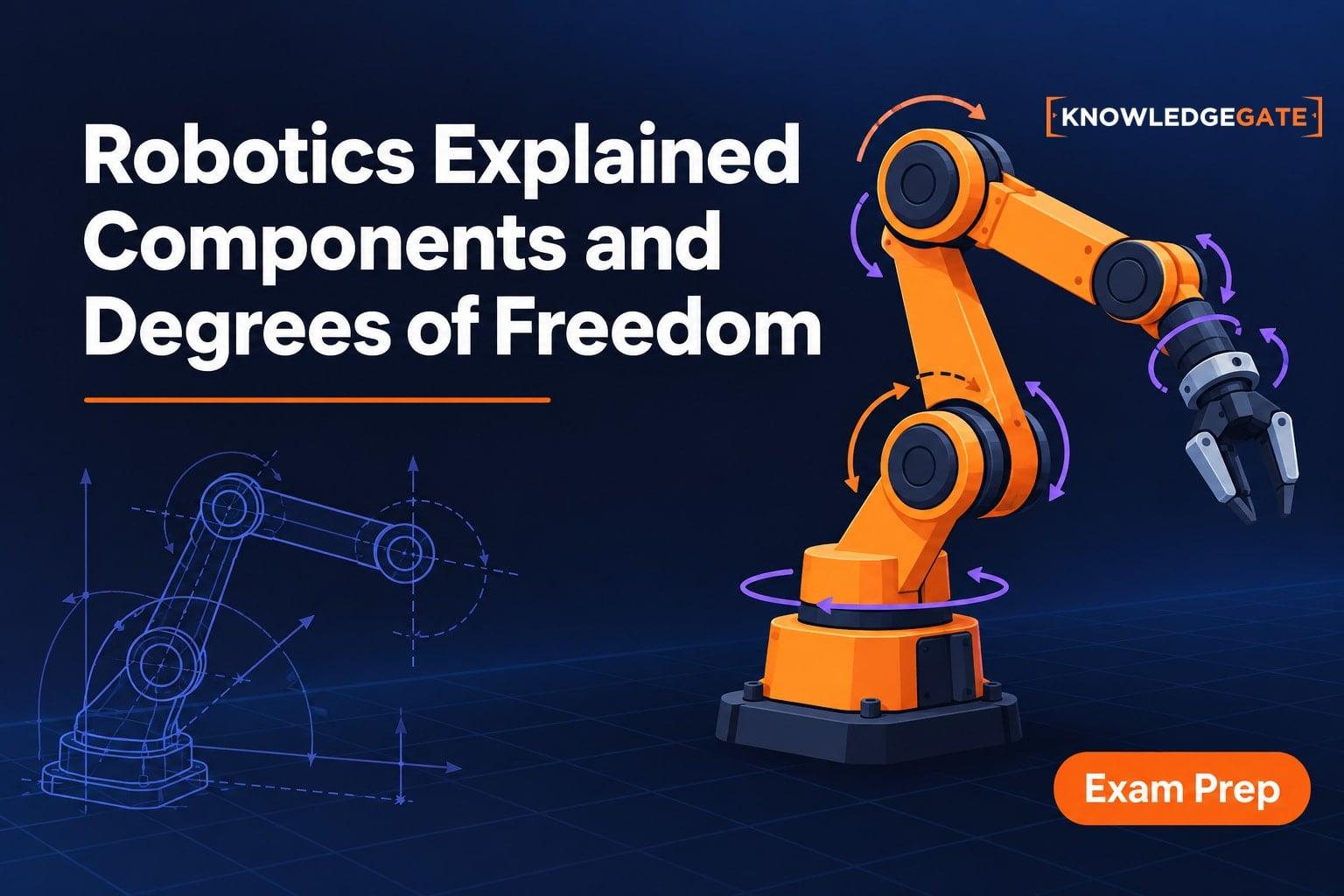
Robotics Explained: Components, Degrees of Freedom, Worked Numericals and Exam Patterns
A robot is a complete sense-plan-act-feedback system, not merely an AI model or a moving machine. Learn its components, calculate a 2R arm endpoint and a differential-drive pose, then avoid common exam traps.
Updated 1 Nov 20266 min readTeaching Recruitment (Computer Science)
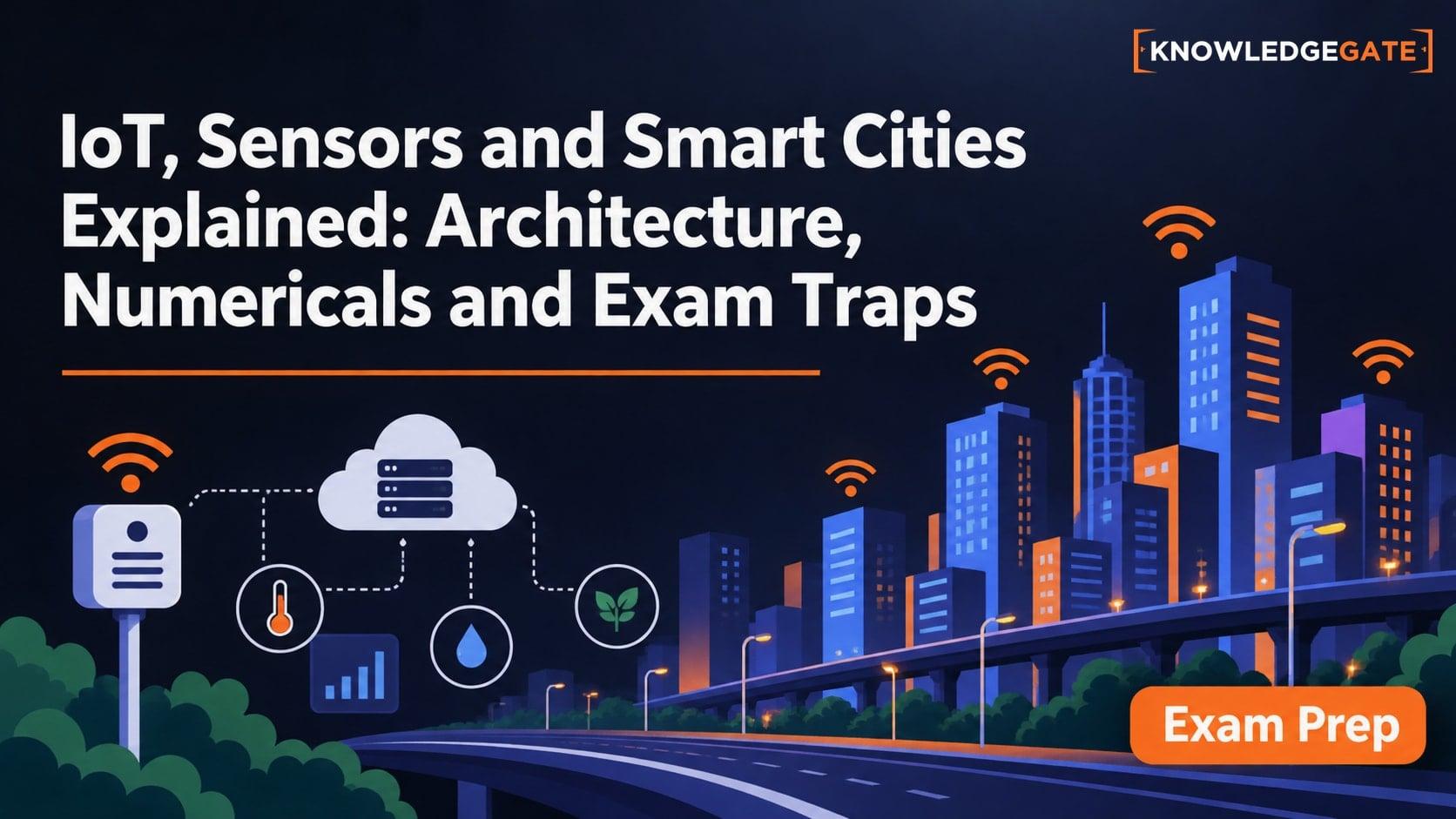
IoT, Sensors and Smart Cities Explained: Architecture, Numericals and Exam Traps
Learn the role of every IoT block, separate common sensor terms, and solve a 120-node streetlighting numerical covering data, energy and hysteresis.
Updated 31 Oct 20266 min readTeaching Recruitment (Computer Science)

Grid Computing and Blockchain Explained: Worked Scheduling, Hash Chains and Exam Traps
Separate grid computing from blockchain, then practise capacity-aware scheduling and trace how an altered block breaks a toy hash chain.
Updated 30 Oct 20266 min readTeaching Recruitment (Computer Science)
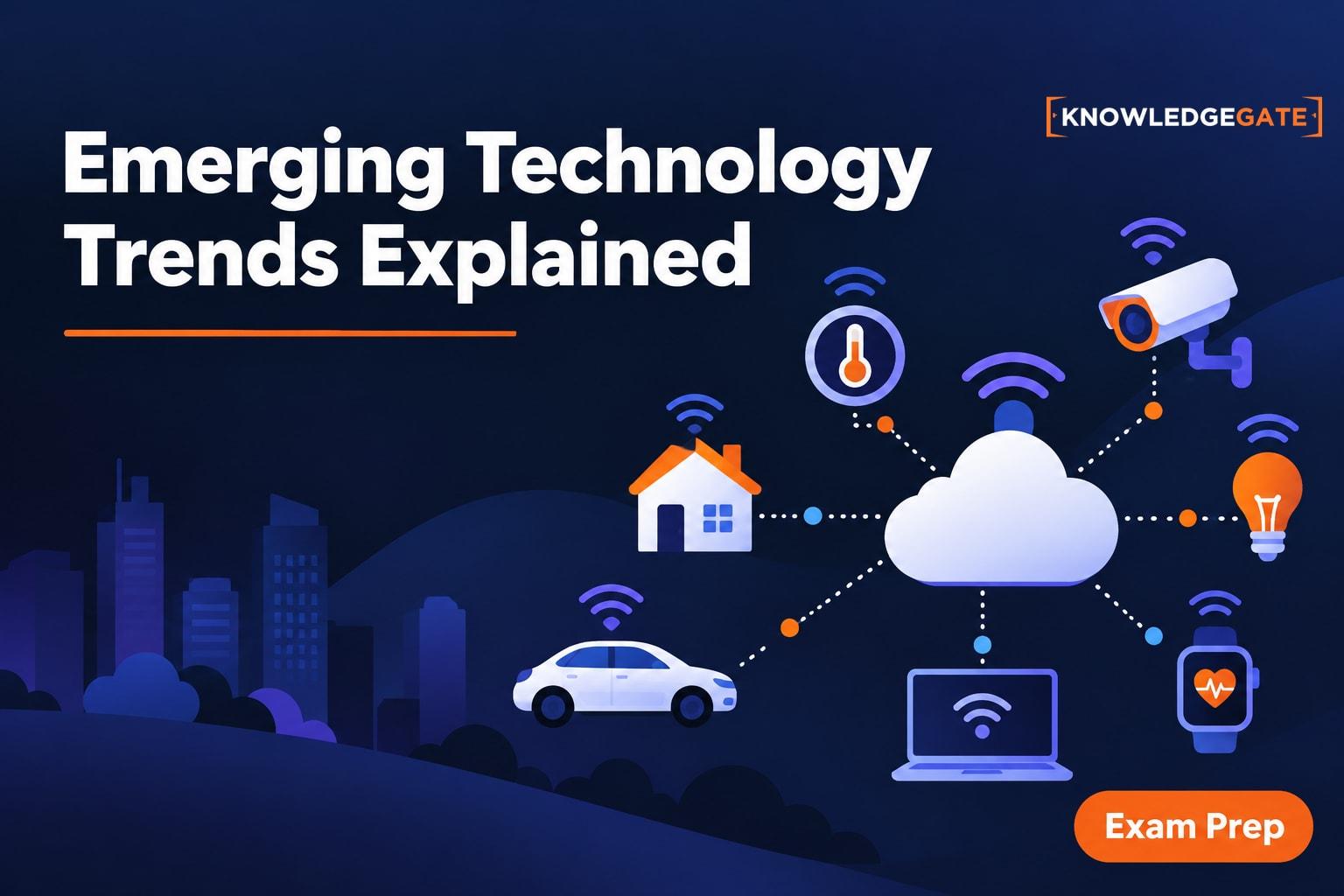
Emerging Technology Trends Explained: Concepts and a Worked IoT Example
Separate IoT, edge, cloud, AI, blockchain, 5G, big data and AR/VR by the job each performs. Then follow a smart-irrigation stack and verify its 75% payload reduction.
Updated 29 Oct 20265 min readTeaching Recruitment (Computer Science)

e-Governance Portals Explained: Service Models, Workflow and Worked Metrics
Learn how portals fit within e-governance, classify G2C, G2B, G2G and G2E interactions, trace a certificate workflow and calculate service metrics.
Updated 30 Oct 20266 min readTeaching Recruitment (Computer Science)

PowerPoint Slides and Views Explained: A Worked Deck and Exam Traps
Learn what each PowerPoint view does, then trace a deck through reordering, duplication and hiding. The worked example separates slide count from show count.
Updated 26 Oct 20265 min readTeaching Recruitment (Computer Science)

Office Mixed Concepts Explained: Access, Clipboard, File Formats and Exam Traps
Learn how Word, Excel, PowerPoint and Access differ, then trace six learner records through a query, an export, a linked chart and a static picture.
Updated 25 Oct 20265 min readTeaching Recruitment (Computer Science)
MS Word Basics: Editing, Formatting, a Worked Document and Exam Traps
Learn how Word applies commands to characters, paragraphs, pages and files. Build an ICT revision plan, audit every state change and avoid common exam traps.
Updated 23 Oct 20266 min readTeaching Recruitment (Computer Science)

Excel Functions and Charts Explained: Formulas, a Worked Sheet and Exam Traps
Learn how Excel formulas, references and charts work by building one mock-test worksheet from scratch. Every output is calculated and every common trap has a fix.
Updated 19 Oct 20265 min readTeaching Recruitment (Computer Science)

Digital Society Explained: Core Concepts, a Worked Inclusion Audit and Exam Patterns
Learn to separate access, skills and outcomes, audit digital inclusion with a worked funnel, apply data minimisation and solve common exam cases.
Updated 15 Oct 20266 min readTeaching Recruitment (Computer Science)