Teaching Recruitment (Computer Science)
DSSSB, KVS, NVS, EMRS, RSSB and state PGT/TGT Computer Science exam strategy and explainers.
53 articles in this topic
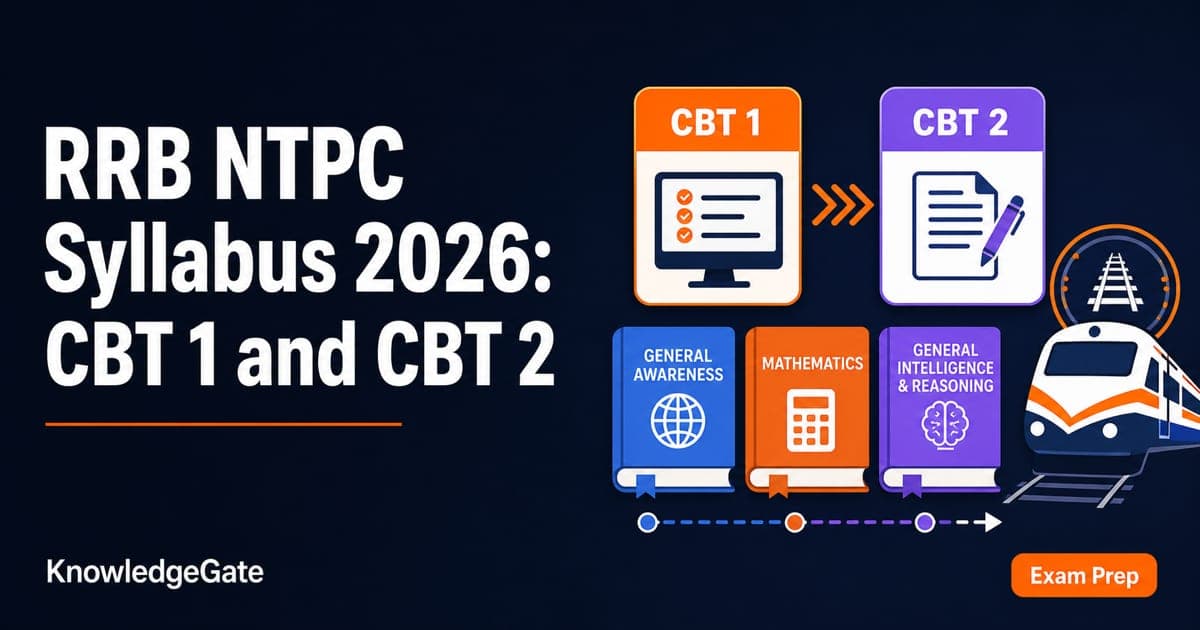
RRB NTPC Syllabus 2026: CBT 1 and CBT 2 Topics Decoded, and What Changes Between Stages
CBT 1 and CBT 2 share the same three subjects. See what changes in depth, purpose and post level, then prepare one syllabus that scales across both stages.
Updated 1 Aug 20265 min readTeaching Recruitment (Computer Science)
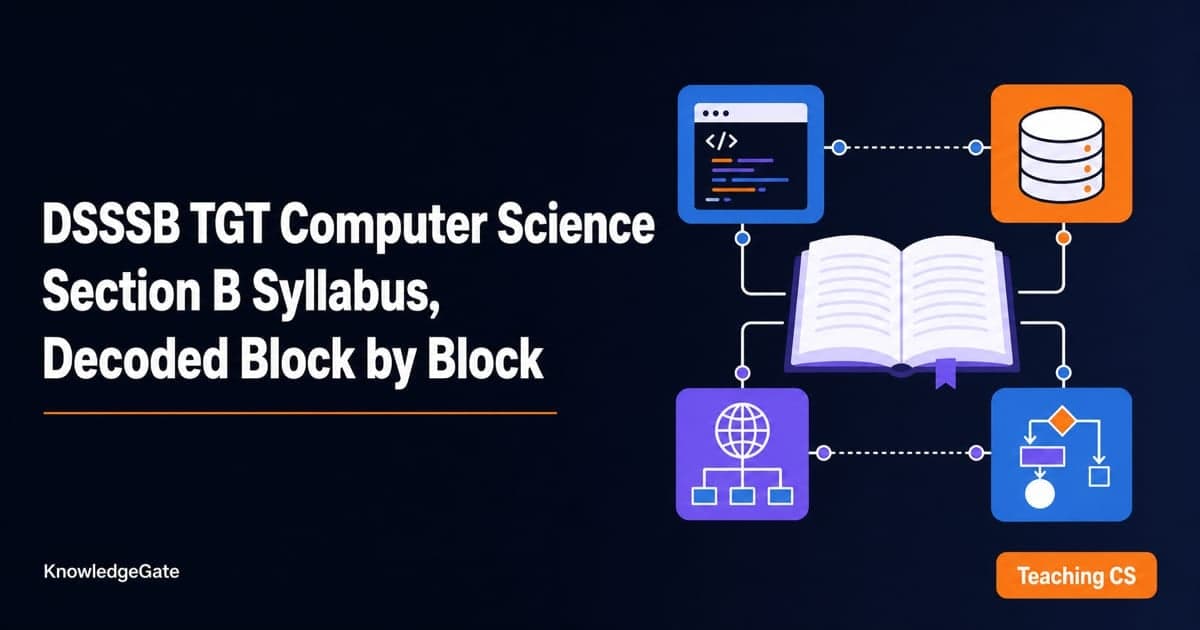
DSSSB TGT Computer Science Section B Syllabus, Decoded Block by Block
Turn the long Section B topic list into seven teachable clusters. See what each core CS block contains, where to place the lighter areas and how to revise it.
Updated 30 Jul 20266 min read282 viewsTeaching Recruitment (Computer Science)
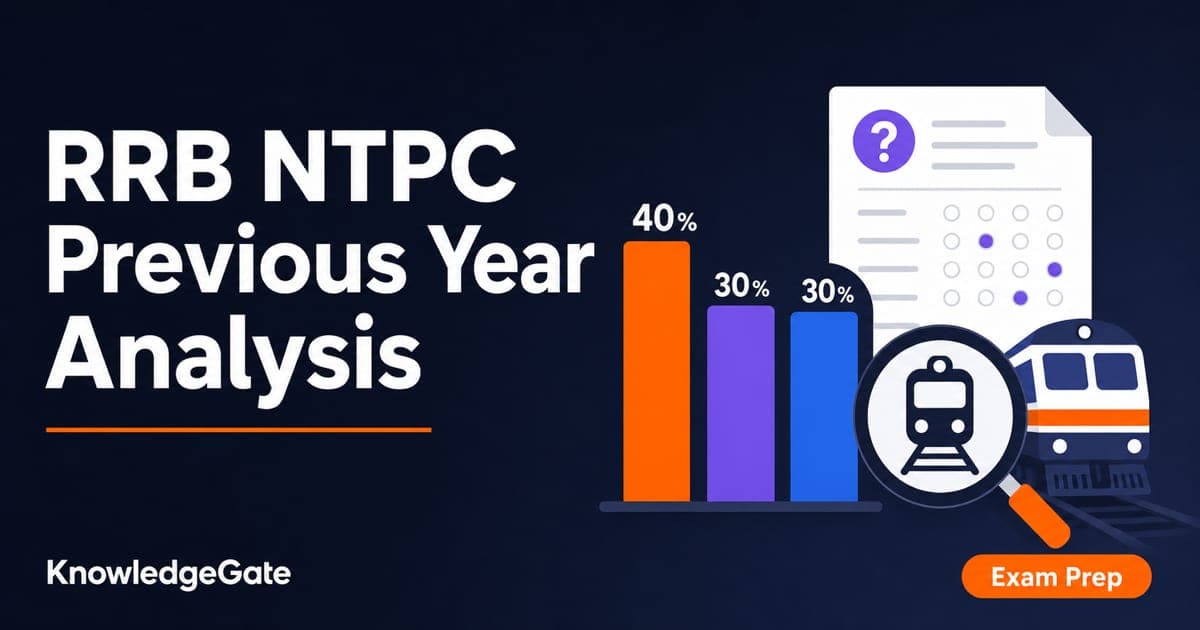
RRB NTPC Previous Year Analysis: Why General Awareness Dominates the Topic Split
Use the recurring section and topic pattern from past RRB NTPC papers to protect high-yield General Awareness, arithmetic and Reasoning preparation.
Updated 29 Jul 20266 min readTeaching Recruitment (Computer Science)
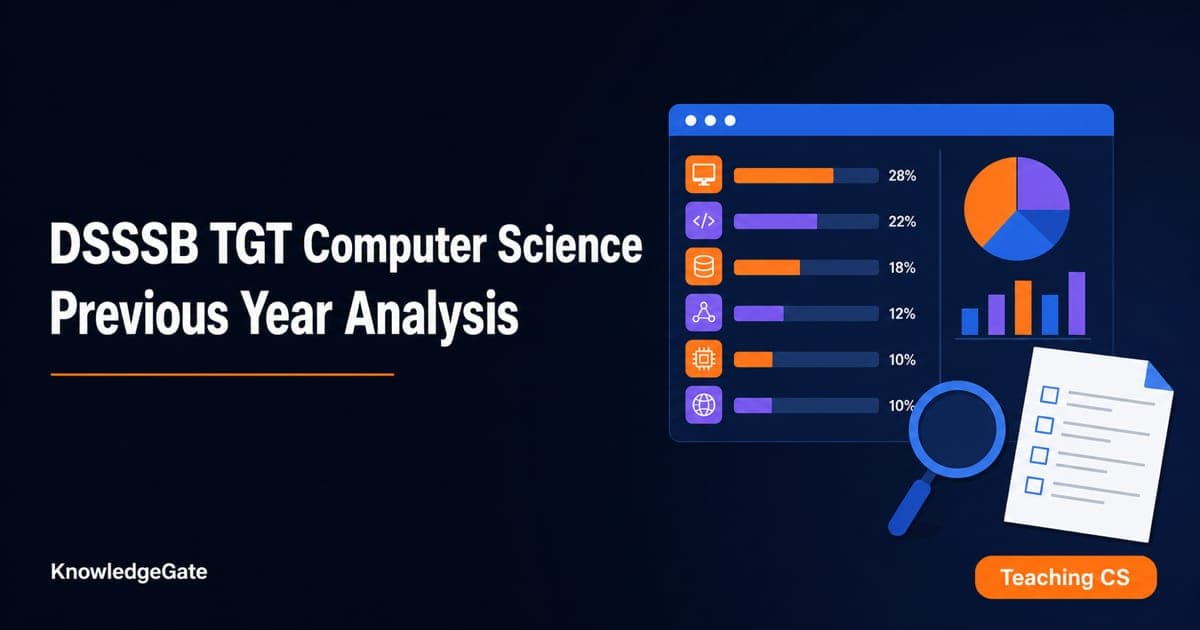
DSSSB TGT Computer Science Previous Year Analysis: Which CS Topics Carry the Marks
Use past DSSSB CS questions as a study-order signal, not a prediction. This analysis groups recurring topic blocks and turns them into a practical practice loop.
Updated 25 Jul 20266 min read1.2k viewsTeaching Recruitment (Computer Science)
RRB NTPC Eligibility and Exam Pattern: Levels, Posts and the Selection Stages Explained
Work out whether you belong in the undergraduate or graduate post band, then trace the CBT, post-specific test, document and medical stages that follow.
Updated 22 Jul 20265 min read115 viewsTeaching Recruitment (Computer Science)
DSSSB TGT Computer Science Eligibility and Exam Pattern: One Tier, Negative Marking and Qualification Rules
Eligibility runs through a Computer Science degree plus a recognised teacher-training qualification, and selection is one CBT with Section A, Section B and negative marking.
20 Jul 20266 min read120 viewsTeaching Recruitment (Computer Science)
MS Office and digital classroom tools for CS teaching exams
Word, Excel and PowerPoint core features, shared shortcuts and formula basics, plus digital classroom tools, taught the way DSSSB and KVS ICT sections test them for computer science teaching posts.
Updated 18 Jul 20265 min readTeaching Recruitment (Computer Science)
Computer fundamentals for teaching exams: generations, hardware and software
A survey of computer fundamentals for TGT and PGT computer science: the generations of computers, CPU and memory organization, number systems basics, and software categories, with how each is examined.
Updated 25 Jul 20265 min read93 viewsTeaching Recruitment (Computer Science)
Web technologies for teaching exams: HTML, HTTP and the internet explained
Web technologies for teaching CS exams: HTML basics, the client-server model, HTTP and URLs, DNS, static versus dynamic pages, and web-authoring tools.
Updated 18 Jul 20265 min readTeaching Recruitment (Computer Science)
OOP for CS teaching exams: classes, inheritance and polymorphism explained
OOP for teaching CS exams: encapsulation, abstraction, inheritance and polymorphism, plus constructors and access specifiers, with a worked class example.
Updated 18 Jul 20266 min readTeaching Recruitment (Computer Science)
ICT for teaching exams: computer fundamentals, internet and e-learning
ICT for teaching exams explained: hardware and software basics, input and output devices, the internet and e-mail, and e-learning tools tested in DSSSB, KVS.
Updated 26 Jul 20266 min readTeaching Recruitment (Computer Science)
Which teaching Computer Science exam should you target? A decision guide
A decision guide for CS graduates choosing a teaching exam: pick by eligibility, post level, region and calendar across DSSSB, KVS, EMRS and RSSB posts.
10 Jul 20265 min readTeaching Recruitment (Computer Science)