

CTET & UPTET
Paper choice, pedagogy, CDP and revision guides for CTET and UPTET teaching eligibility aspirants.
86 articles in this topic
Concept of Growth and Development MCQs: 10 Solved Questions for Teaching Exams
Is becoming taller the same as becoming more capable? Solve ten questions on growth, developmental principles, motor skills and play, then use the explanations to identify your mistakes.
Updated 20 Nov 20267 min readCTET & UPTET
NCF 2005 for CTET: Key Recommendations and Classroom Question Traps
Turn NCF 2005 recommendations into classroom decisions. Use an equal-strip fractions lesson to understand constructivism, diagnose mistakes and choose useful assessment responses.
Updated 19 Nov 20266 min readCTET & UPTET
Principles of English Language Teaching: CTET Notes with Classroom Examples
Turn language-teaching principles into classroom decisions. Follow a library timetable lesson, understand purposeful error correction, and practise matching an activity to its learning objective.
Updated 18 Nov 20265 min readCTET & UPTET
REET Science Solved Questions: Explain the Concept and Eliminate Traps
Work through five original science questions, explain why the distractors fail, and turn each answer into a classroom explanation. Includes pressure and efficiency calculations.
Updated 17 Nov 20265 min readCTET & UPTET
CTET Syllabus: Paper 1 and Paper 2 Section-by-Section Study Map
Choose the correct CTET paper, map every section into content and pedagogy tasks, and use worked examples plus a seven-day diagnostic to set priorities.
Updated 16 Nov 20265 min readCTET & UPTET
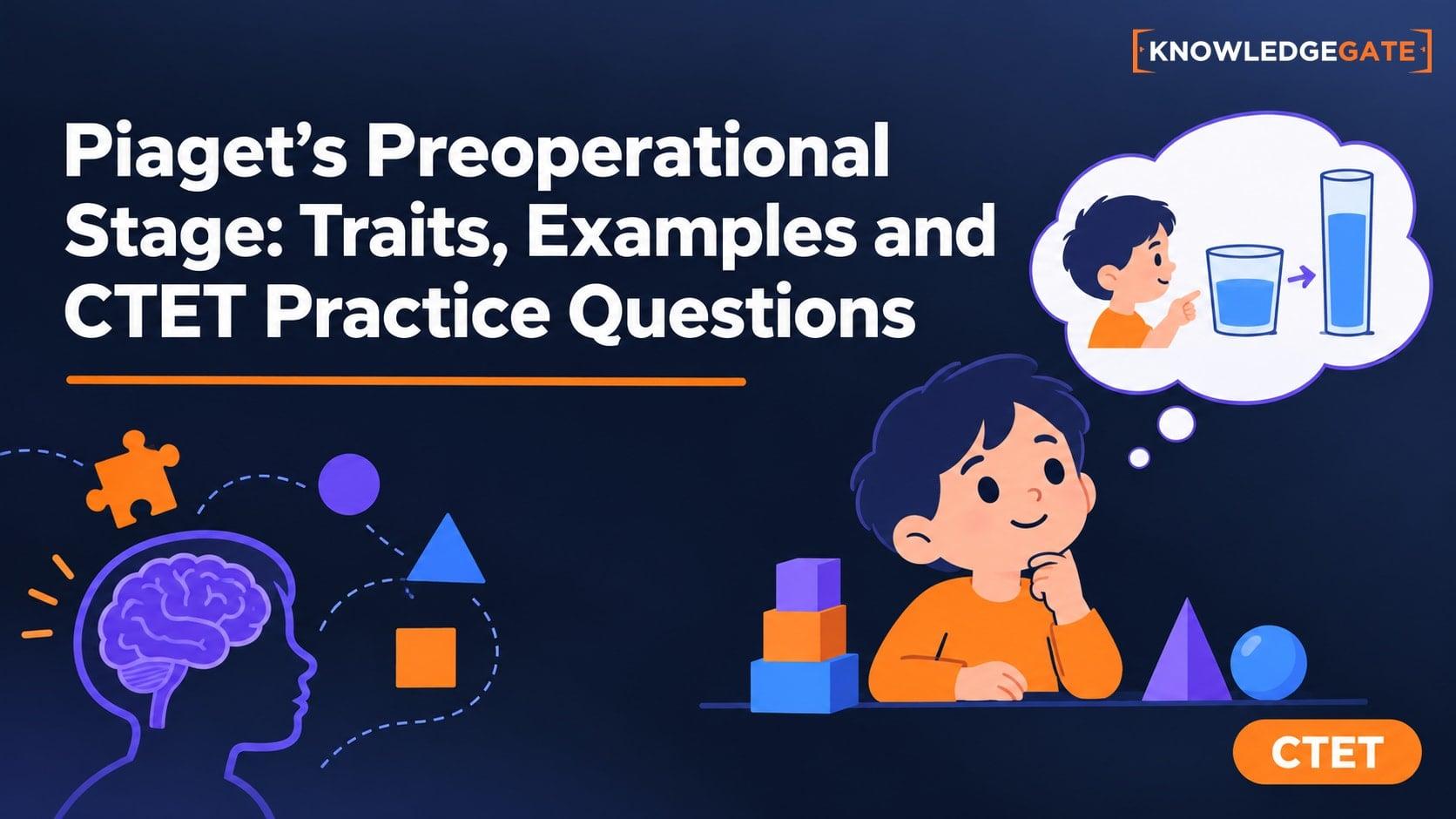
Piaget’s Preoperational Stage: Traits, Examples and CTET Practice Questions
A four-year-old can use a box as a bus yet still judge quantity by height. Learn the key preoperational traits, teach them through concrete activity and test the distinctions with original practice items.
Updated 16 Nov 20266 min readCTET & UPTET
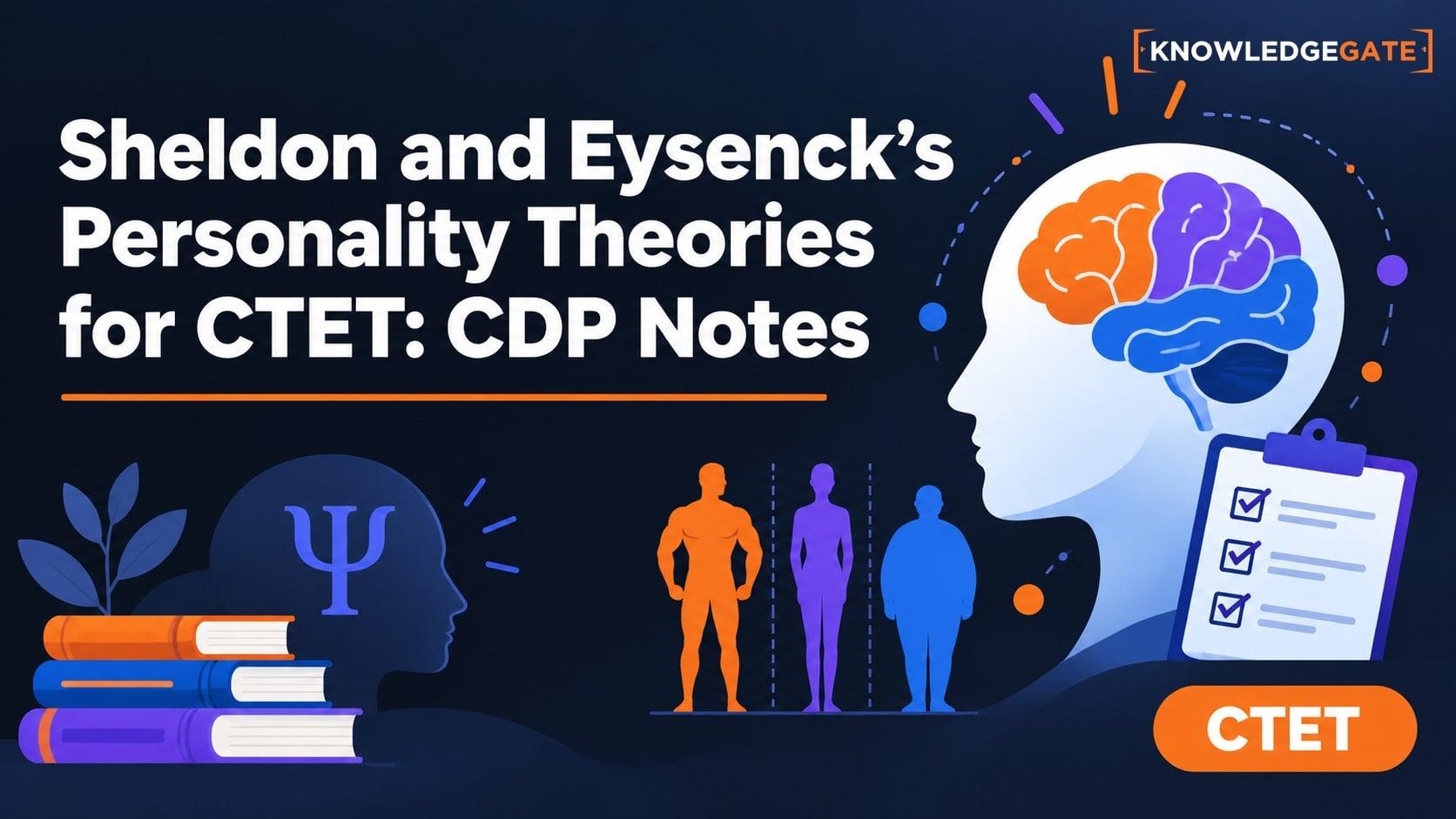
Sheldon and Eysenck’s Personality Theories for CTET: CDP Notes
Separate Sheldon’s body-based somatotypes from Eysenck’s behavioural dimensions. Use the mapping tables, solved E-N quadrant, and quick exam cues to revise both theories responsibly.
Updated 15 Nov 20265 min readCTET & UPTET

EVS in CTET: Scope and Relation to Science and Social Studies, with a Worked Example
Understand integrated EVS through its six themes, three contributing lenses and a four-household water inquiry that separates evidence from assumption.
Updated 14 Nov 20266 min readCTET & UPTET
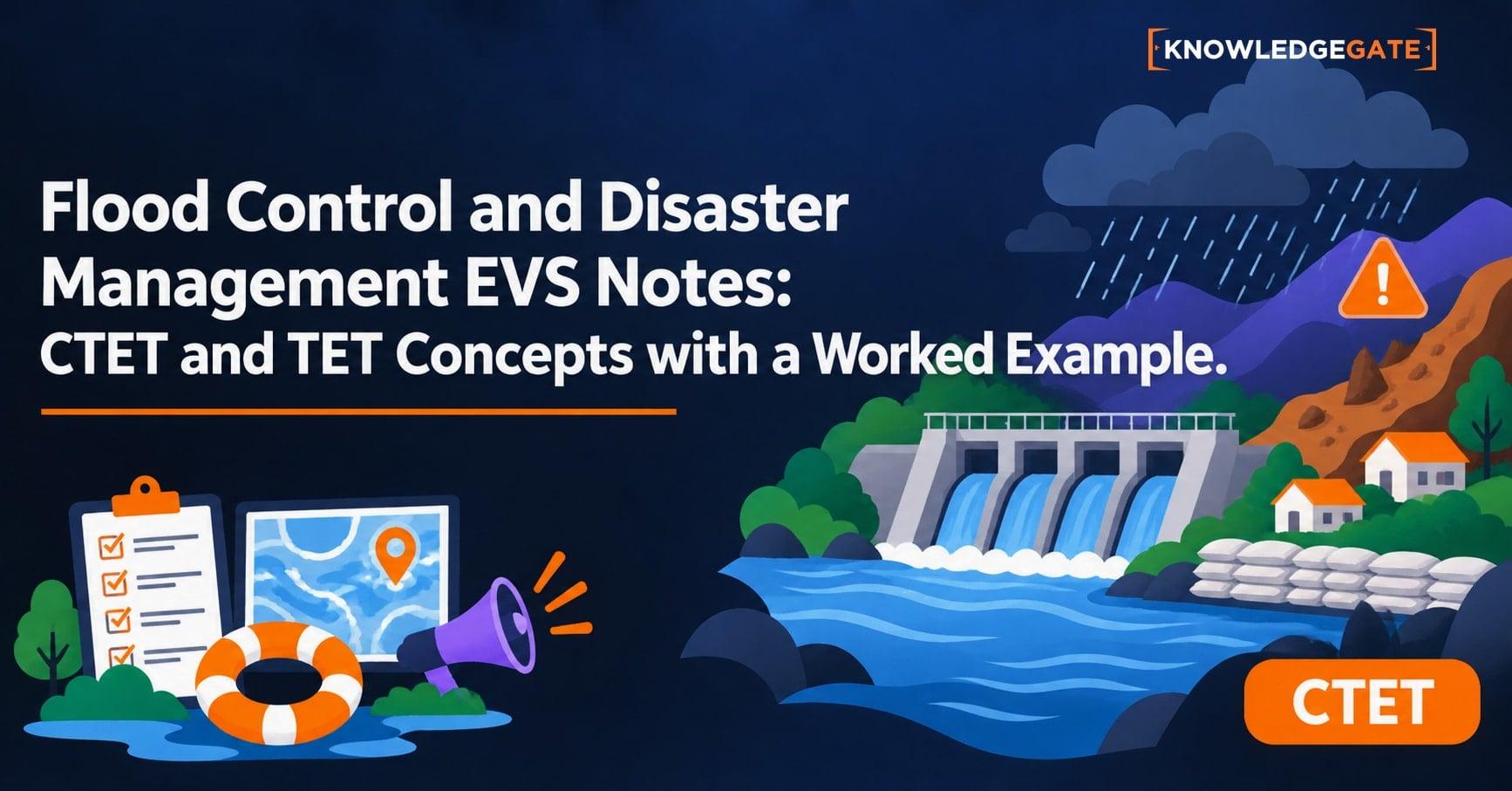
Flood Control and Disaster Management EVS Notes: CTET and TET Concepts with a Worked Example
Learn how floods turn into disasters, match controls to causes, sort actions across four management phases, and check a fictional evacuation plan step by step.
Updated 13 Nov 20266 min readCTET & UPTET
CTET Eligibility for Engineering Graduates: B.Tech, B.Ed and D.El.Ed Rules
A B.Tech is only one part of a CTET qualification route. See how B.Ed, D.El.Ed, graduation and post-graduation marks affect Paper I and Paper II.
Updated 12 Nov 20264 min readCTET & UPTET
EVS for CTET: Environmental Studies vs Environmental Education with Worked Examples
Learn how primary-stage EVS differs from Environmental Education, how six themes integrate around a child's life, and how to solve evidence-led CTET choices.
Updated 11 Nov 20265 min readCTET & UPTET
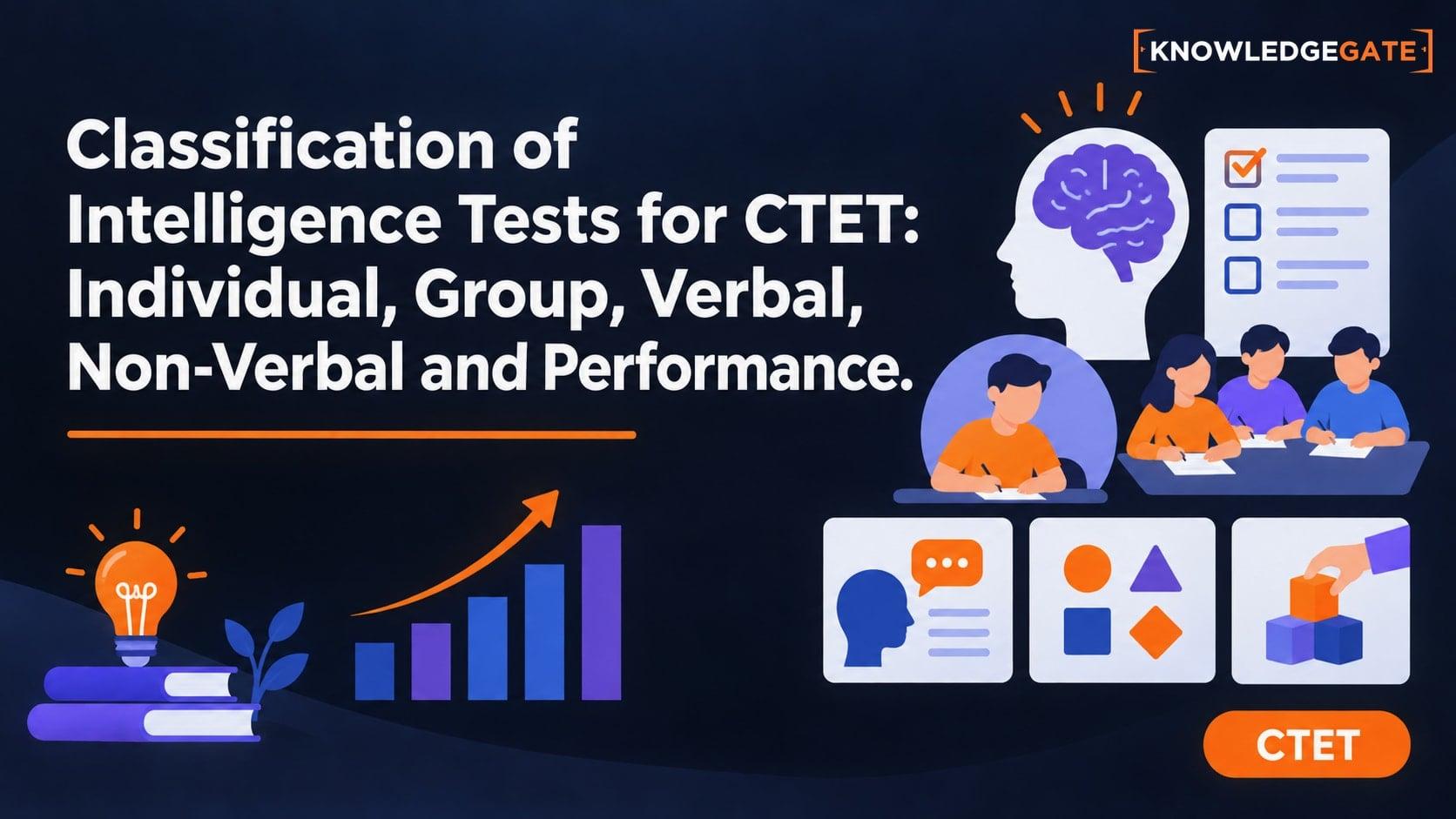
Classification of Intelligence Tests for CTET: Individual, Group, Verbal, Non-Verbal and Performance
Learn to separate individual and group administration from verbal, non-verbal and performance tasks, then apply the rule to CTET-style questions.
Updated 10 Nov 20266 min readCTET & UPTET