Engineering Mathematics
50 articles in this topic
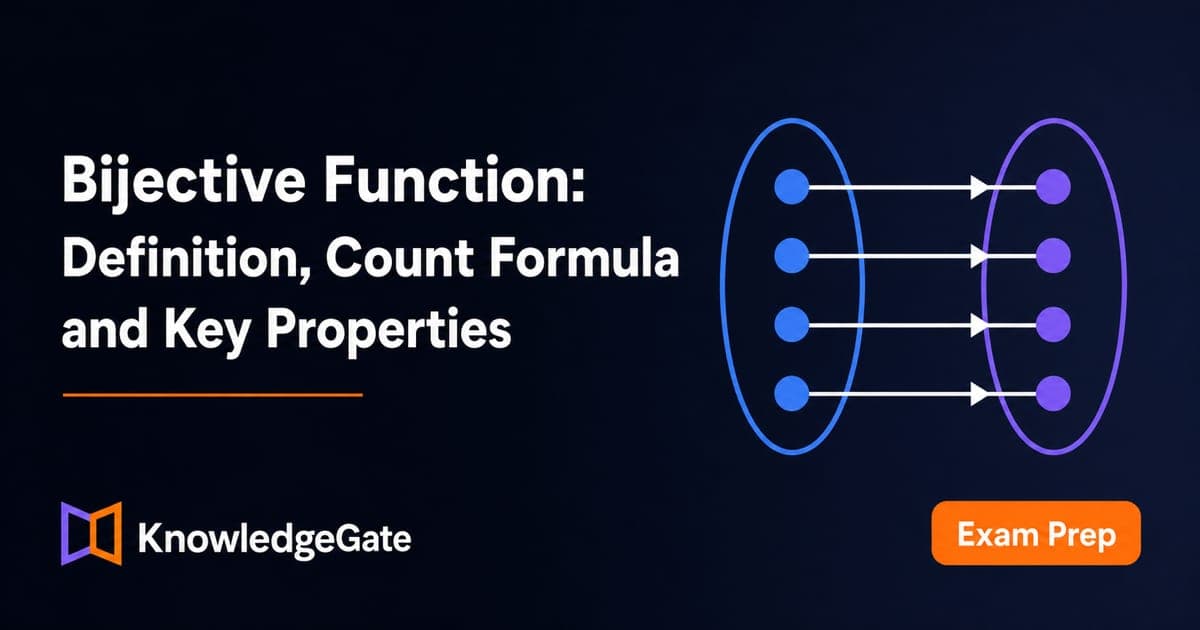
Bijective Function: Definition, Count Formula and Key Properties
Learn how to identify a bijection, construct its inverse, count bijections between finite sets, and avoid the mistakes that commonly spoil exam answers.
Updated 18 Sep 20266 min readEngineering Mathematics
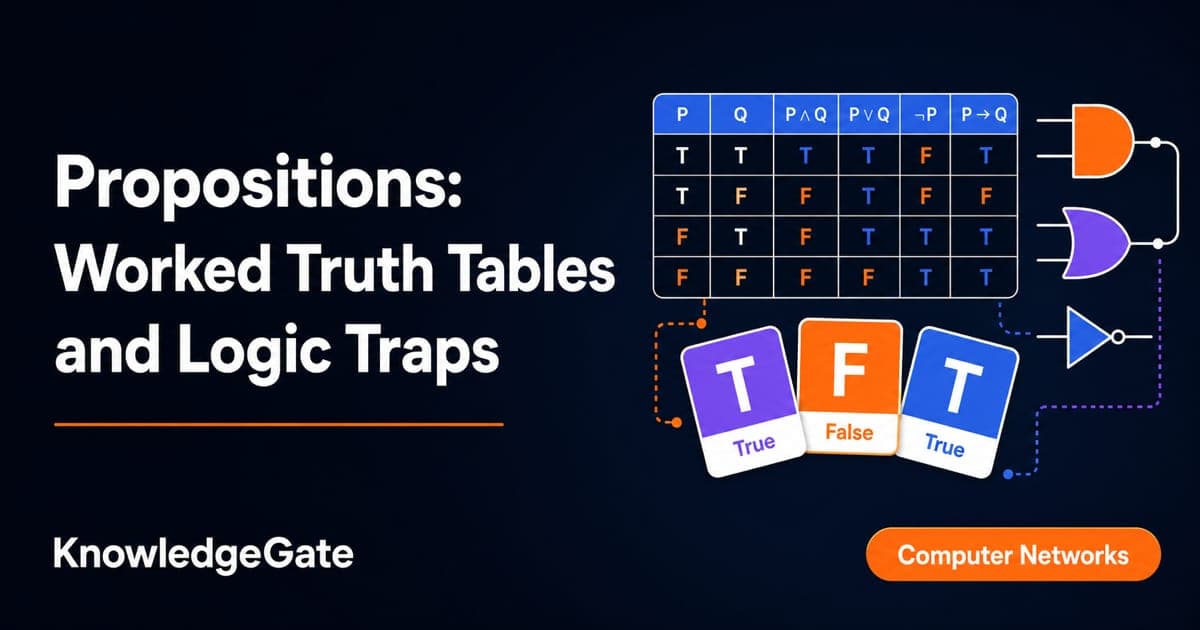
Questions and Practice Problems on Propositions: Worked Truth Tables and Logic Traps
Translate proposition statements reliably, build truth tables, test equivalence and validity, find satisfying assignments, and repair common logic errors.
Updated 16 Sep 20266 min readEngineering Mathematics
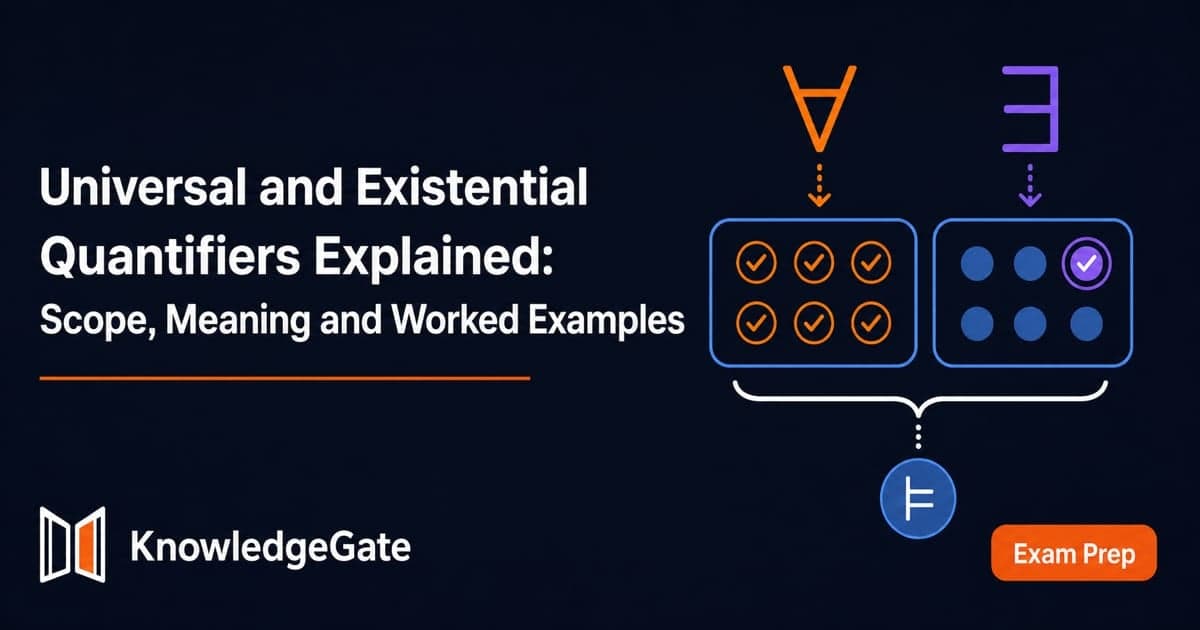
Universal and Existential Quantifiers Explained: Scope, Meaning and Worked Examples
Learn universal and existential quantifiers from zero, then evaluate finite domains, translations, negations and nested formulas with worked examples.
Updated 15 Sep 20266 min read70 viewsEngineering Mathematics

Quantifiers and Predicate Logic Practice Problems: Step-by-Step Solutions
Solve quantifier problems with a fixed routine, then test it on complete predicate tables, nested relations, negations and five rapid checks.
Updated 13 Sep 20265 min read53 viewsEngineering Mathematics
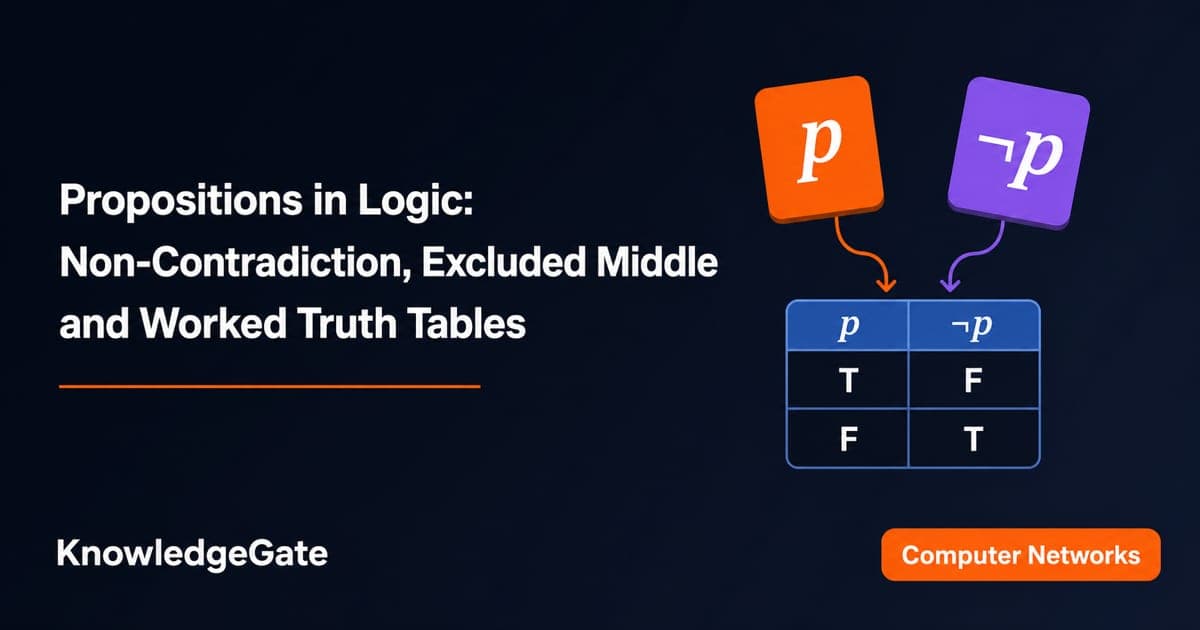
Propositions in Logic: Non-Contradiction, Excluded Middle and Worked Truth Tables
Learn what makes a sentence a proposition, how excluded middle differs from non-contradiction, and how both laws simplify a larger truth table.
Updated 12 Sep 20266 min readEngineering Mathematics
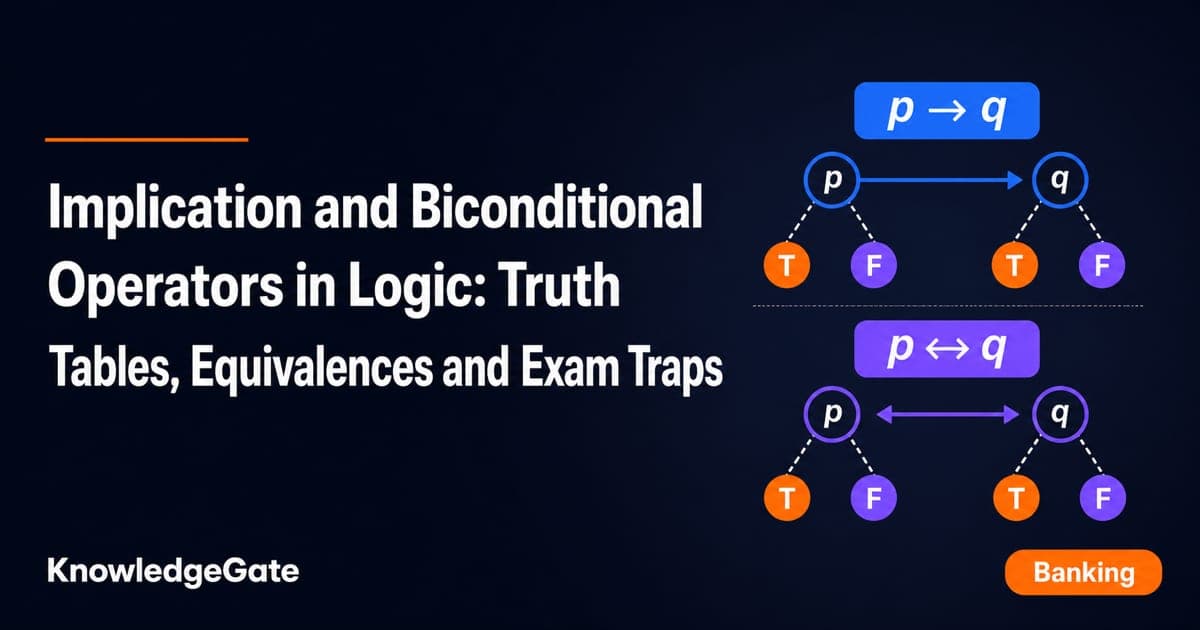
Implication and Biconditional Operators in Logic: Truth Tables, Equivalences and Exam Traps
Learn why implication fails only at T to F, how biconditional checks matching values, and how to translate if, only if, necessary and sufficient. Includes a full contrapositive proof and fast exam checks.
Updated 10 Sep 20265 min read65 viewsEngineering Mathematics
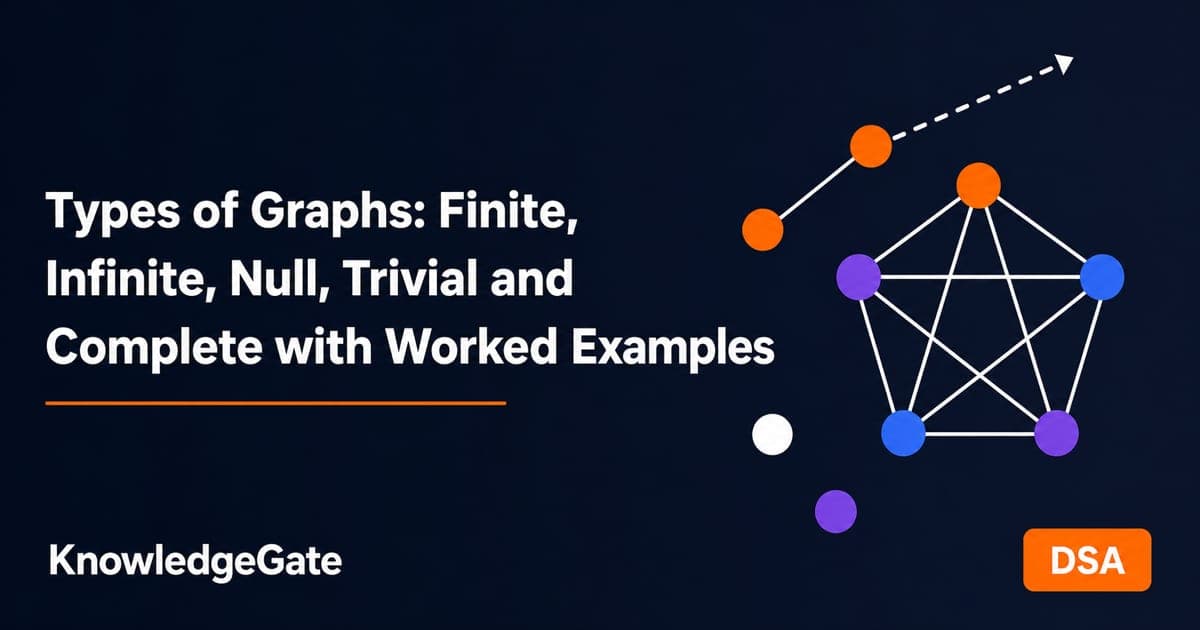
Types of Graphs: Finite, Infinite, Null, Trivial and Complete with Worked Examples
Learn why graph labels can overlap. Classify five fixed examples using order, size, degree, adjacency and complements, then test the method in a speed drill.
Updated 9 Sep 20265 min readEngineering Mathematics

Subgroup Definition and Verification Techniques: Worked Examples for GATE CS
Learn how to prove or reject a subgroup using the definition, the one-step test, operation tables, and precise counterexamples. The main worked example checks {0,3,6,9} in Z_12.
Updated 8 Sep 20266 min readEngineering Mathematics
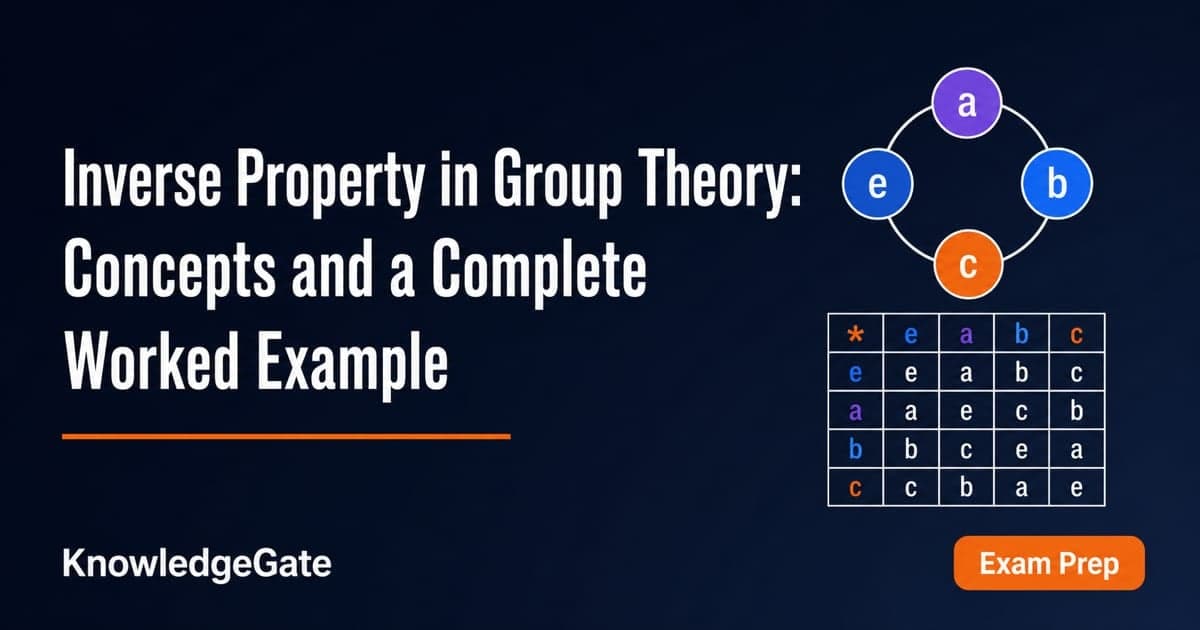
Inverse Property in Group Theory: Concepts and a Complete Worked Example
Learn how identity and inverses work in a group, then prove and use every inverse in U(10). Includes a Cayley table, solved equations, and key inverse laws.
Updated 6 Sep 20266 min readEngineering Mathematics
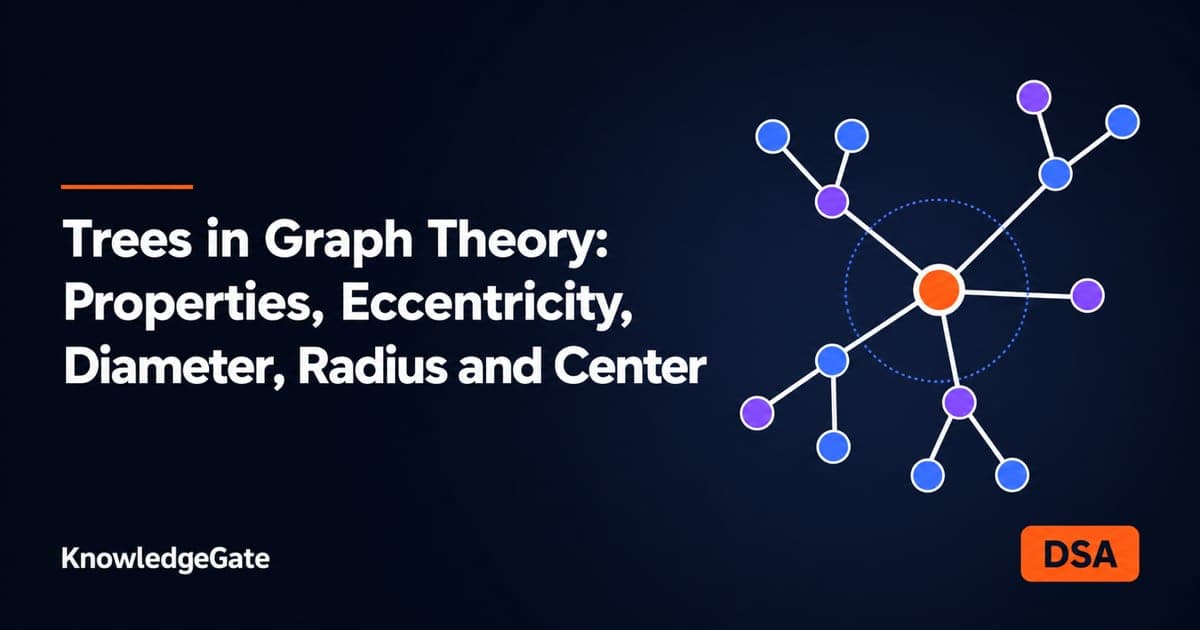
Trees in Graph Theory: Properties, Eccentricity, Diameter, Radius and Center
Build every important tree metric from one eight-vertex example, then use structural tests, a distance table and the two-sweep method to check each answer.
Updated 5 Sep 20265 min readEngineering Mathematics
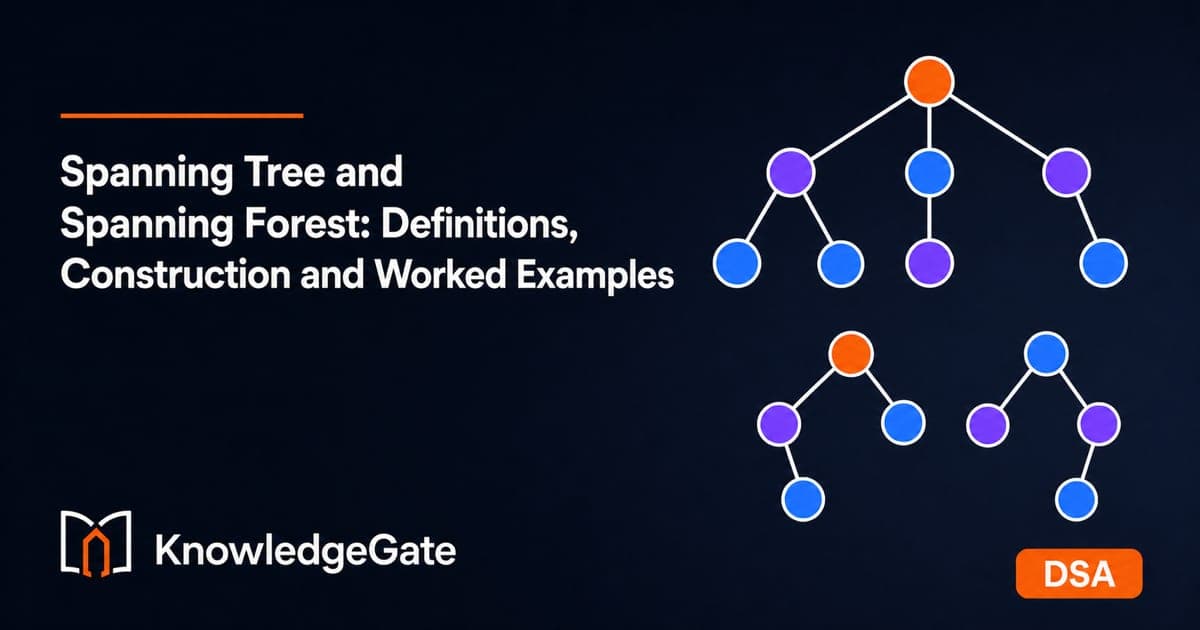
Spanning Tree and Spanning Forest: Definitions, Construction and Worked Examples
Learn how to construct and verify spanning trees and forests, why their edge counts are n - 1 and n - c, and when edge weights change the question.
Updated 3 Sep 20266 min readEngineering Mathematics
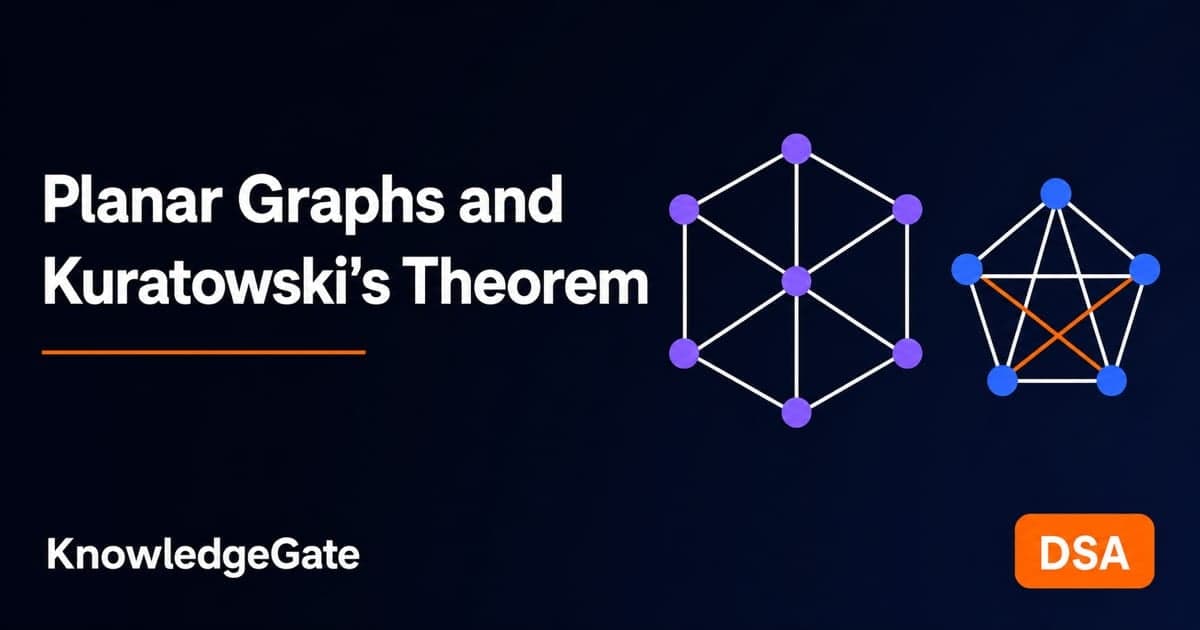
Planar Graphs and Kuratowski's Theorem: Homeomorphism, K5 and K3,3 Worked Examples
Learn why crossings and edge bounds can mislead, then expose a hidden K3,3 by suppressing degree-two vertices in a complete worked example.
Updated 1 Sep 20266 min read61 viewsEngineering Mathematics