CS Fundamentals
469 articles in this topic

Cyber Threats and Attacks Explained: Types, Worked DDoS Example and Exam Traps
Learn to separate threats, vulnerabilities, vectors and attacks, then apply the distinctions to a calculated DDoS scenario and exam-style questions.
Updated 10 Oct 20266 min readComputer Networks
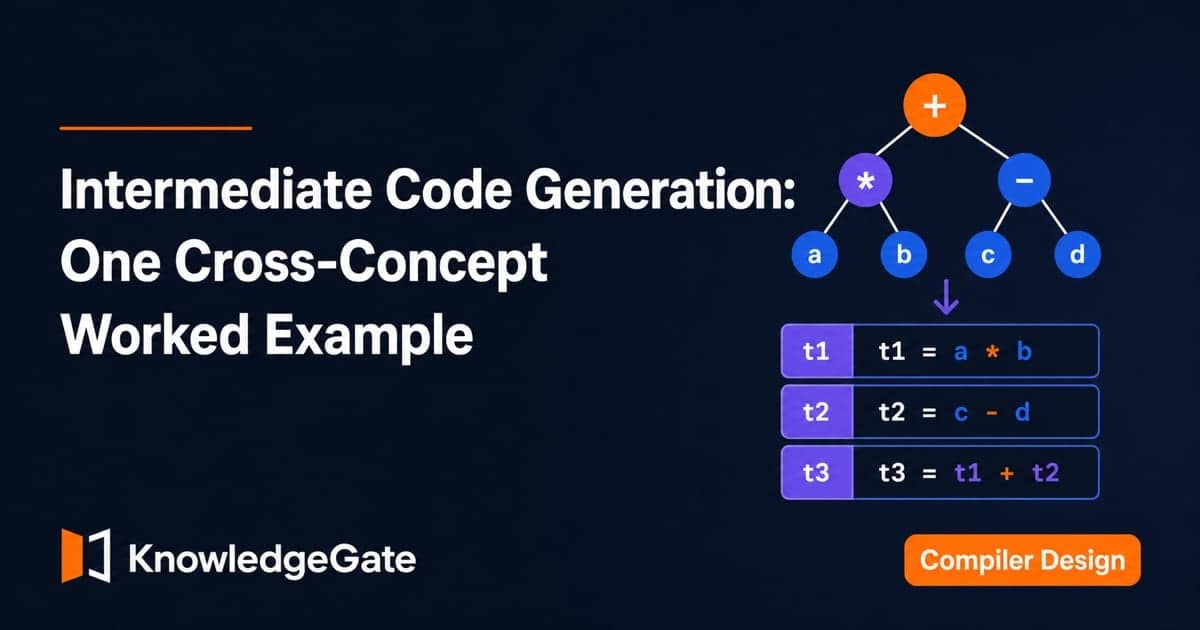
Intermediate Code Generation in Compiler Design: One Cross-Concept Worked Example
Carry one C-like fragment from its source facts to typed temporaries, three-address code, quadruples and a control-flow graph, with every value traced.
Updated 10 Oct 20266 min readCompiler Design
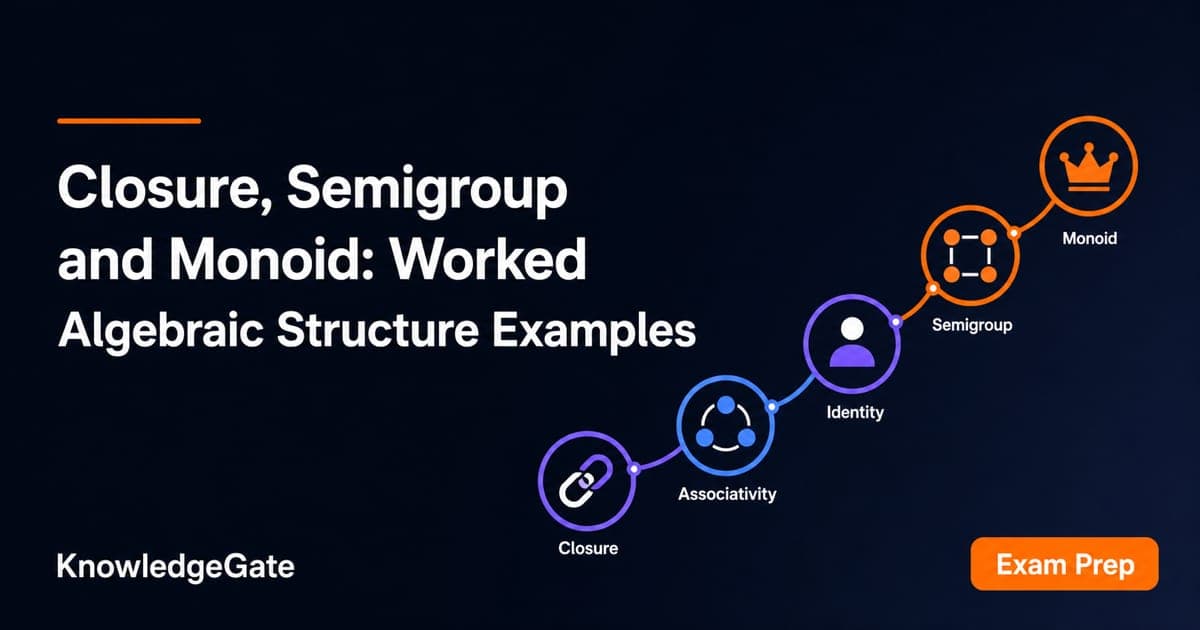
Closure, Semigroup and Monoid: Worked Algebraic Structure Examples
Learn a reliable order for testing closure, associativity and identity. Worked tables and counterexamples show exactly when a structure becomes a semigroup or monoid.
Updated 9 Oct 20266 min readEngineering Mathematics
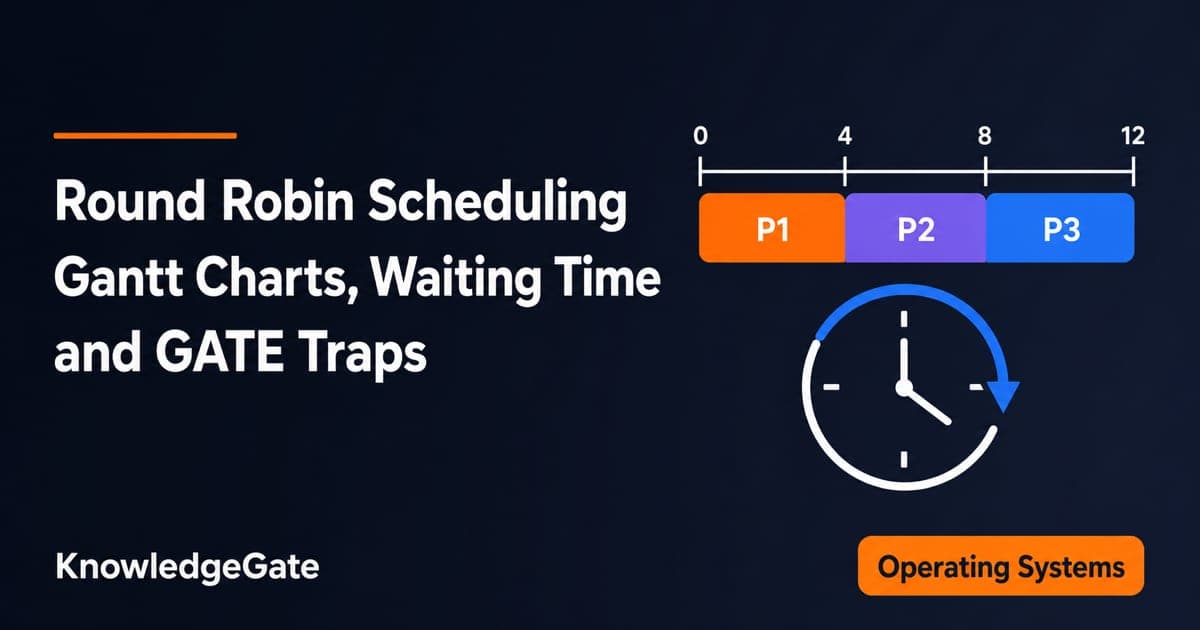
Round Robin Scheduling Explained: Gantt Charts, Waiting Time and GATE Traps
Learn a fixed Round Robin queue convention, trace staggered arrivals, calculate CT, TAT, WT and RT, and see how quantum size and context-switch cost change results.
Updated 9 Oct 20265 min read67 viewsOperating Systems
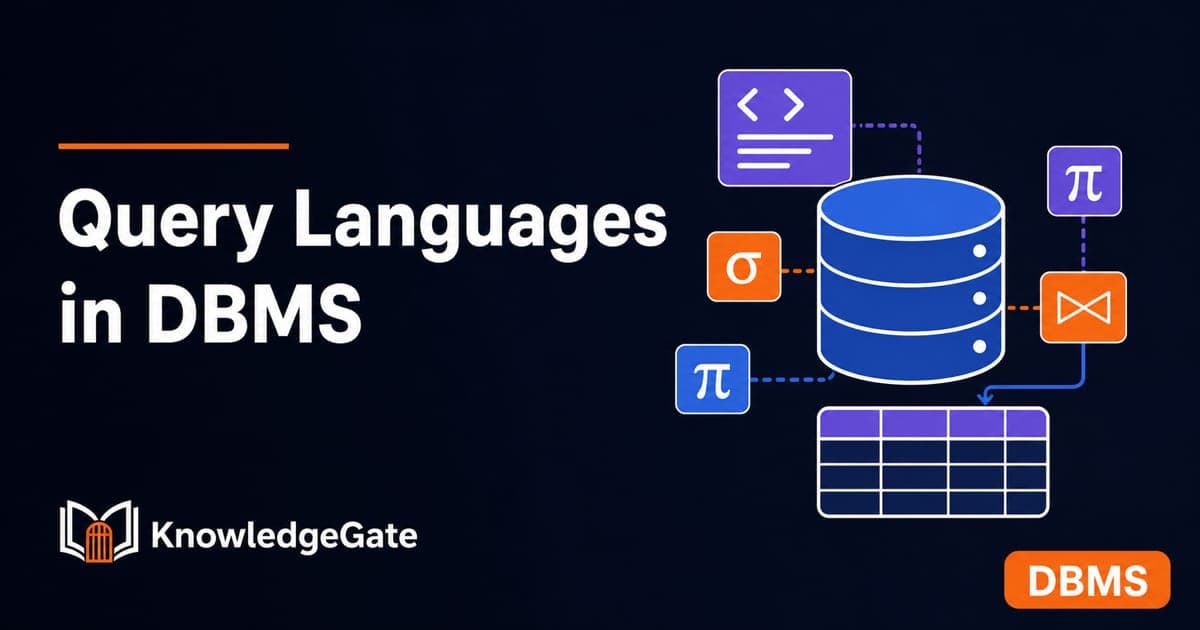
Query Languages in DBMS: Relational Algebra, SQL and a Worked Query
Follow one database request from plain English to relational algebra, intermediate relations, relational calculus and SQL, with every result traced.
Updated 9 Oct 20265 min readDBMS
NFA to DFA Conversion: Subset Construction, Worked Example, and Exam Traps
Learn subset construction by converting one three-state NFA row by row, checking the result with strings, and then minimising the reachable DFA.
Updated 9 Oct 20265 min read58 viewsTheory of Computation
Programmed I/O: Polling, CPU Utilisation, Worked Examples and GATE Question Patterns
Follow one programmed-input transfer from control write to data read, then calculate how many polls one word costs and what a longer poll period buys.
Updated 7 Oct 20266 min readComputer Organization & Architecture
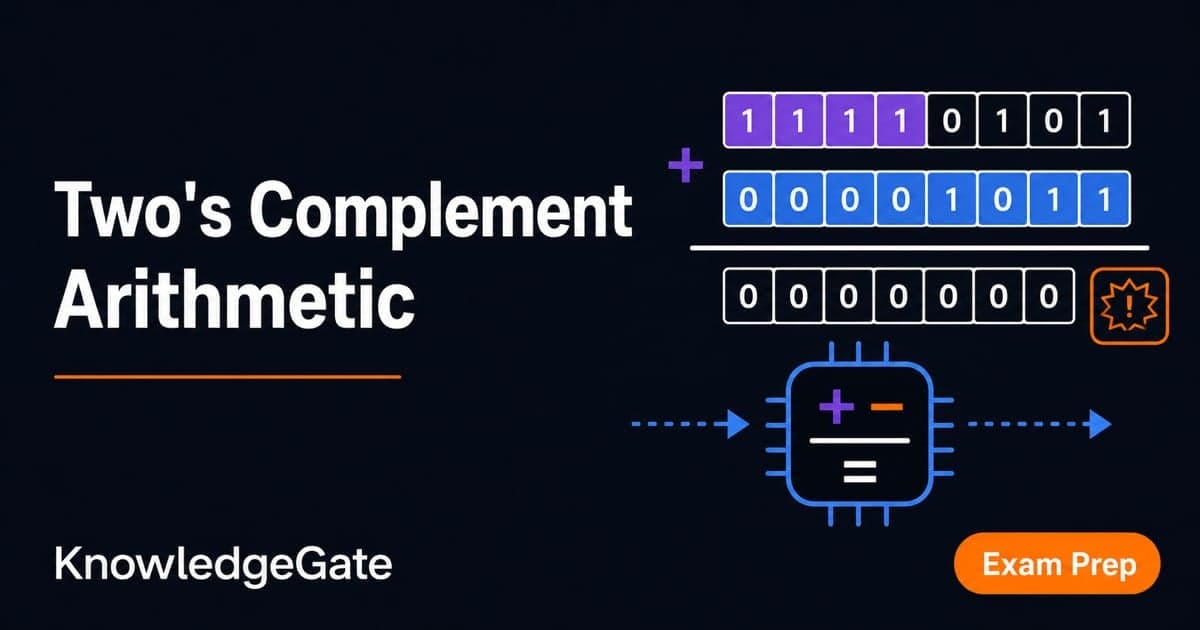
Two's Complement Arithmetic Explained: Signed Ranges, Subtraction, Overflow and Worked Examples
Build a reliable 8-bit method for encoding signed values, subtracting with complements, detecting overflow, extending signs and checking every result.
Updated 7 Oct 20266 min readDigital Logic
Functions in C: Syntax, Parameters and Worked Examples
Learn how C declarations, calls, and definitions fit together. Compile two complete programs, follow their values, and trace composition and recursion.
Updated 6 Oct 20266 min readC Programming & Data Structures
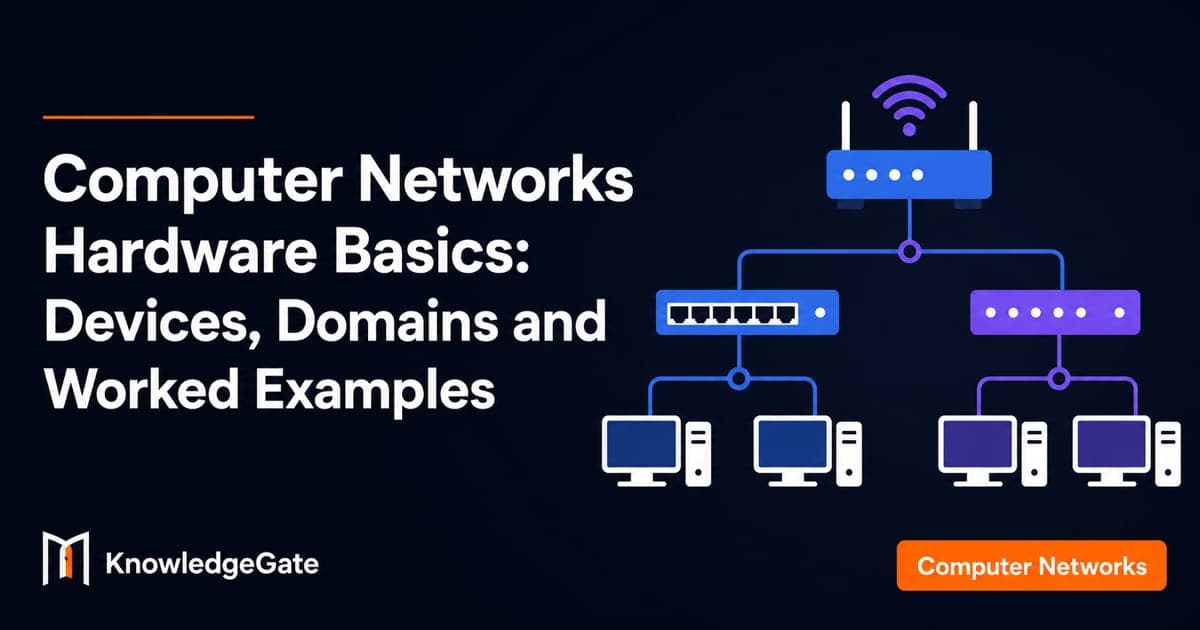
Computer Networks Hardware Basics: Devices, Domains and Worked Examples
Learn what hubs, switches, routers, gateways and access points actually do, then count network domains and trace frames through a two-LAN topology.
Updated 6 Oct 20266 min readComputer Networks
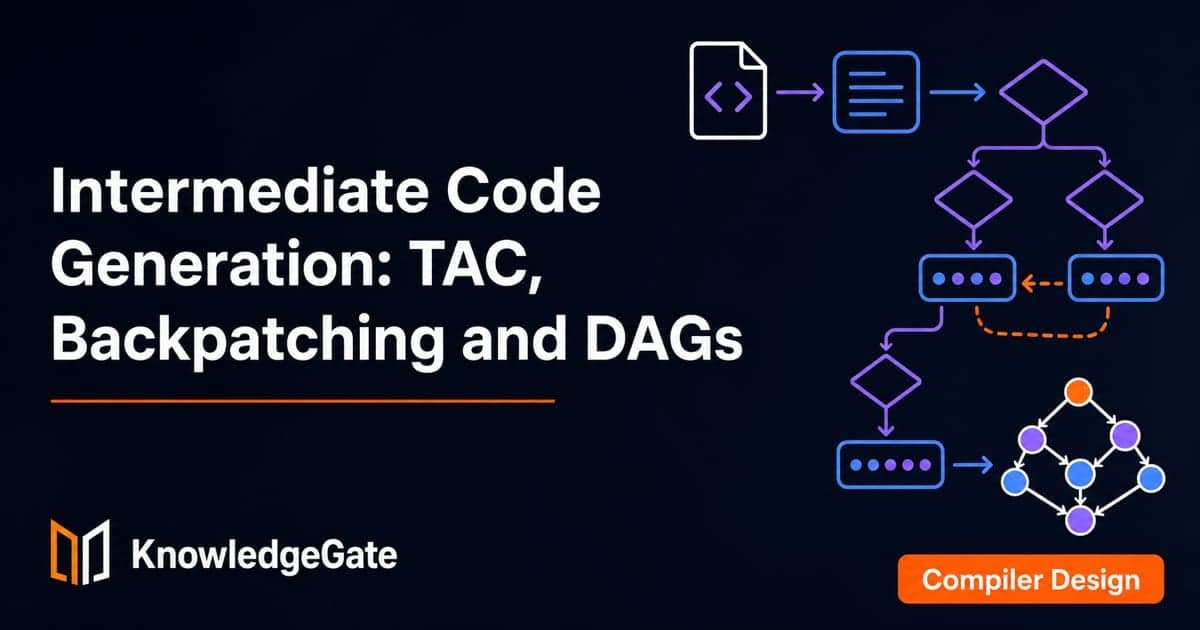
Intermediate Code Generation in Compiler Design: TAC, Backpatching and DAGs
Connect expressions, short-circuit control flow and local optimisation through a single worked translation, from source code to resolved TAC and a reusable DAG.
Updated 5 Oct 20265 min readCompiler Design
Classification of Finite and Infinite Groups: Orders, Cyclicity and Worked Examples
Learn how group axioms, group order, element order and generators classify finite and infinite groups through complete, checkable examples.
Updated 4 Oct 20266 min readEngineering Mathematics