UGC NET Computer Science
UGC NET Computer Science and Applications: exam structure, syllabus areas, and preparation strategy.
52 articles in this topic
Function Keys F1-F12 Explained: Uses, Worked Shortcut Map and Exam Traps
Learn what F1 through F12 do in named Windows and Microsoft application contexts, then solve a nine-command classification and avoid common modifier traps.
Updated 20 Oct 20266 min readUGC NET Computer Science
E-Waste Management Explained: Lifecycle, Worked Recovery Example and Exam Traps
Learn how e-waste moves from use to reuse, recycling and controlled residue. A hypothetical 600 kg batch shows how to close the mass balance and avoid denominator traps.
Updated 16 Oct 20266 min readUGC NET Computer Science
Data Protection, IPR and Open Source Explained: Two Worked Cases and Exam Traps
Separate privacy from security, match IP rights to software assets, and solve two numerical cases on data minimisation and mixed-licence releases.
Updated 12 Oct 20266 min readUGC NET Computer Science
Common Software & Tools MCQs: 12 Solved ICT Questions Explained
Attempt 12 previous-year ICT MCQs before reading concise explanations that separate applications, hardware, web tools, abbreviations, malware and operating systems.
8 Oct 20267 min readUGC NET Computer Science
ICT in Education MCQs: 12 Solved Questions on Digital Learning Tools
Solve 12 ICT in Education MCQs, then use clear explanations and a five-layer model to separate files, tools, platforms and public initiatives.
Updated 3 Oct 20268 min readUGC NET Computer Science
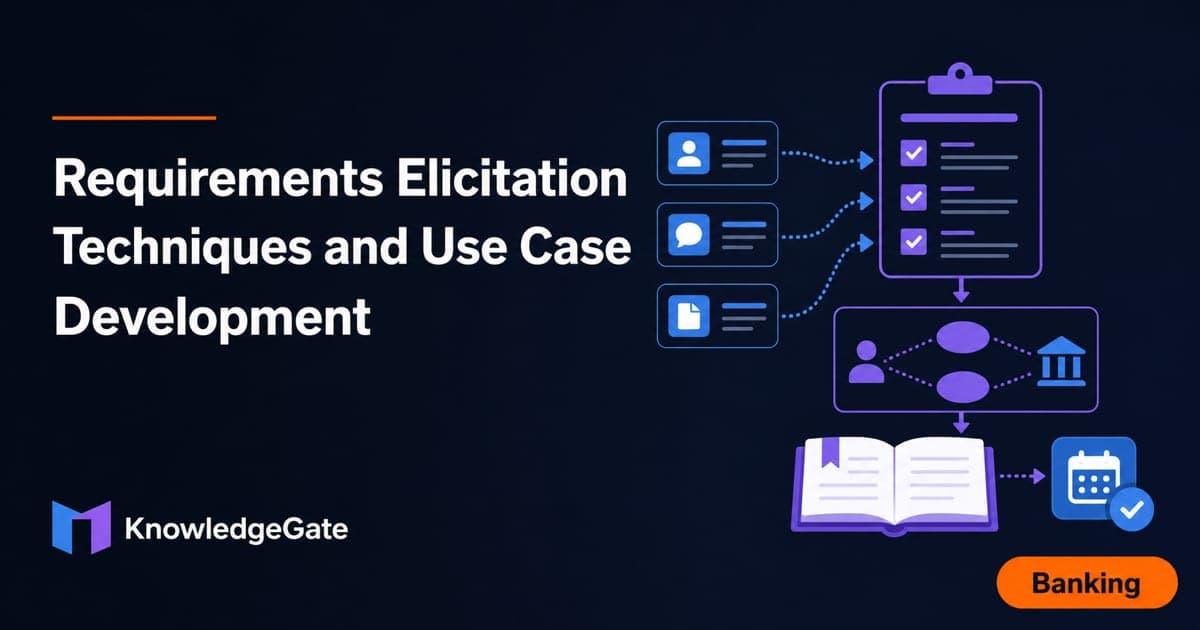
Requirements Elicitation Techniques and Use Case Development: Worked Library Example
Follow a fictional library reservation from interviews and observation through testable requirements, a UML use-case model, UC-07, and acceptance checks.
Updated 28 Sep 20266 min readUGC NET Computer Science
Quality Factors: McCall’s and ISO 9126 Models with a Worked Scoring Example
Build both quality models around one maintainability audit. This guide maps their vocabulary, calculates McCall-style and ISO-style scores, and ends with exam-focused checks.
Updated 25 Sep 20265 min readUGC NET Computer Science
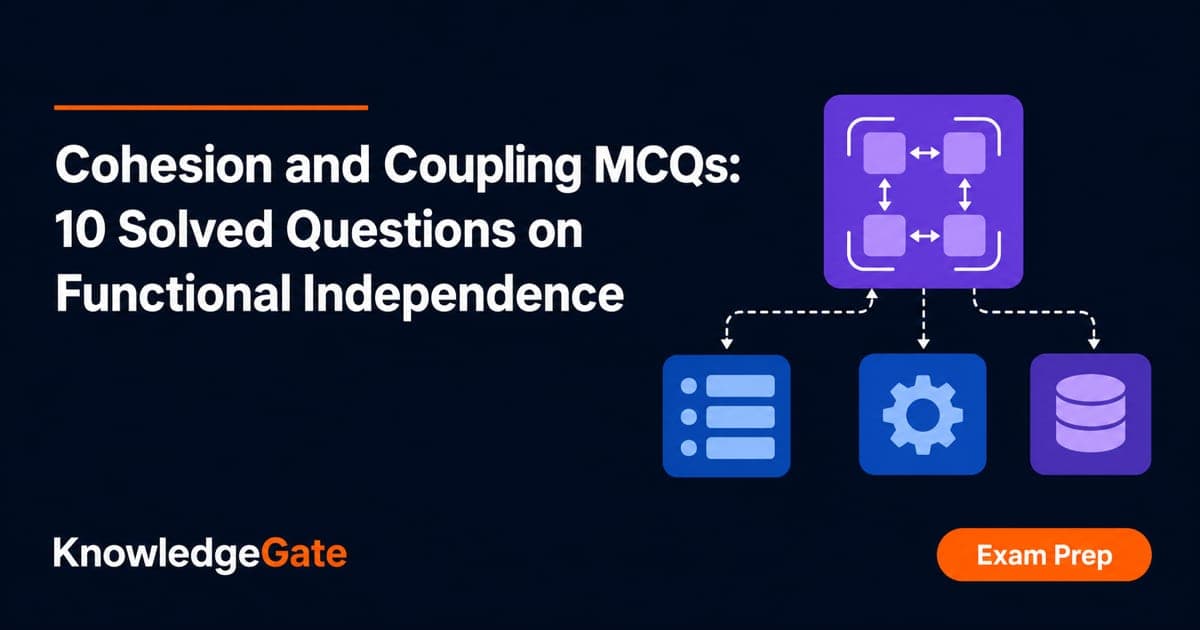
Cohesion and Coupling MCQs: 10 Solved Questions on Functional Independence
Practise 10 solved MCQs on cohesion, coupling, functional independence, module dependencies, and the distinctions that make closely matched options easier to separate.
Updated 24 Sep 20267 min readUGC NET Computer Science

Cryptography and Digital Security Technologies: Encryption, Hashes, Signatures and Mobile Security
Learn what encryption, hashes, MACs and signatures actually guarantee. Follow a full RSA calculation and map layered controls onto a mobile payment path.
Updated 23 Sep 20265 min readUGC NET Computer Science
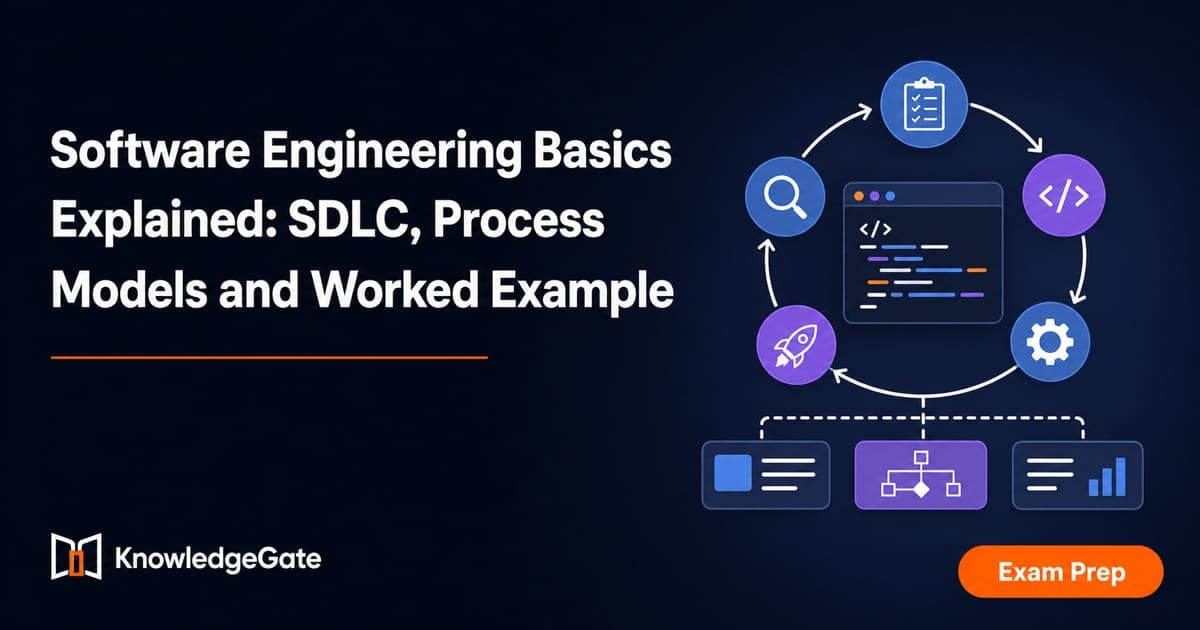
Software Engineering Basics Explained: SDLC, Process Models and Worked Example
Learn how software engineering extends beyond coding, how major process models differ, and how to choose and apply one in a constructed student portal project.
Updated 21 Sep 20266 min readUGC NET Computer Science
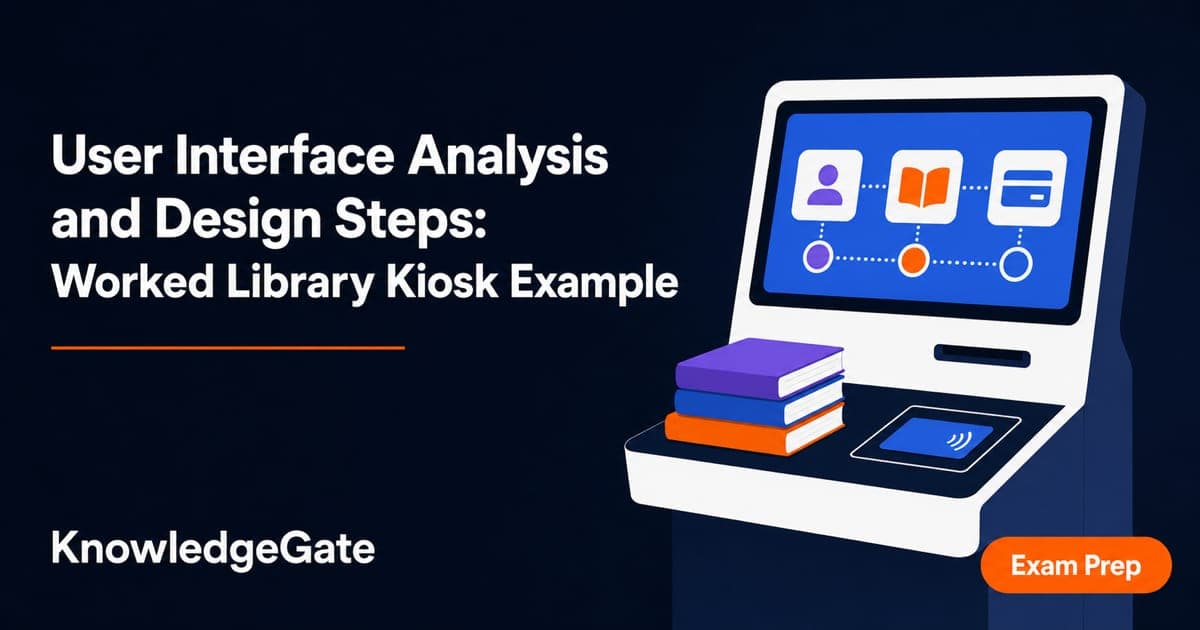
User Interface Analysis and Design Steps: Worked Library Kiosk Example
Follow one constructed college-library kiosk from user and task analysis to screen flows, error recovery and a measured prototype revision.
Updated 20 Sep 20266 min readUGC NET Computer Science
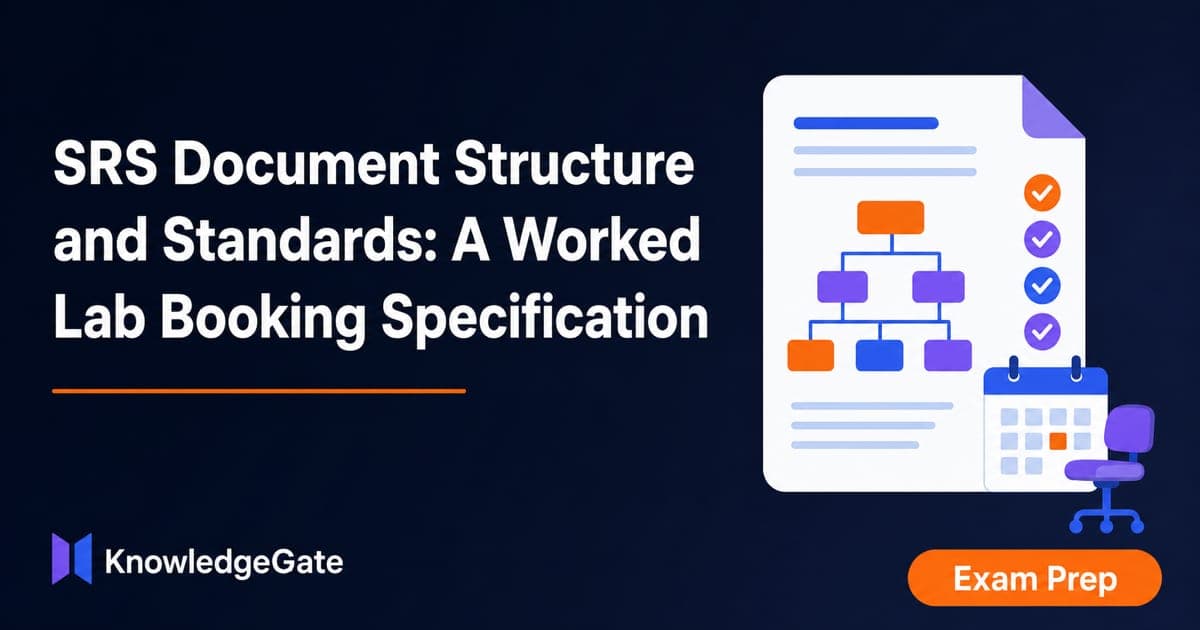
SRS Document Structure and Standards: A Worked Lab Booking Specification
Build a small campus lab booking SRS, turn vague statements into testable requirements, and trace each important requirement to a worked acceptance check.
Updated 19 Sep 20266 min readUGC NET Computer Science