Placement Preparation
Company exam patterns, aptitude routines, and coding-round prep for campus and off-campus hiring.
176 articles in this topic
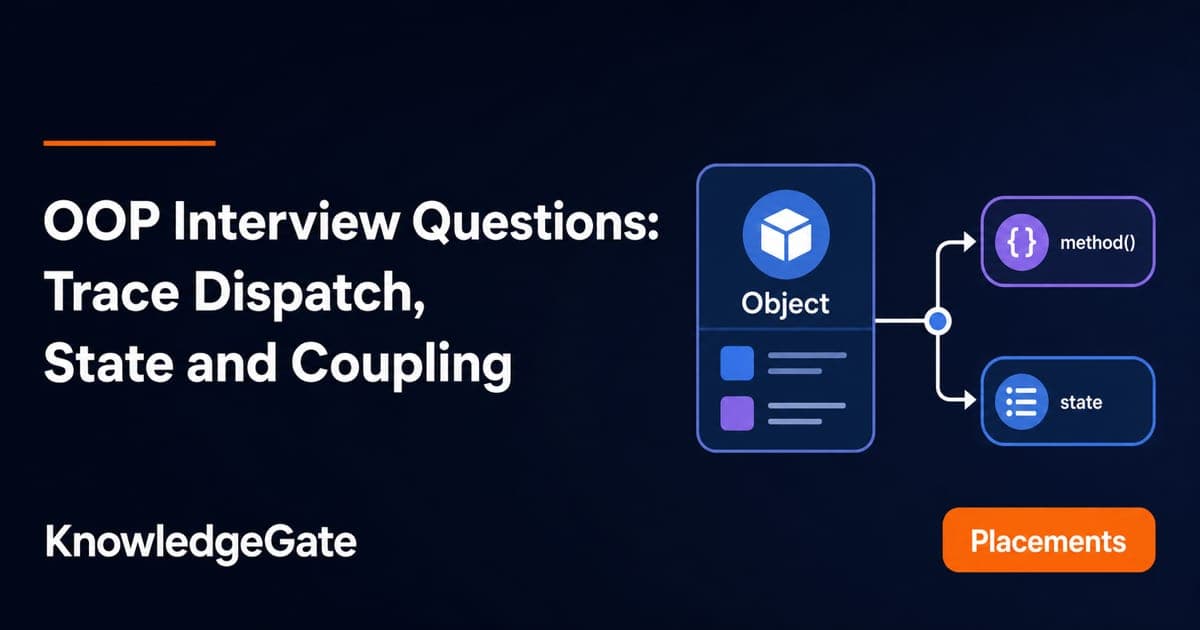
OOP Interview Questions: Trace Dispatch, State and Coupling
Trace one Wallet object through aliases and overridden calls, then use the same model to reason about invariants, substitutability and dependency design.
Updated 19 Sep 20266 min readInterview Corner
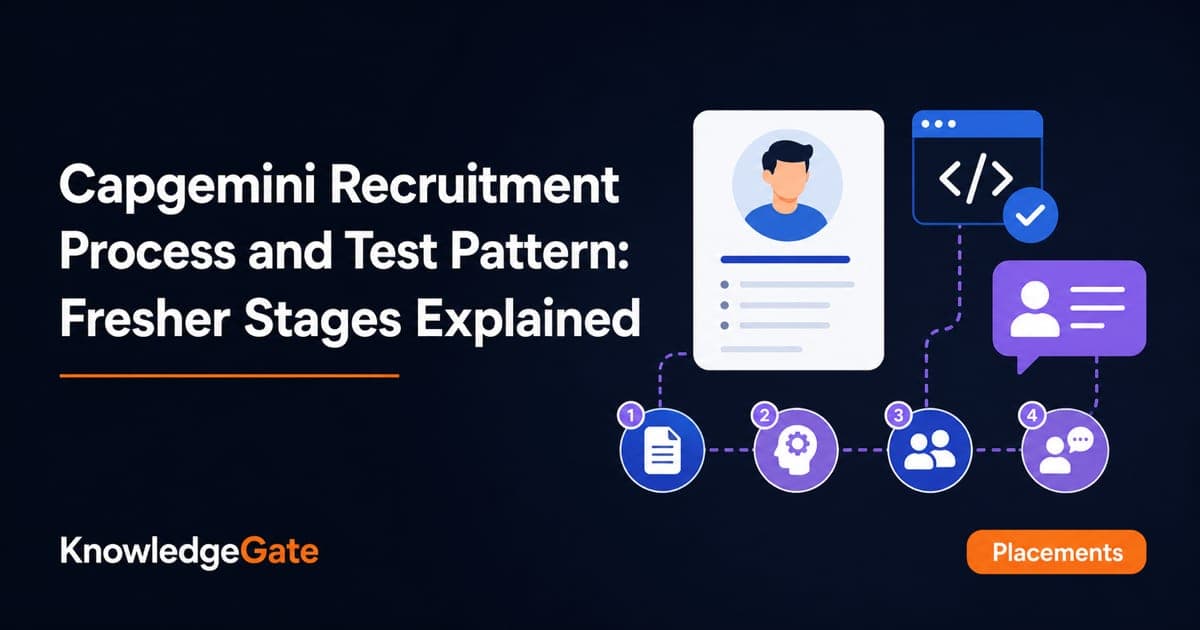
Capgemini Recruitment Process and Test Pattern: Fresher Stages Explained
Separate Capgemini's official hiring framework from the details that vary by role. Learn what to verify, how to read an assessment invite, and what evidence to prepare.
Updated 18 Sep 20265 min read95 viewsCompany-Specific Prep
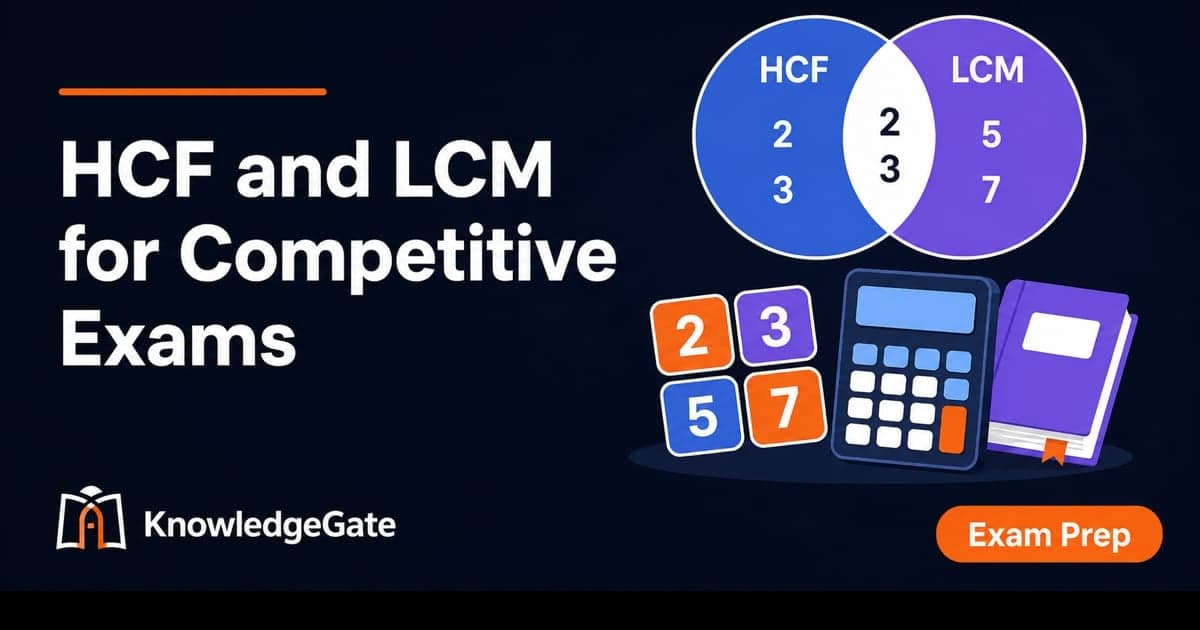
HCF and LCM for Competitive Exams: Concepts, Shortcuts and Solved Examples
Learn when to use HCF or LCM, how the main methods work, and how to check grouping, cycle, missing-number and remainder problems step by step.
Updated 18 Sep 20266 min read58 viewsAptitude & Reasoning
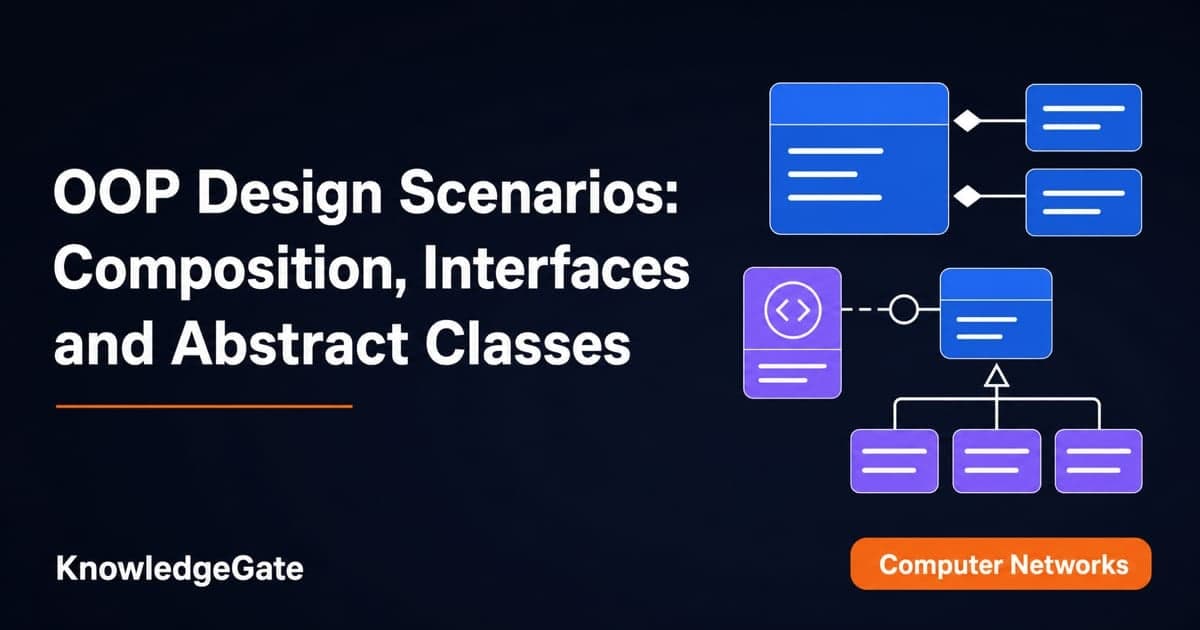
OOP Design Scenarios: Composition, Interfaces and Abstract Classes
Learn to defend OOP design boundaries through two complete examples: a multi-channel incident alert service and a report exporter with independent formats and destinations.
Updated 17 Sep 20266 min readInterview Corner
Cognizant Placement Preparation: A 4-Week Pattern-Matched Study Plan
Build a pattern card from your current Cognizant communication, diagnose your gaps, and allocate four weeks by evidence. The plan includes simulations, error review, interview practice, and a missed-day rule.
Updated 17 Sep 20265 min readCompany-Specific Prep
Divisibility Rules for Competitive Exams: Shortcuts and Solved Examples
Learn why divisibility rules work, then apply them to common divisors, composite numbers, missing digits, remainders, and quick exam decisions.
Updated 17 Sep 20266 min readAptitude & Reasoning
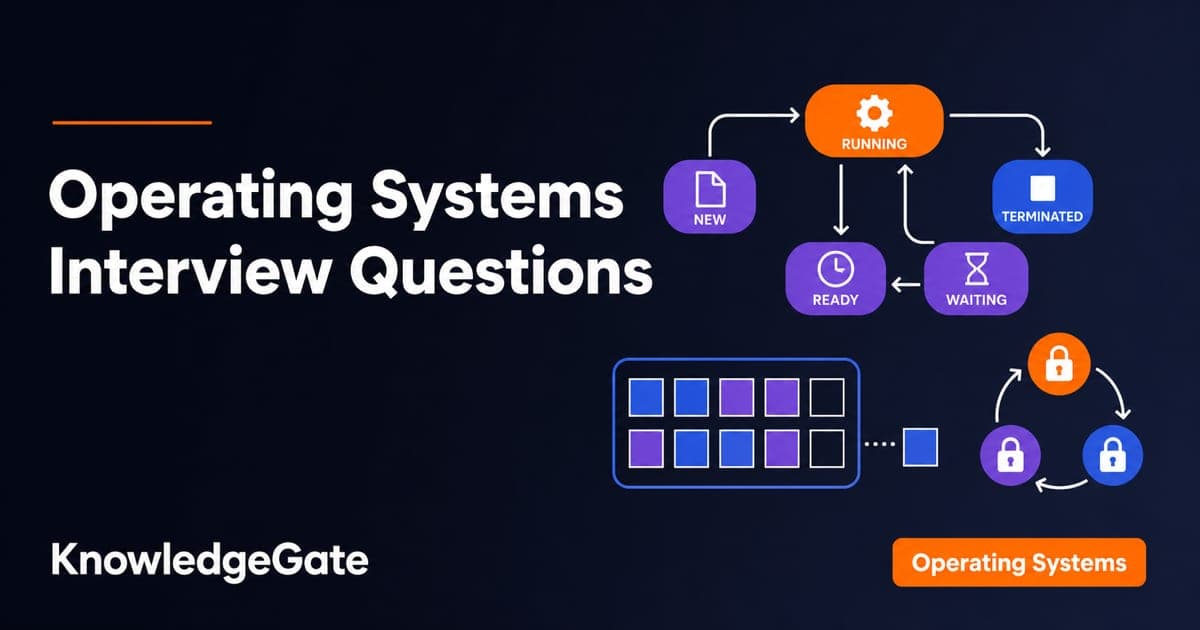
Operating Systems Interview Questions: Processes, Memory and Deadlocks with Worked Answers
Turn isolated OS definitions into clear interview answers through five worked traces covering processes, scheduling, memory, synchronisation and deadlock safety.
Updated 16 Sep 20266 min readInterview Corner
Cognizant Coding Questions: 4 High-Value Patterns with Solved Examples
Learn to recognise four reusable coding patterns, trace each solution, justify its complexity, and test the edge cases that often break a correct-looking approach.
Updated 16 Sep 20266 min readCompany-Specific Prep
Table Charts for Data Interpretation: Fast Percentage, Ratio and Comparison Methods
Use one practice table to master lookups, comparison bases, percentage change, ratios, shares, totals, averages, estimation and common error checks.
Updated 15 Sep 20265 min read71 viewsAptitude & Reasoning
HR Interview Questions on Relocation, Shifts and Service Agreements: A Fresher Answer Plan
Prepare truthful answers for relocation, rotating shifts and written service agreements. Follow Meera's boundary map, exact scripts and seven-day rehearsal plan.
Updated 15 Sep 20265 min readInterview Corner
Accenture Drive Mistakes: Fix Common Rejection Risks at Every Stage
Use evidence sheets, diagnostic mocks, coding edge cases, response drills, and consistency checks to reduce controllable rejection risks in an Accenture drive.
14 Sep 20265 min readCompany-Specific Prep
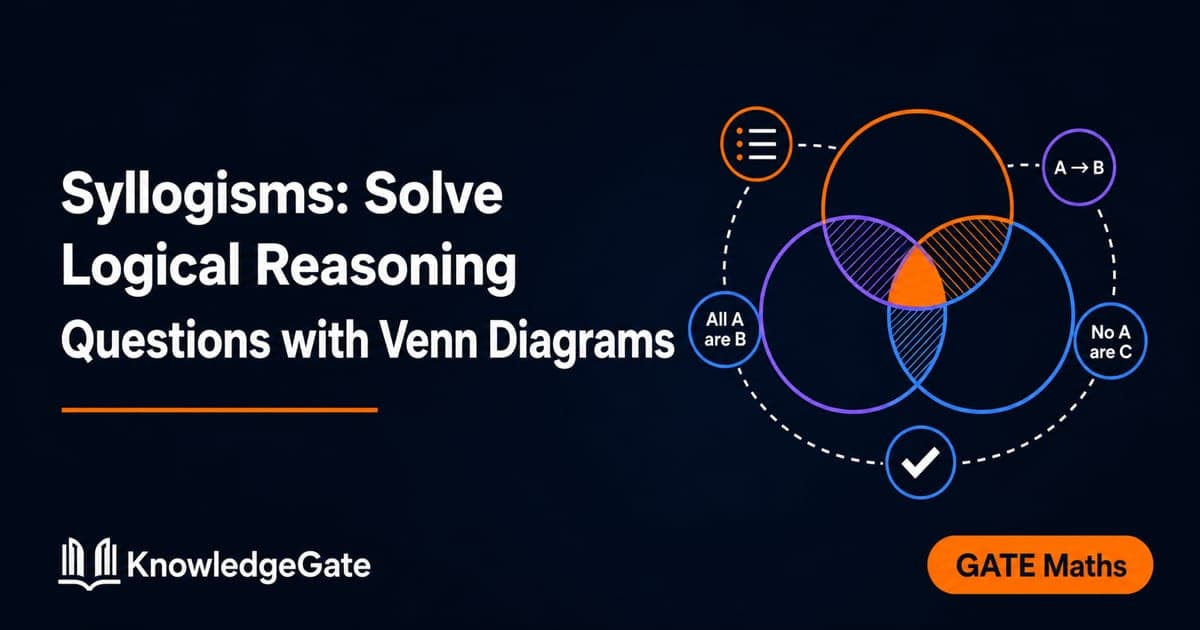
Syllogisms: Solve Logical Reasoning Questions with Venn Diagrams
Translate syllogism statements into sets, test what must follow, and build witness or counterexample models for conclusions that are only possible or not definite.
Updated 14 Sep 20265 min read61 viewsAptitude & Reasoning