Operating Systems
54 articles in this topic
Introduction to Operating System: Core Concepts with a Worked CPU Schedule
Build a connected model of operating-system services, privilege, process states and kernel structures. Then trace an FCFS schedule with I/O and switching costs.
Updated 1 Sep 20266 min read61 viewsOperating Systems
Linux Operating System: Kernel, Processes, Files and Worked Examples
Build a layer-by-layer model of Linux, then follow a system call, translate a virtual address and calculate file permissions by hand.
Updated 31 Aug 20265 min readOperating Systems
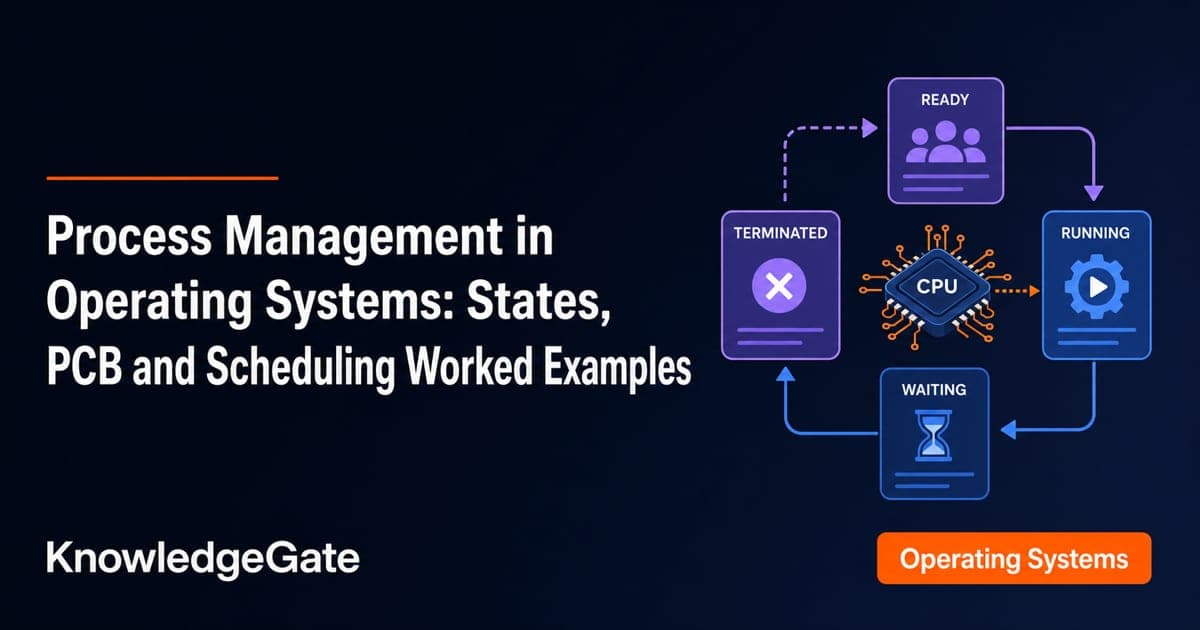
Process Management in Operating Systems: States, PCB and Scheduling Worked Examples
Connect the process lifecycle, PCB, queues and dispatcher, then calculate FCFS and Round Robin metrics through one complete scheduling example.
Updated 29 Aug 20266 min readOperating Systems
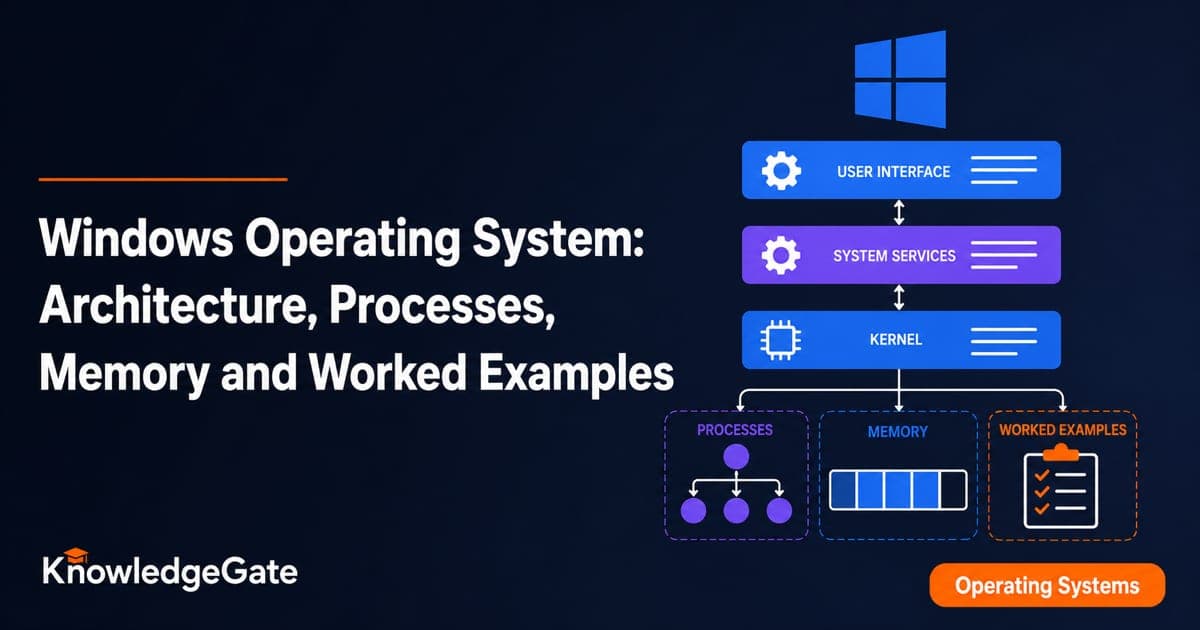
Windows Operating System: Architecture, Processes, Memory and Worked Examples
Build a clear Windows architecture map, then practise exact traces for file I/O, thread scheduling, semaphores, paging and access checks.
Updated 27 Aug 20266 min readOperating Systems
Virtual Memory in Operating Systems: Paging, TLB and Page Replacement with Worked Examples
Follow one virtual address through the TLB and page table, then calculate page faults, replacement traces and working-set pressure step by step.
Updated 26 Aug 20266 min read51 viewsOperating Systems
Threads and Process Creation in OS: fork() Worked Examples
See exactly what processes and threads own, then trace copy-on-write, a conditional fork tree, and a shared-counter race without relying on shortcuts.
Updated 24 Aug 20266 min readOperating Systems
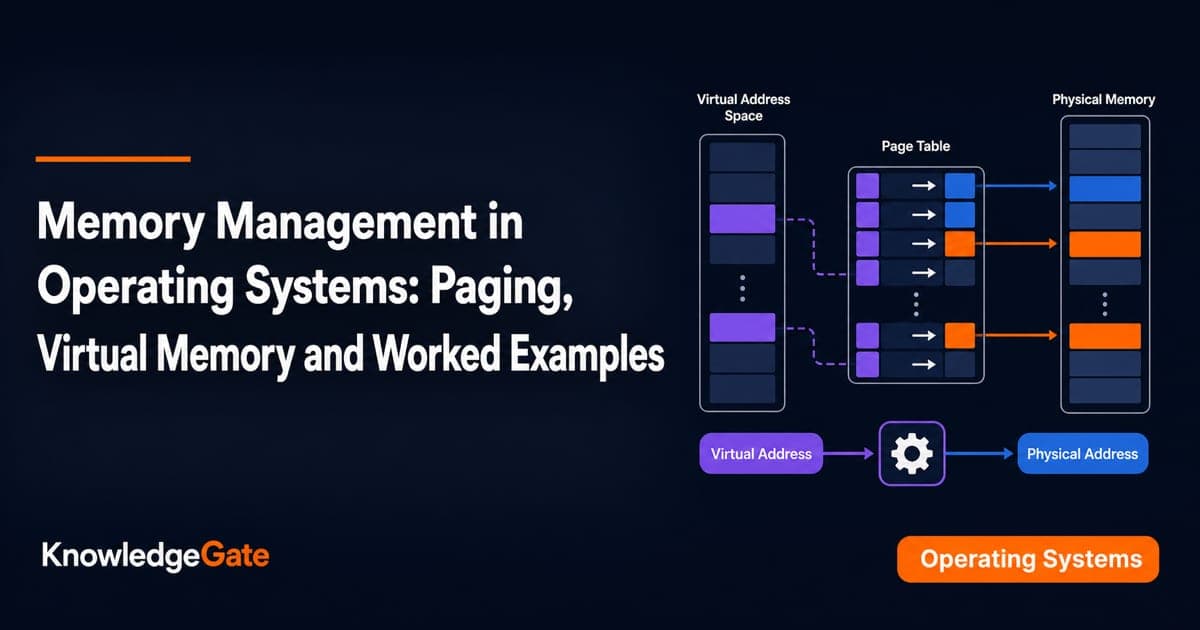
Memory Management in Operating Systems: Paging, Virtual Memory and Worked Examples
Connect allocation, paging, segmentation and virtual memory through one address-translation system, two access-time calculations and a full replacement trace.
Updated 22 Aug 20265 min read102 viewsOperating Systems
File Systems and I/O for GATE: Allocation, Inodes and Worked Examples
A file-system question becomes manageable when you trace the path from a name to an inode, blocks and device I/O. Work through allocation, offsets and timing with reproducible examples.
Updated 21 Aug 20267 min readOperating Systems
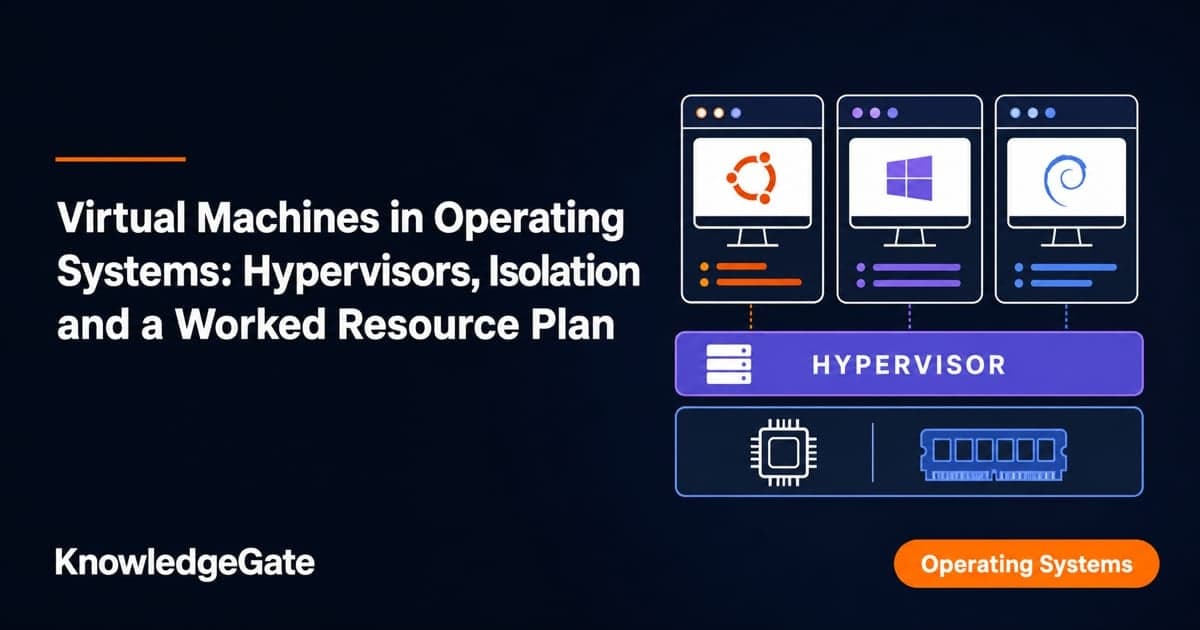
Virtual Machines in Operating Systems: Hypervisors, Isolation and a Worked Resource Plan
Follow one three-VM host plan from the hypervisor layer to CPU scheduling, address translation, virtual I/O, isolation, snapshots and migration.
Updated 19 Aug 20266 min readOperating Systems
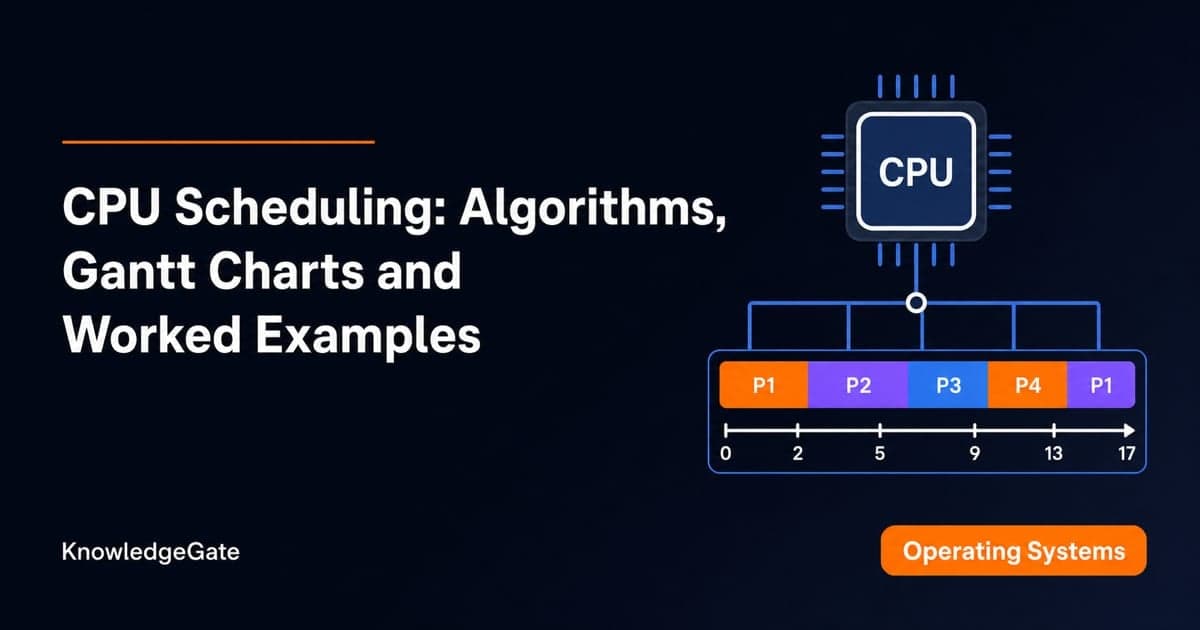
CPU Scheduling in Operating Systems: Algorithms, Gantt Charts and Worked Examples
Trace one process set through five CPU scheduling policies, calculate every core metric, and extend the method to switching costs and MLFQ.
Updated 17 Aug 20266 min read53 viewsOperating Systems
Operating System for GATE: Syllabus, Weightage Pattern and Prep Order
See what GATE officially includes under Operating System, how we classified two 2026 CS papers, and how to turn that scope into a 30-hour study plan.
Updated 15 Aug 20265 min read156 viewsOperating Systems
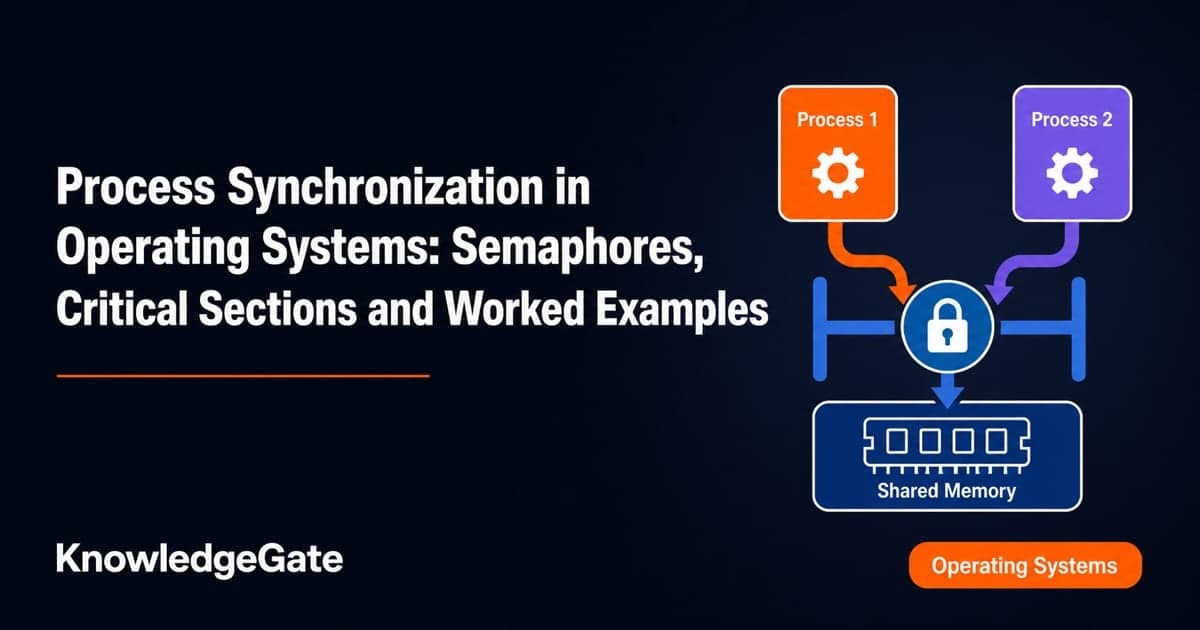
Process Synchronization in Operating Systems: Semaphores, Critical Sections and Worked Examples
Build process-synchronization reasoning from a lost update to critical-section rules, semaphore operations, a capacity-3 buffer trace and common failure patterns.
Updated 13 Aug 20267 min readOperating Systems