ISRO CS Syllabus vs GATE CS: Overlap, Gaps, and Revision Plan
Most GATE CS notes transfer well to ISRO Scientist/Engineer CS preparation, but not completely. See what carries over, what the official 2023 paper adds, and how to bridge it.
KnowledgeGate Team
Exam prep & CS education
Updated 28 Jul 20265 min read59 views
Can GATE CS notes and PYQs carry you into ISRO Scientist/Engineer 'SC' Computer Science preparation? The core transfers strongly, but not completely. Three documents settle the question: the official GATE 2026 CS syllabus, ISRO's 27 May 2025 recruitment notice, and the official 2023 ISRO CS paper. Unofficial weightage tables settle nothing.
ISRO CS vs GATE CS: the short answer
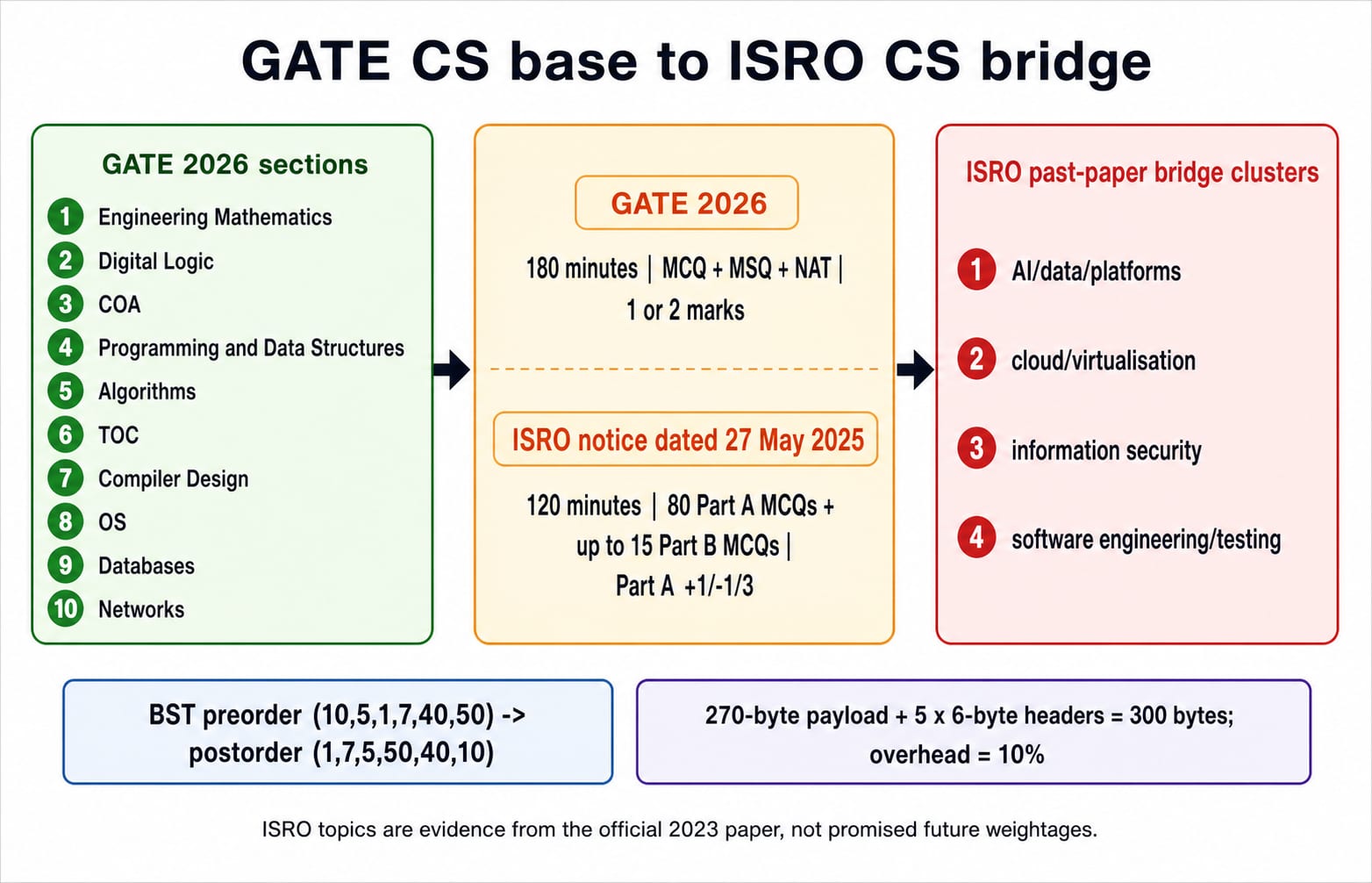
Use a three-part rule. Reuse your preparation for all ten named sections of the GATE 2026 CS syllabus. Adapt your practice to the ISRO paper format and its faster objective-question pace. Add the clusters that appeared in ISRO's official 2023 paper but are not named as sections in the GATE syllabus.
Read each of those documents for what it can actually tell you. The GATE syllabus is a section list that holds from year to year. The ISRO notice fixes the written-test pattern for one recruitment cycle. The 2023 paper records what ISRO asked once, so it is fair to say that paper included AI questions, and wrong to plan as though ISRO will always ask AI or to trust a predicted weightage table. The same distinction matters in UGC NET vs GATE Computer Science.
The core CS overlap that transfers directly
Every official GATE 2026 CS section has a counterpart in the official ISRO 2023 paper. Carry over concepts, solved examples, and notes, then test them under the target paper's conditions.
GATE 2026 section | Evidence in the ISRO 2023 paper | What to carry over |
|---|---|---|
Engineering Mathematics | Probability questions | Formula selection and short calculations |
Digital Logic | Digital circuits | Boolean reasoning and circuit analysis |
Computer Organization and Architecture | Architecture and memory questions | Datapath, instructions, and memory concepts |
Programming and Data Structures | BST traversal | Tree construction and traversal rules |
Algorithms | MST and shortest paths | Graph algorithm purpose and execution |
Theory of Computation | Automata and grammars | Language and machine reasoning |
Compiler Design | Parsing | Grammar and parsing methods |
Operating Systems | Processes and synchronisation | State, scheduling, and concurrency concepts |
Databases | SQL and normalisation | Query reasoning and schema design |
Computer Networks | Protocol overhead and networking | Layering, protocols, and numericals |
Take the official 2023 BST question. Its preorder is (10, 5, 1, 7, 40, 50).
Preorder begins with the root, so the root is
10.The values below
10, namely(5, 1, 7), form the left subtree. Its root is5, with1on the left and7on the right.The values above
10, namely(40, 50), form the right subtree. Its root is40, with50on the right.Postorder visits left subtree, right subtree, then root. The result is
(1, 7, 5, 50, 40, 10).
That method comes from GATE's Programming and Data Structures section. If this core feels weak, revise it through GATE Guidance by Sanchit Sir.
Where the question style and revision depth differ
The official GATE 2026 pattern lists a 180-minute CBT with MCQ, MSQ, and NAT questions worth 1 or 2 marks. ISRO's 27 May 2025 notice specified a 120-minute objective paper. Part A had 80 discipline MCQs with +1 for a correct answer and -1/3 for a wrong answer. Part B had up to 15 aptitude or ability MCQs with no negative marking. A later notice may change these details, so match mocks to the current one.
Keep GATE's multi-step problem solving, but add quicker option elimination, definition checks, matching questions, and short calculations. Do not treat ISRO as recall-only. The 2023 paper also included numericals.
For example, a five-layer protocol adds a 6-byte header at every layer to a 270-byte message:
Header bytes =
5 x 6 = 30bytes.Transmitted bytes =
270 + 30 = 300bytes.Wasted bandwidth =
30/300 x 100 = 10%.
For deeper work on processes and synchronisation, use Operating Systems for GATE as a subject-level follow-up.
The gaps a GATE-only plan can leave
Questions 61 to 80 of the official ISRO 2023 paper provide a practical bridge list:
AI, data, and platforms: first-order logic in AI, hybrid Bayesian networks, HDFS, JMX, and K-means.
Distributed systems, cloud, and virtualisation: Cassandra, private cloud, cloud bursting, and full versus para-virtualisation.
Information security: ICMP attacks, MAC cloning, ARP spoofing, filtering, NAT, firewalls, encryption, and CAPTCHA.
Software engineering and testing: MCDC, regression testing, HIPO or structure charts, cyclomatic complexity, and system views.
None of these clusters appears as a named section in the GATE 2026 CS syllabus, which is exactly why a GATE-only plan misses them. They come from a single paper, so treat them as a bridge to build, not a syllabus to memorise. Use the ISRO Scientist/Engineer SC Computer Science course to organise exam-specific coverage after your GATE core is stable.
Build your own overlap-and-gap audit
Make 14 rows: the ten GATE sections in the table plus the four ISRO bridge clusters. Score each row using one scale:
0= not started1= can solve with notes2= can solve timed without notes
The maximum is 14 x 2 = 28. Rows scoring 0 or 1 are your revision list, worst first.
Suppose a candidate scores 2 on eight core rows, 1 on two core rows, 0 on three bridge rows, and 1 on one bridge row. The total is:
(8 x 2) + (2 x 1) + (3 x 0) + (1 x 1) = 16 + 2 + 0 + 1 = 19/28
Their next action is not to turn 19/28 into a selection probability. It is to repair the three zero bridge rows first, then time the two one-point core rows until those can be solved without notes.
A 14-day bridge plan for a GATE-prepared candidate
Days 1 and 2: Score the 14-row audit and solve 20 mixed core questions.
Days 3 to 6: Cover one bridge cluster each day. Produce a one-page recall sheet for each cluster.
Days 7 to 9: Complete three 40-question mixed MCQ blocks, one per day. Keep an error log with the topic and reason for every miss.
Days 10 and 11: Practise aptitude and ability questions separately from the technical set.
Day 12: Redo every wrong question without notes. Return to the concept wherever the method still fails.
Day 13: Attempt one 120-minute simulation only if the current notice still matches the 2025 pattern.
Day 14: Review the error log and revise the weakest two audit rows.
If you lose one day, merge recall-sheet review into the next question block. Do not skip the final simulation and review. If your fundamentals are weak, extend the plan instead of compressing first-time concept learning into 14 days.
Final verdict: reuse the base, add the bridge
GATE preparation supplies the core CS engine, but it is not a complete ISRO plan. Keep the ten-section core, adapt to the dated ISRO format, and deliberately add the four past-paper bridge clusters. Continue with the ISRO preparation category, then check the latest notice on the official ISRO recruitment page before fixing your mock format or final revision list.
Keep learning
ISRO Scientist CS Cutoff Trends: How to Set Your Target Score
A remembered cutoff is useful only when you know its score scale and recruitment stage. Compare two historical CS notices, calculate an illustrative buffer and use weaker mocks to plan your next repair week.
30 Sep 20264 min readISRO Recruitment
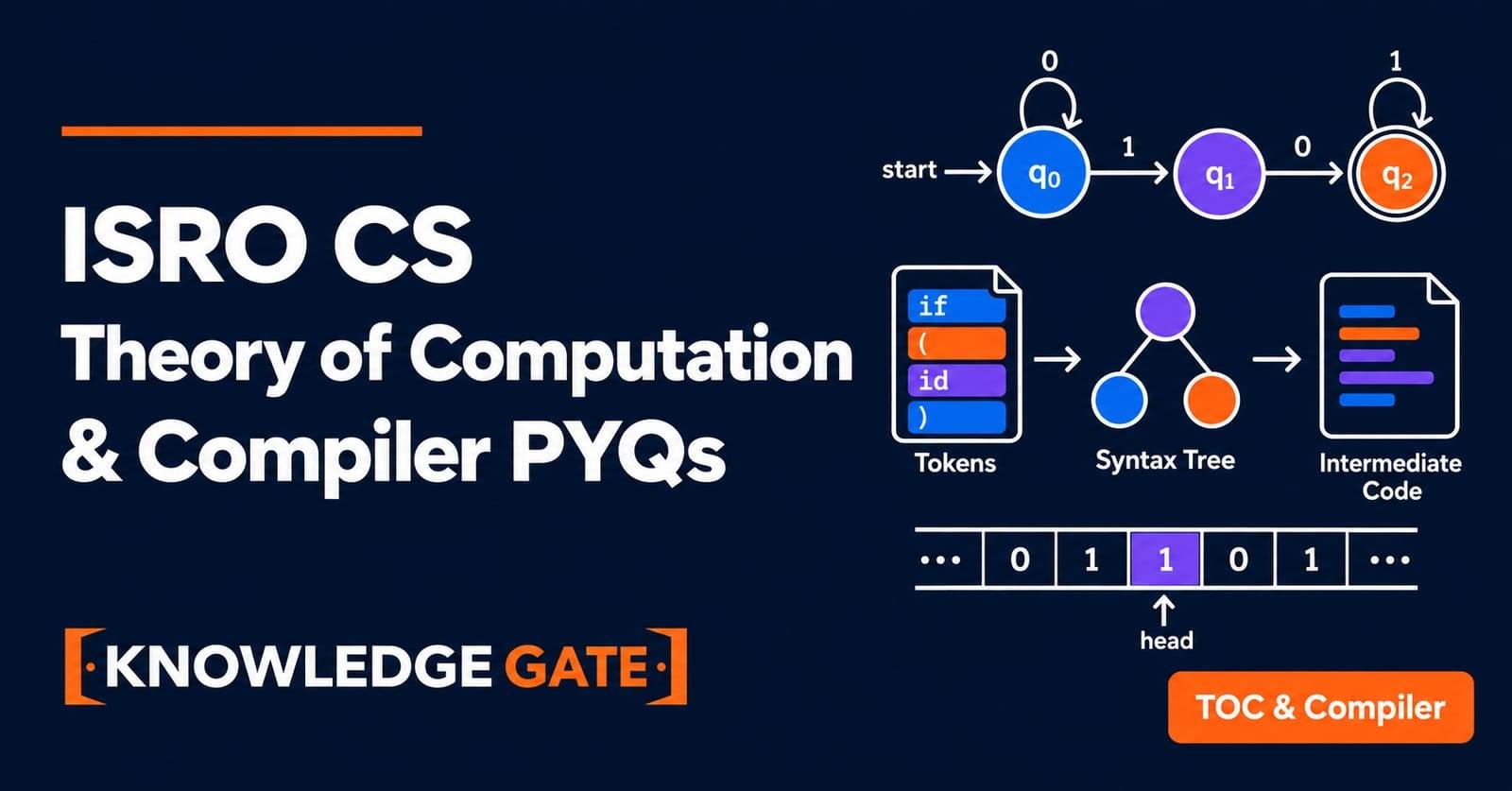
ISRO CS Theory of Computation and Compiler Design PYQs: 7 Solved Questions
Seven exact ISRO Theory of Computation and Compiler Design previous-year questions, with options, correct answers and clear explanations.
21 Sep 20266 min read135 viewsISRO Recruitment
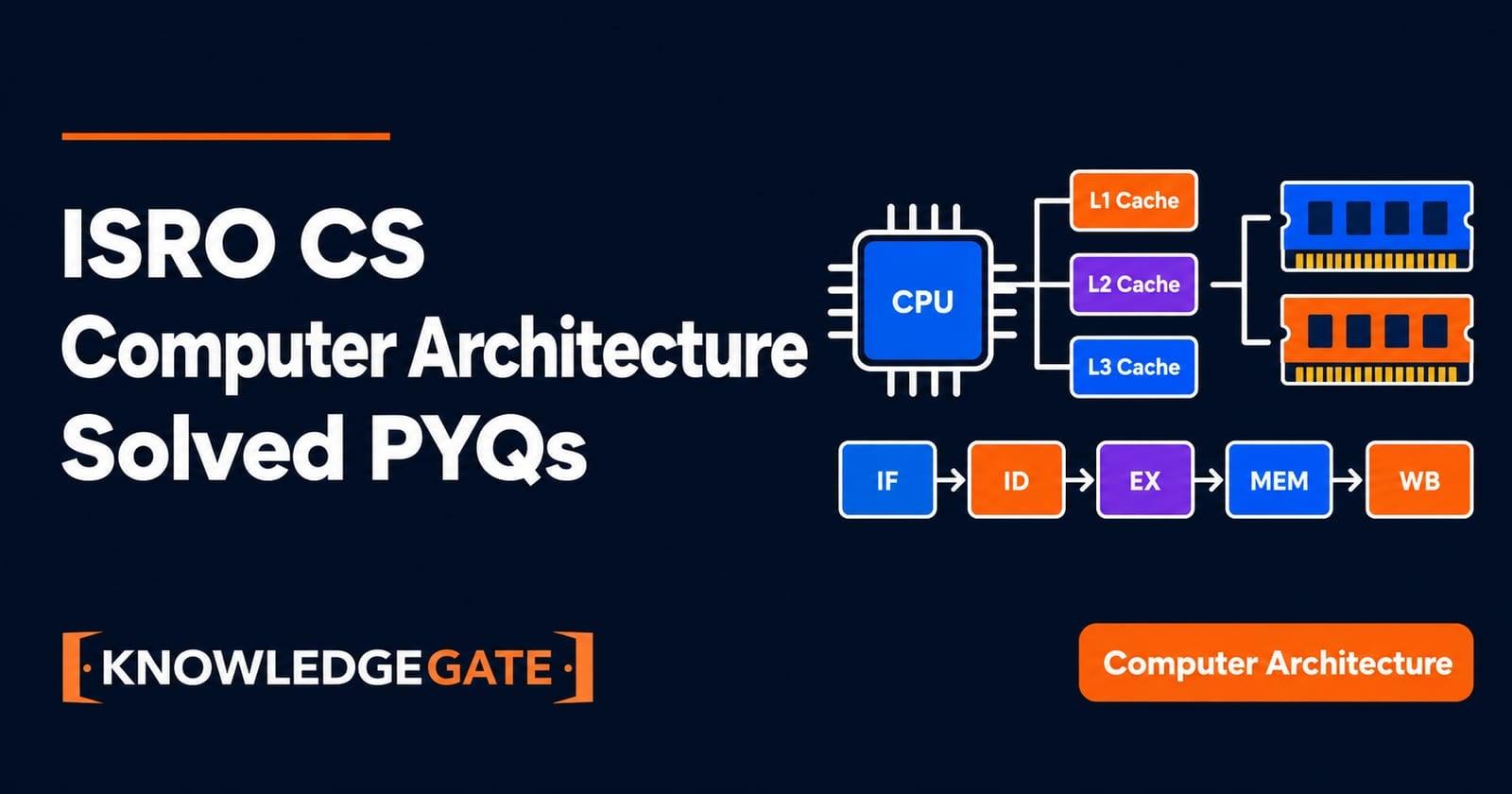
ISRO CS Computer Organization and Architecture PYQs: 7 Solved Questions
Seven exact ISRO Computer Organization and Architecture previous-year questions, with options, correct answers and clear explanations covering cache, memory, control units, interrupts and addressing modes.
21 Sep 20266 min read68 viewsISRO Recruitment
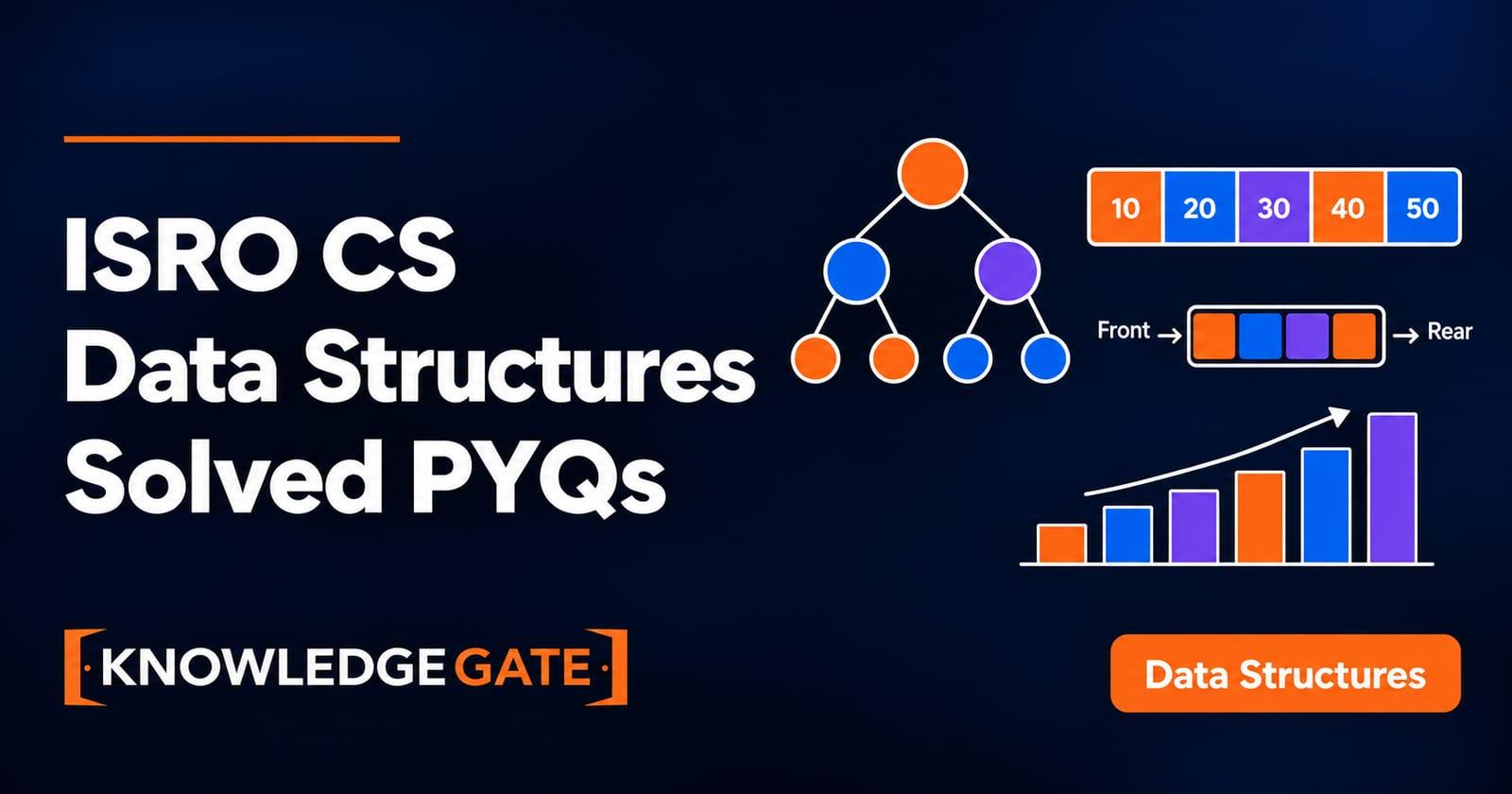
ISRO CS Data Structures and Algorithms PYQs: 6 Solved Questions
Six exact ISRO Data Structures and Algorithms previous-year questions, with options, correct answers and explanations covering arrays, trees, searching, BFS and sorting.
21 Sep 20265 min read166 viewsISRO Recruitment