The growth of bacteria (lactobacillus) in milk leads to curd formation. A…
GATE · 2017 · ME · Set 1 · General Aptitude
The growth of bacteria (lactobacillus) in milk leads to curd formation. A minimum bacterial population density of 0.8 (in suitable units) is needed to form curd. In the graph below, the population density of lactobacillus in 1 litre of milk is plotted as a function of time, at two different temperatures, 25 °C and 37 °C.
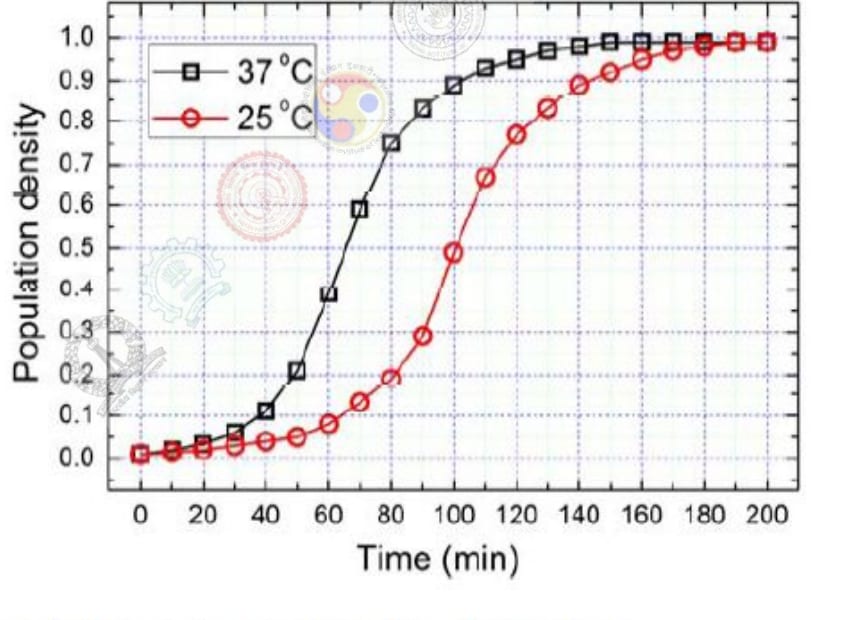
Consider the following statements based on the data shown above:
i. The growth in bacterial population stops earlier at 37 °C as compared to 25 °C
ii. The time taken for curd formation at 25 °C is twice the time taken at 37 °C
Which one of the following options is correct?
- A.
Only i
- B.
Only ii
- C.
Both i and ii
- D.
Neither i nor ii
Sign up free to check your answer
Sign up freeLoading lesson…