

C Language
Concepts, MCQs, Coding Questions
Need help choosing this course?
Our counsellor will help with pricing, syllabus, and enrollment.
About C Language
Complete C programming course covering basic to advanced concepts with MCQs and coding questions for exams, interviews and placements.
Compare C Language with all coursesThis is a complete C programming language course covering all basic to advance programming concepts and MCQ Questions.
KGAI Learning Platform Features
- This is a complete C programming language course covering all basic to advance programming concepts and MCQ Questions.
Select Your Plan
Compare plansPro includes
- Concept Videos · All videos
- Video Solutions · Unlimited
- Test Series · All tests as per academic calendar + AI tests
- PYQs · Unlimited
- Notes & PDFs · Download
- Course Captain · Priority
What you get
- Validity
- 180 days
Course Curriculum
C Language101 lessons
- C Programming by Yash Sir40 lessons
- Coding Questions by Yash Sir59 lessons
- Object Oriented Programming (OOPS)2 lessons
Instructors
Yash Jain
Latest from the Blog
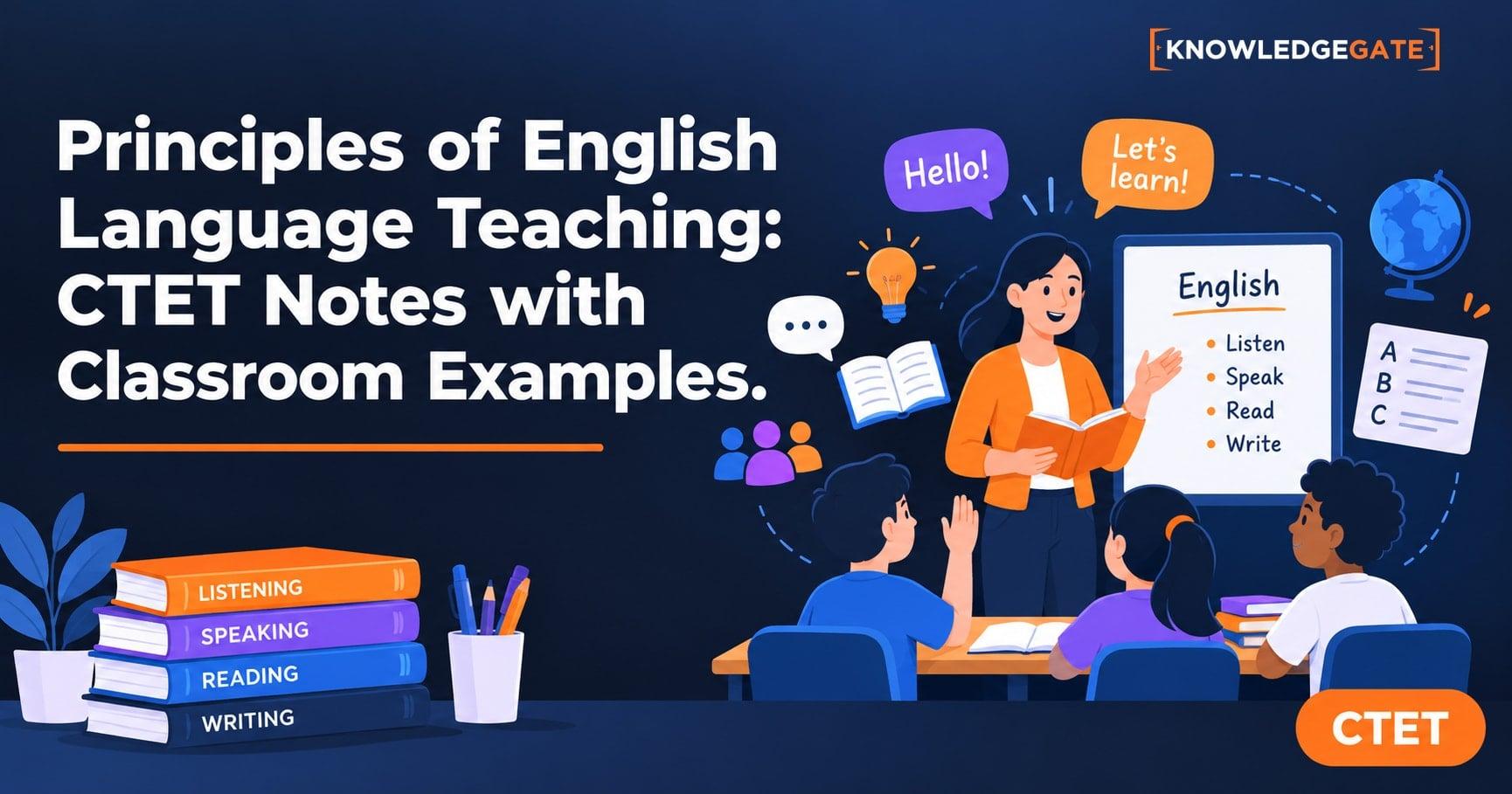
Principles of English Language Teaching: CTET Notes with Classroom Examples
Turn language-teaching principles into classroom decisions. Follow a library timetable lesson, understand purposeful error correction, and practise matching an activity to its learning objective.
Updated 18 Nov 20265 min readCTET & UPTET
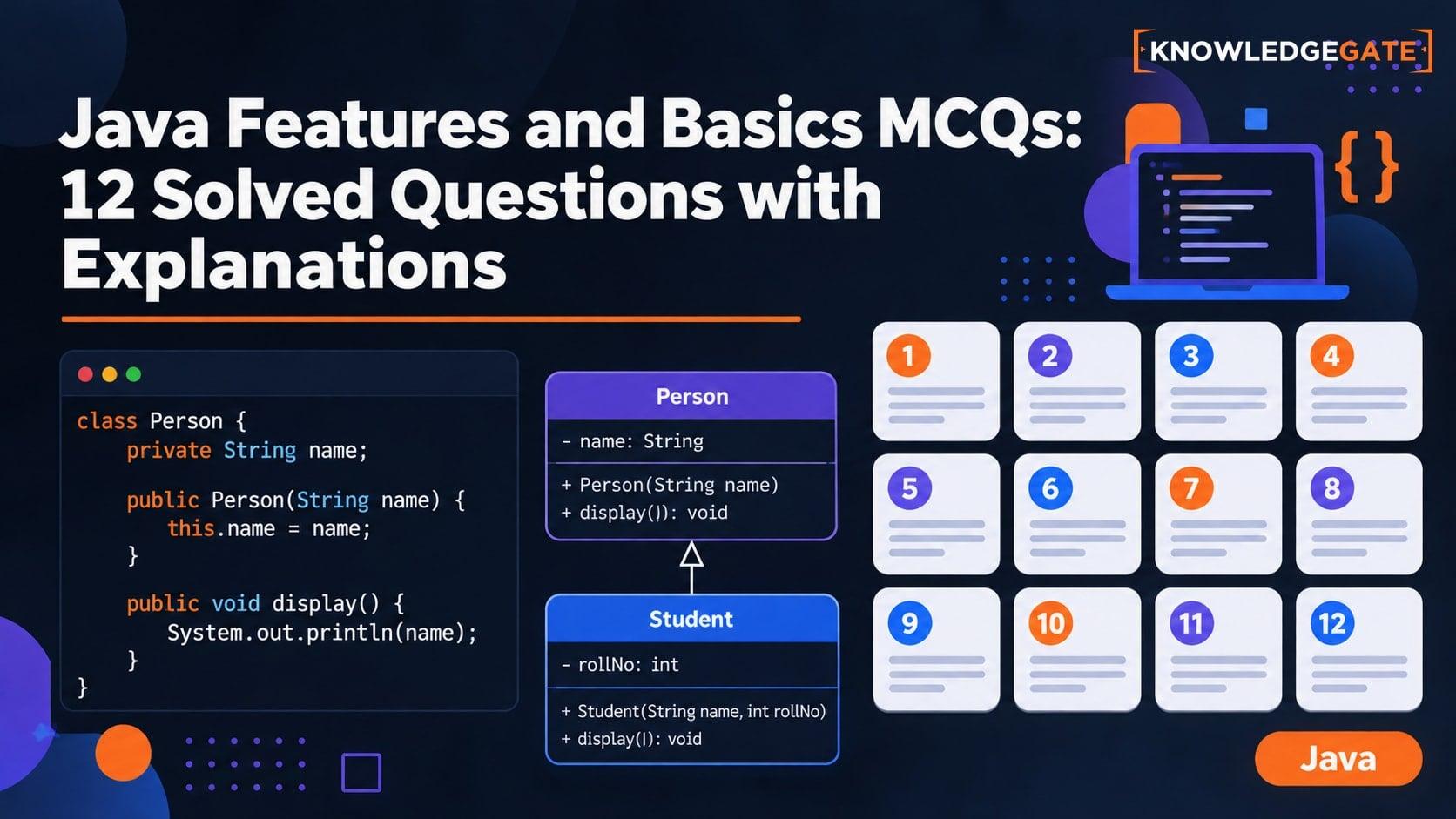
Java Features and Basics MCQs: 12 Solved Questions with Explanations
Test your Java foundation with 12 solved MCQs, then trace the rules behind compilation, naming, classes, packages and two small programs.
Updated 16 Nov 20267 min readJava
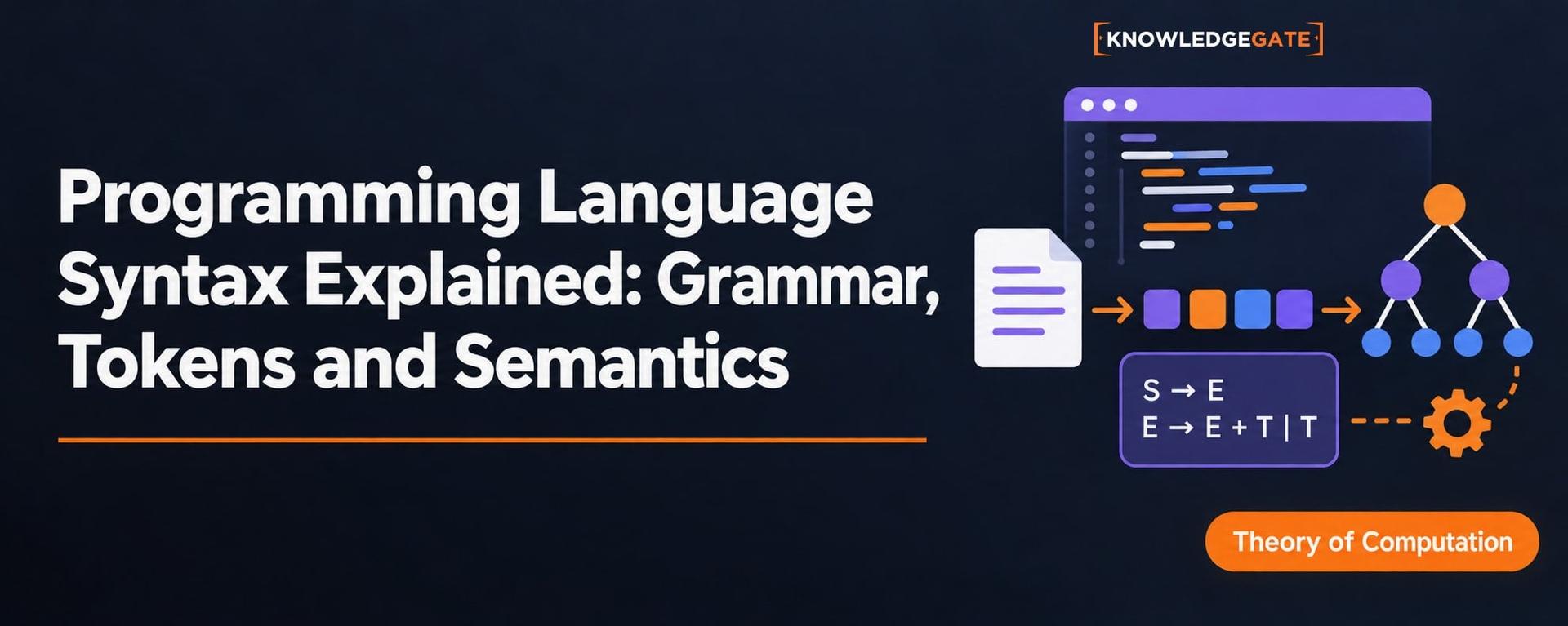
Programming Language Syntax Explained: Grammar, Tokens and Semantics
Follow one assignment from its source characters to tokens, an AST, type checks and runtime evaluation. Learn exactly where syntax ends and semantics begins.
Updated 12 Nov 20265 min readProgramming Languages Survey
Frequently Asked Questions
KnowledgeGate's placement preparation spans the full drive: a TCS track for TCS's hiring exams, a Company Specific track for exams run by Infosys, Wipro, Accenture, Cognizant, Capgemini, LTI Mindtree, Deloitte and Hexaware, an IT Recruitment Exams track for AMCAT, CoCubes, eLitmus and CDAC C-CAT, plus standalone Aptitude and Resume & Interview courses. You can pick the track that matches the stage or exam you are preparing for.
This category includes dedicated courses in C, C++, Java and Python, each covering concepts from basic to advanced level. Alongside these, there are placement-focused programmes — DSA Using Java and Coding For Placements — which build on language fundamentals and apply them to data structures, algorithms and the kind of coding and MCQ questions asked in placement drives and technical interviews.
The C Language or Python course is a good starting point, as both cover programming from basic to advanced concepts. C gives you a grounding in how programming works at a lower level, while Python is often considered easier to pick up first — either works as a foundation before moving into DSA Using Java or Coding For Placements.
Computer Science Fundamentals for Placements bundles the six core subjects recruiters ask about most, including DBMS, Operating Systems and Computer Networks, into one course, so you can prepare for interview questions across these areas together. The course is taught by Sanchit Sir and works well both as a first structured pass through these subjects and as focused revision closer to placement season.
If you are not sure which company's drive you will appear for, start with the Aptitude track, since quantitative aptitude, logical reasoning and verbal ability are tested across most placement and recruitment exams. Once you know which company or exam you are targeting, move to the matching Company Specific, TCS or IT Recruitment Exams course for exam-specific practice.
You can start working on your resume and interview skills at any point, but most students take this course once they are close to or past the written round of a drive, when interview and HR rounds are the immediate next step.
Both, depending on which exam you pick. Semester/College, built around ZERO TO HERO, is oriented toward university semester exam preparation, while Placement, built around Sanchit Sir's Computer Science Fundamentals for Placements, is oriented toward campus placement interview preparation. ZERO TO HERO takes learners from foundational to advanced-level topics, while the placement course bundles the subjects recruiters ask about most into one place.
The course is built around core computer science subjects generally rather than one specific university's syllabus, so it works as a general foundational-to-advanced route through CS concepts that overlap with most semester exam patterns. Since it is not mapped to any single university's exact syllabus, it is worth cross-checking the topics covered against your own semester schedule before relying on it as your sole study resource.
The course is taught by Sanchit Sir and is built specifically around the core computer science subjects that come up most often in campus placement interview rounds, including DBMS, Operating Systems and Computer Networks. It bundles these subjects into a single course so you can prepare for interviews across all of them together rather than through separate resources.
It is a mix depending on the course. Some, like the TCS Preparation Live Course and the Aptitude Live Course, run as live batches with fixed sessions, while most Superset-style courses across TCS, Company Specific and IT Recruitment Exams are self-paced. The Complete Preparation track's Placement Talk with Yash Sir is also delivered live.