GATE CS Preparation
Subject-wise strategy, PYQ analysis, and realistic study plans for GATE CS aspirants.
56 articles in this topic

Backtracking and Branch and Bound for GATE: N-Queens and the State-Space Tree, Traced
Trace a 4-Queens state-space tree, see exactly why branches die, and calculate a fractional knapsack bound. The comparison turns two similar methods into distinct exam tools.
Updated 20 Sep 20266 min read59 viewsGATE Strategy & Roadmap

ARP, DHCP and ICMP for GATE: The Three Support Protocols and How They Are Tested
Fix the job, layer and packet flow of ARP, DHCP and ICMP. Then use six GATE-style scenarios to practise choosing the right support protocol without guesswork.
Updated 19 Sep 20266 min readGATE Strategy & Roadmap

Why Two Students With the Same GATE Score Get Different College Options
A GATE score is important, but it is not a seat-allocation formula. Here is why two candidates with the same score can see very different college options.
19 Sep 20266 min readGATE CS Preparation

Will a Low GATE Rank Ruin Your Career? Here’s the Reality?
18 Sep 20263 min read88 viewsGATE CS Preparation

Runtime Environments for GATE: Activation Records, Static vs Dynamic Scoping and Parameter Passing
Separate control and access links, trace static and dynamic scope, then calculate how value, reference and value-result change one program's output.
Updated 18 Sep 20266 min readGATE Strategy & Roadmap

ROM, PLA and PAL for GATE: Sizing and Programmable-Logic Implementation Questions Solved
Implement the same Boolean functions with ROM, PLA and PAL, calculate every size and see exactly why product-term sharing changes the answer.
Updated 16 Sep 20266 min readGATE Strategy & Roadmap

RISC vs CISC for GATE: Architecture Differences and the True-False Questions They Generate
Learn the design choice behind RISC and CISC, rebuild the comparison table from first principles, and solve the CPU-time numerical that defeats instruction-count guesses.
Updated 15 Sep 20265 min read50 viewsGATE Strategy & Roadmap
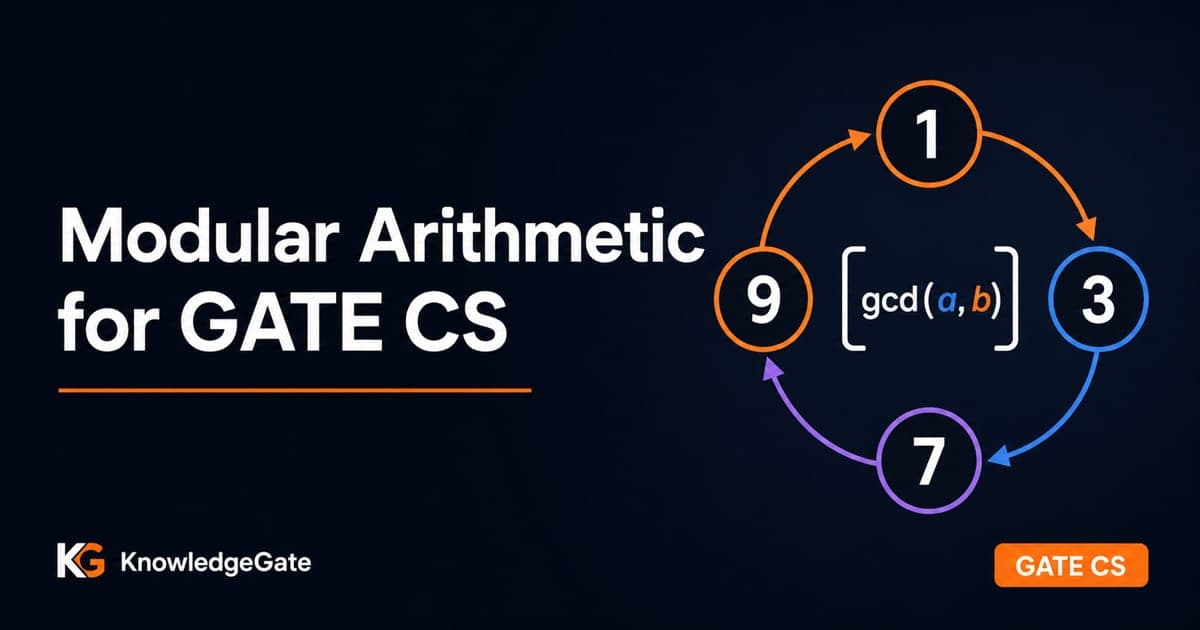
Modular Arithmetic for GATE CS: Congruences, GCD and Euler's Totient, Solved
Turn large remainder questions into small calculations using congruences, the Euclidean algorithm, Euler's totient and modular inverses.
Updated 14 Sep 20265 min read69 viewsGATE Strategy & Roadmap
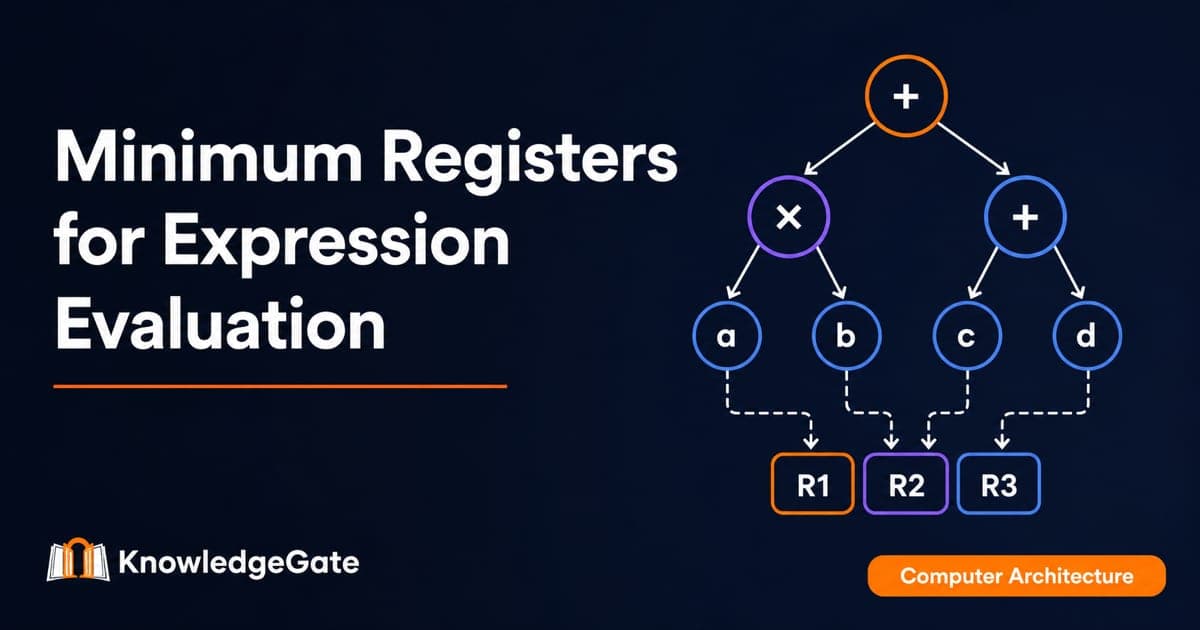
Minimum Registers to Evaluate an Expression for GATE: Sethi-Ullman Numericals Solved
Label an expression tree from the leaves upward, read the minimum register count at the root, and construct an evaluation schedule that actually achieves it.
Updated 12 Sep 20266 min readGATE Strategy & Roadmap
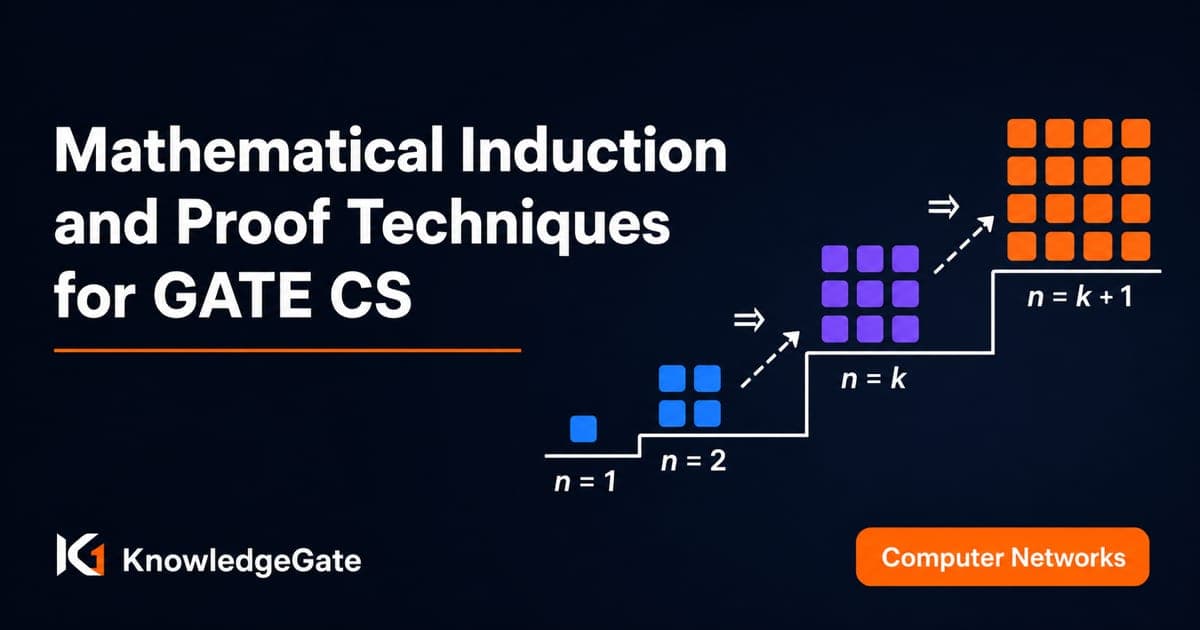
Mathematical Induction and Proof Techniques for GATE CS: Direct, Contrapositive and Contradiction Worked
Learn when to use direct proof, contrapositive, contradiction and induction, with complete algebra and the proof errors GATE commonly turns into options.
Updated 11 Sep 20266 min read98 viewsGATE Strategy & Roadmap

Two-Phase Locking and Timestamp Ordering for GATE: Recoverable and Cascadeless Schedules Solved
Classify one schedule as recoverable but not cascadeless, trace basic timestamp ordering against Thomas' Write Rule, and connect both results to strict 2PL.
Updated 9 Sep 20266 min read57 viewsGATE Strategy & Roadmap
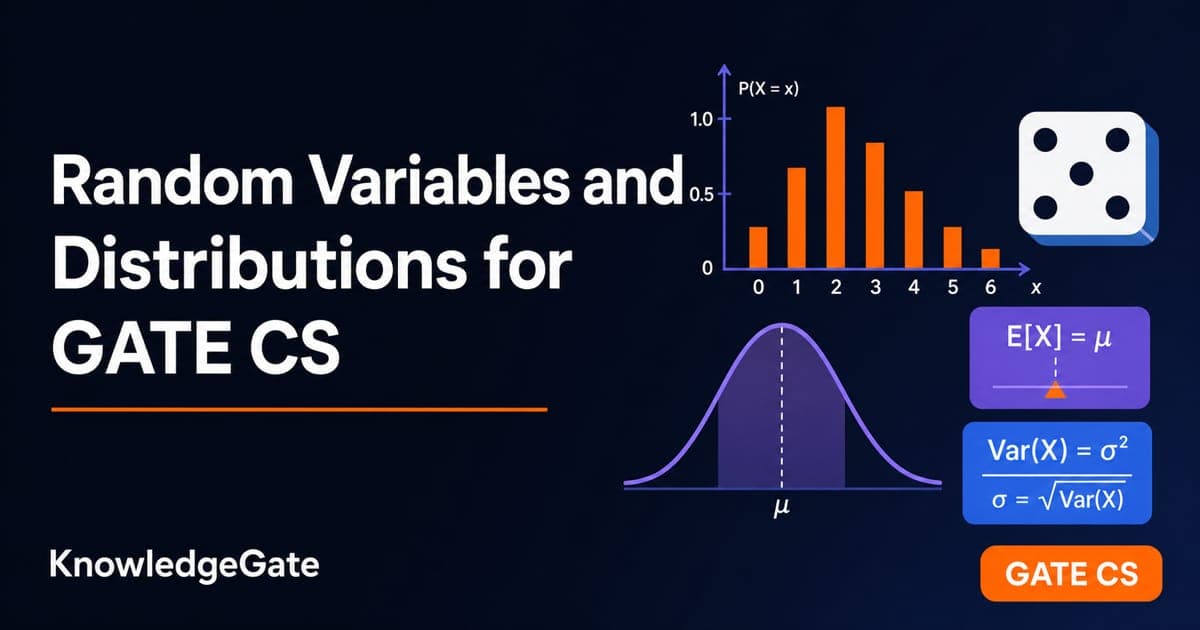
Random Variables and Distributions for GATE CS: Expectation and Variance Numericals Solved
Compute expectation and variance from a PMF, recognise four standard distributions, and use linearity and variance scaling without silent formula errors.
Updated 8 Sep 20265 min readGATE Strategy & Roadmap