Consider the test item given below and match the following: Column - A Column…
2024
Consider the test item given below and match the following:
Column - A | Column - B |
|---|---|
Unit of force | Joule |
Symbol of iron | HCl |
Formula of hydrochloric acid | Ag |
Unit of work | 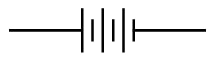 |
Symbol of silver | Calorie |
Symbol of battery | Fe |
Newton |
Which of the following is NOT a reason that can be given to justify that the item is poorly constructed?
Answer: B. There are unequal entries in column A and B — Concept: A well-constructed matching-type item keeps every column homogeneous (all entries in one column belong to a single category), gives the response…
- A.
For an entry in column A there are at the most two plausible entries in column B
- B.
There are unequal entries in column A and B
- C.
The matching pairs can be easily guessed
- D.
There is inconsistency among entries
Attempted by 9 students.
Show answer & explanation
Correct answer: B
Concept: A well-constructed matching-type item keeps every column homogeneous (all entries in one column belong to a single category), gives the response column (Column B) more entries than the stimulus column (Column A) so the last pairing cannot be found merely by elimination, and offers enough plausible responses for each stem that the pairing cannot be guessed from general knowledge alone.
Application: In this item, Column A lists six stems -- unit of force, symbol of iron, formula of hydrochloric acid, unit of work, symbol of silver, and symbol of battery -- while Column B lists seven responses -- Joule, HCl, Ag, the battery-symbol diagram, Calorie, Fe, and Newton. Column B therefore has one more entry than Column A, which is exactly the recommended technique for preventing elimination-based guessing on the final pairing; the unequal count is a strength of this item, not a defect.
Cross-check -- contrasting each statement against the item:
'For an entry in column A there are at the most two plausible entries in column B': several stems here have only a small, easily-enumerable set of plausible responses among the seven given -- the elemental-symbol stems ('symbol of iron', 'symbol of silver') can really only match Fe or Ag, and the chemical-formula stem ('formula of hydrochloric acid') can really only match HCl; needing to weigh just one or two genuine alternatives, instead of many plausible candidates, is a genuine construction weakness.
'The matching pairs can be easily guessed': facts such as Fe = iron, Ag = silver, HCl = hydrochloric acid, and Newton = force are common general knowledge, so most pairs can be matched correctly without any specialised study; this ease of guessing is a genuine construction weakness.
'There is inconsistency among entries': Column A mixes four different categories -- SI units (force, work), elemental symbols (iron, silver), a chemical formula (hydrochloric acid), and an electrical circuit symbol (battery) -- instead of drawing from one homogeneous category; this lack of homogeneity is a genuine construction weakness.
'There are unequal entries in column A and B': Column B genuinely has one more entry (seven) than Column A (six), but this unequal, response-heavy design is the standard technique recommended to stop the final pairing from being obtained by elimination; it is therefore not a construction weakness.
So the claim that names this required, recommended design feature as a fault -- the statement about unequal entries in the two columns -- is the one that cannot be used to justify that the item is poorly constructed.