The line graph given below shows the total number of TV sold and difference…
2025
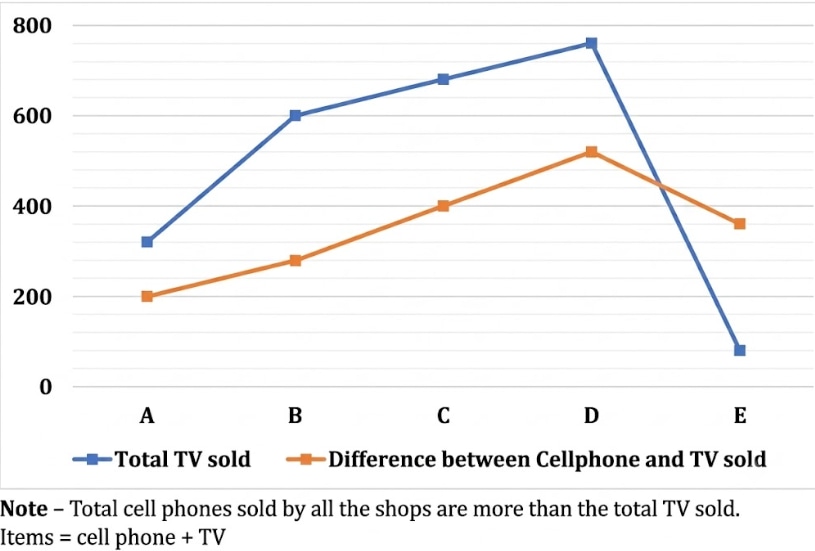
The line graph given below shows the total number of TV sold and difference between cell phone and TV sold by five different shops (A, B, C, D and E).
If 12.5% of TV sold by D are defective and total items sold by D that are defective is 280. Find the defective cell phones sold by D.
Answer: A. 185 — ConceptWhen a fixed percentage of one category is defective, the count of defective units in that category equals that percentage of its total. If the grand…
- A.
185
- B.
120
- C.
100
- D.
180
- E.
186
Attempted by 20 students.
Show answer & explanation
Correct answer: A
Concept
When a fixed percentage of one category is defective, the count of defective units in that category equals that percentage of its total. If the grand total of defective items across two categories is known, the defective count of the second category is found by subtraction: defective(second) = total defective − defective(first).
Application
For shop D, items sold = TV + cell phone, and only TVs have a stated defect rate, so:
Read the total TV sold by D from the blue line: 760.
Defective TVs = 12.5% of 760 = (1/8) × 760 = 95.
Total defective items sold by D = 280 (given).
Defective cell phones = total defective − defective TVs = 280 − 95 = 185.
Cross-check
Add the parts back: 95 defective TVs + 185 defective cell phones = 280 defective items, which matches the given total. Also 12.5% = 1/8, and 760 is divisible by 8 (760/8 = 95), so the defective TV count is a whole number — consistent. Hence 185 defective cell phones.