GATE CS Preparation
Subject-wise strategy, PYQ analysis, and realistic study plans for GATE CS aspirants.
11 articles in this topic
InfyTQ Certification: Exam Rounds, Syllabus, and the Path to an Infosys Offer
Understand the InfyTQ learning and certification path, what the technical and coding rounds demand, and why certification opens an interview rather than guaranteeing an offer.
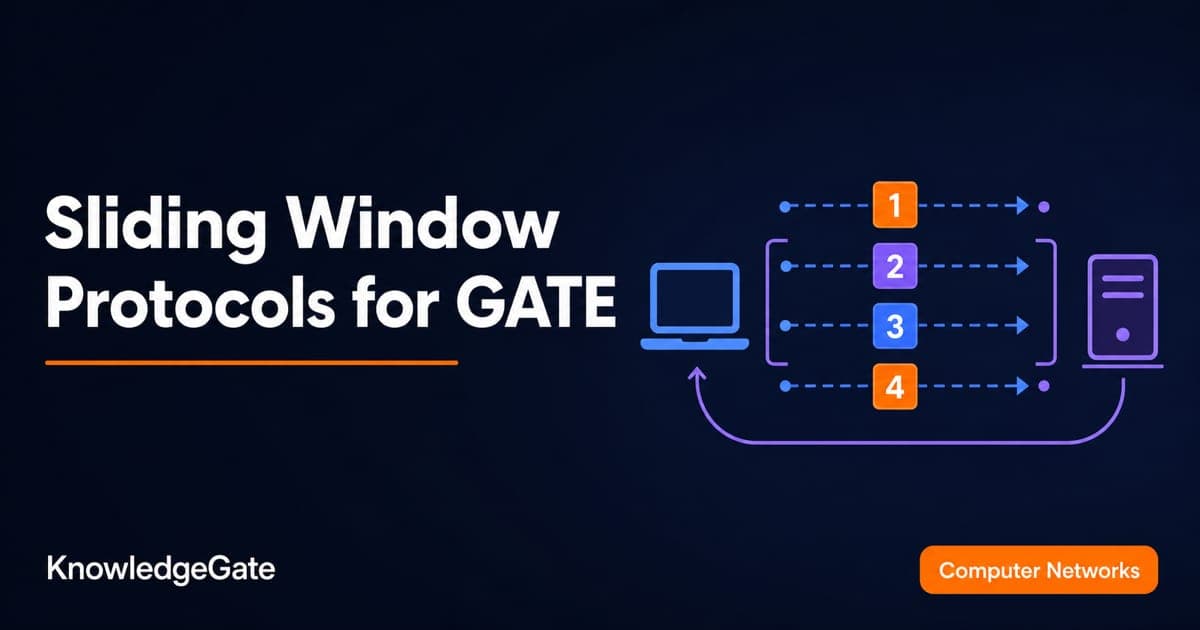
Sliding Window Protocols for GATE
Compute Stop-and-Wait and Go-Back-N utilization, choose safe sequence fields, and compare GBN with Selective Repeat after a lost frame.
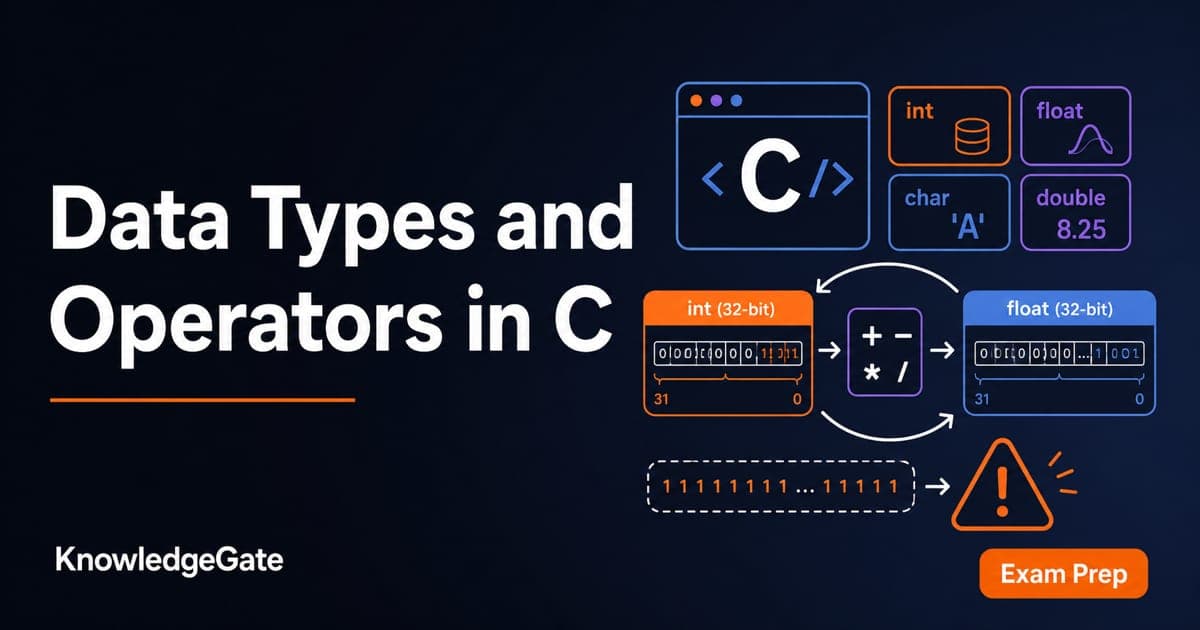
Data Types and Operators in C: Integer Promotion, Overflow and Type-Conversion Traps
Make C's silent conversions visible, then use the converted operand types to predict comparisons, arithmetic, overflow behaviour, and output.
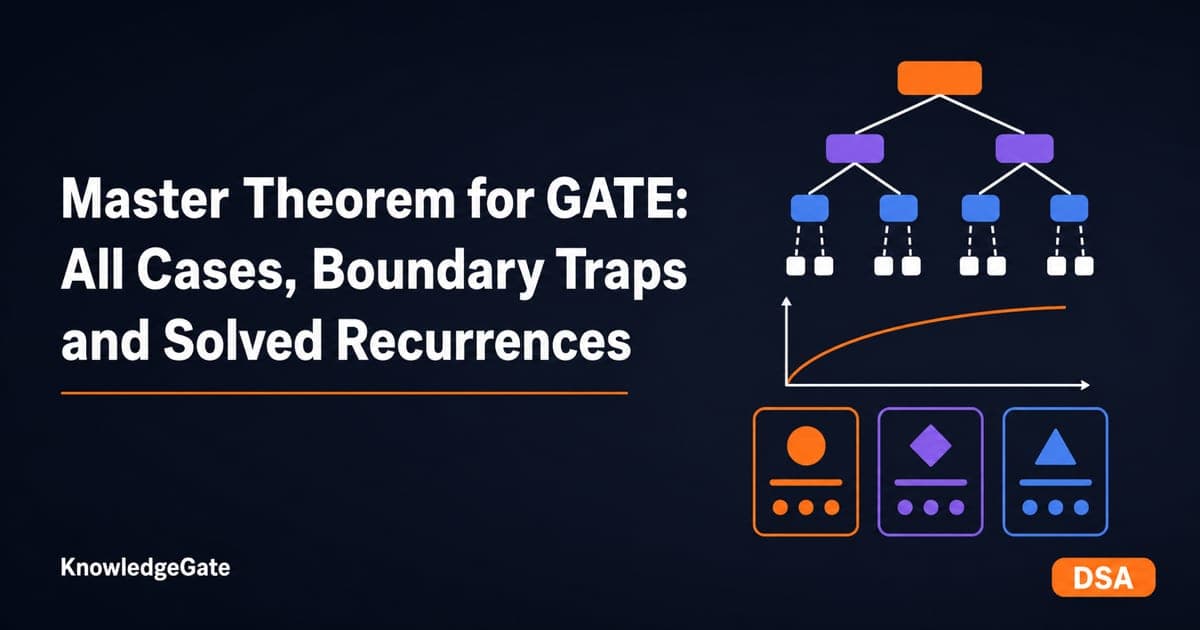
Master Theorem for GATE: All Cases, Boundary Traps and Solved Recurrences
Classify divide-and-conquer recurrences through one comparison, verify the regularity condition, and recognise the log-gap recurrences that need another method.
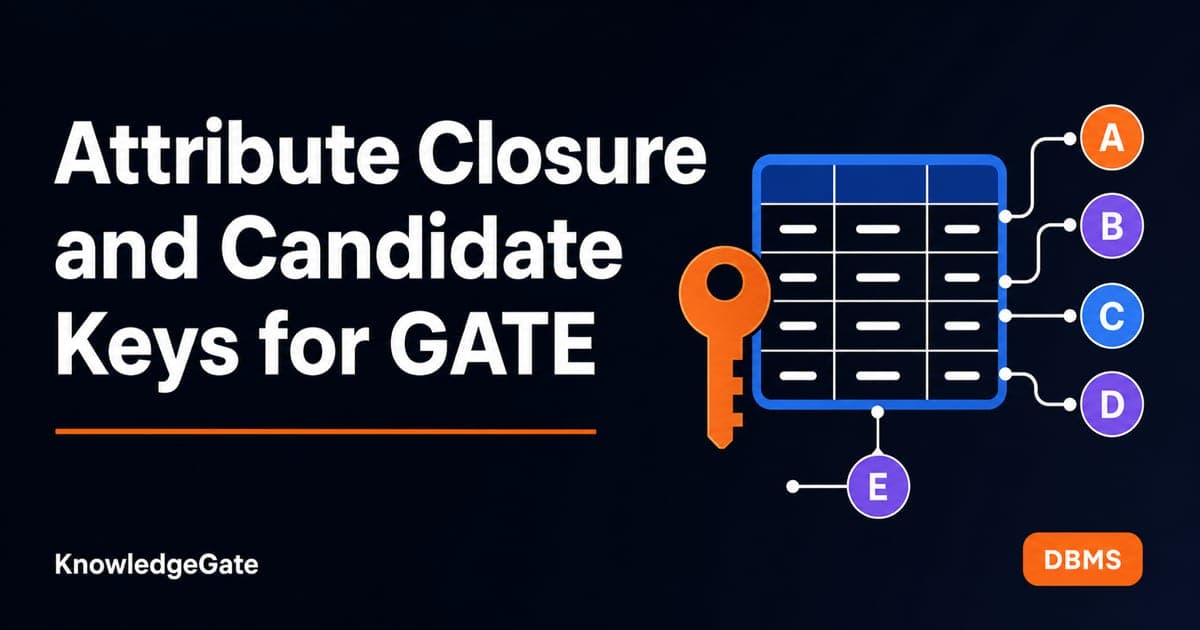
Attribute Closure and Candidate Keys for GATE
Compute closure to a fixed point, use RHS analysis to find every minimal key, and handle prime attributes and candidate-key counting without guessing.
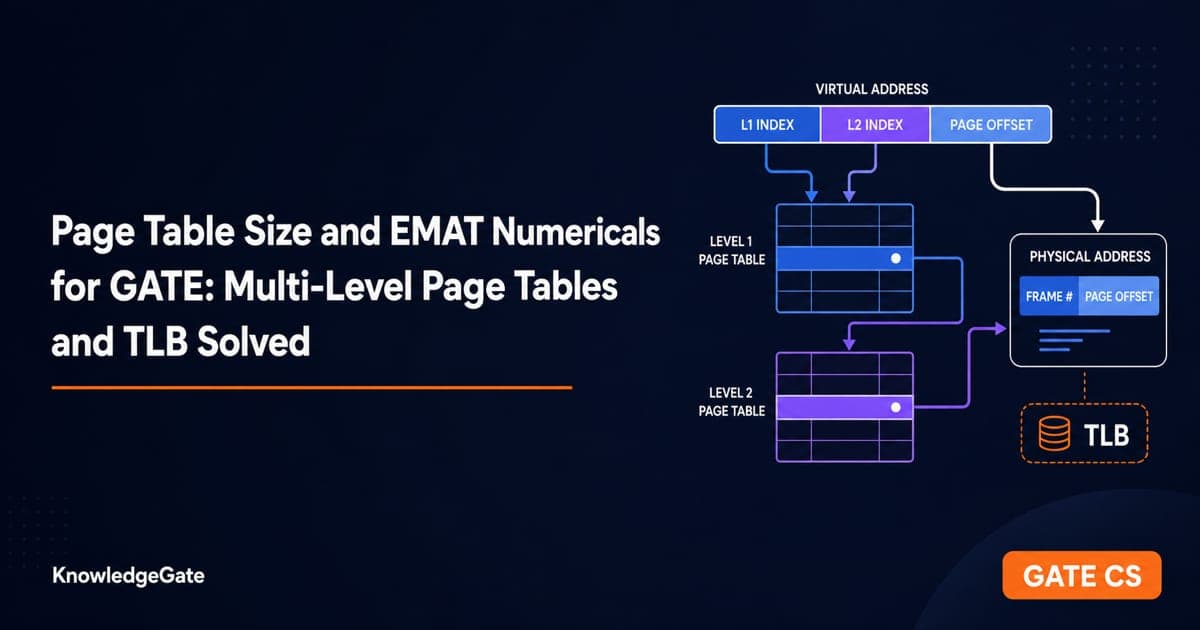
Page Table Size and EMAT Numericals for GATE: Multi-Level Page Tables and TLB Solved
Page table size and EMAT with TLB are the highest-repeat virtual memory numericals in GATE CS. Six worked examples cover single-level table size, PTE sizing, multi-level level counts, and hit ratio EMAT, with the NAT traps that cost marks.

Producer-Consumer, Readers-Writers and Dining Philosophers for GATE: Semaphore Trace Tables
Counting semaphore values traced line by line through producer-consumer, readers-writers and dining philosophers: the trace tables, the negative-value rule, the swapped-wait deadlock, and how GATE multiple-select questions test each one.
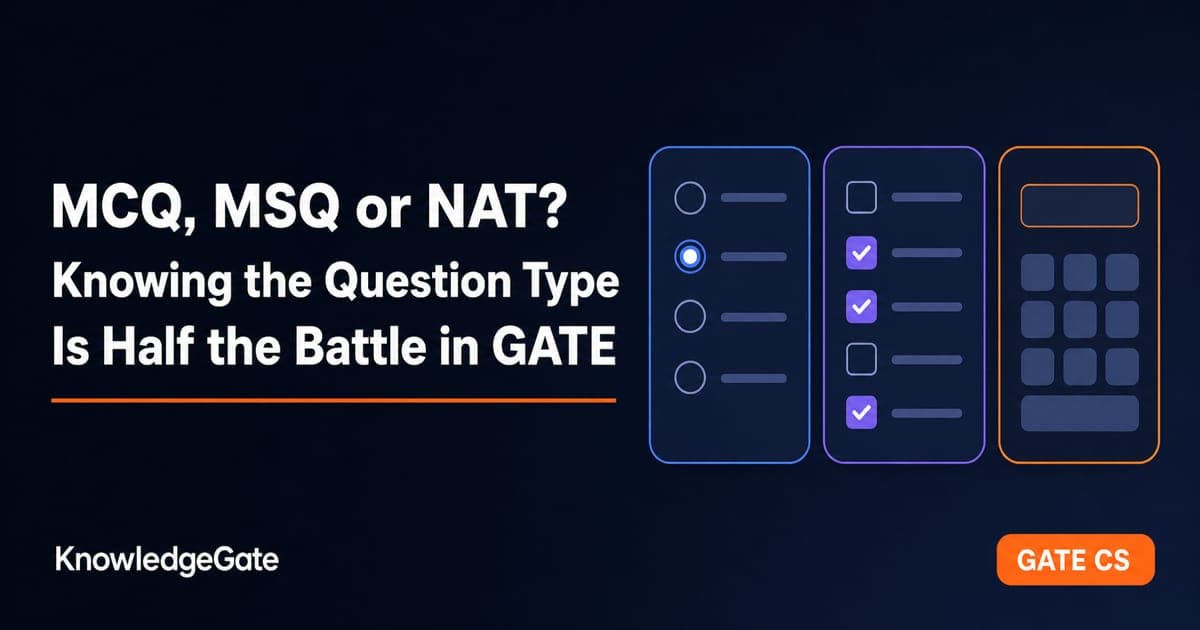
MCQ, MSQ or NAT? Knowing the Question Type Is Half the Battle in GATE
GATE does not just test what you know. It tests whether you know the rules of each question type. MCQ, MSQ and NAT each reward a different strategy. Here is how to play each one.
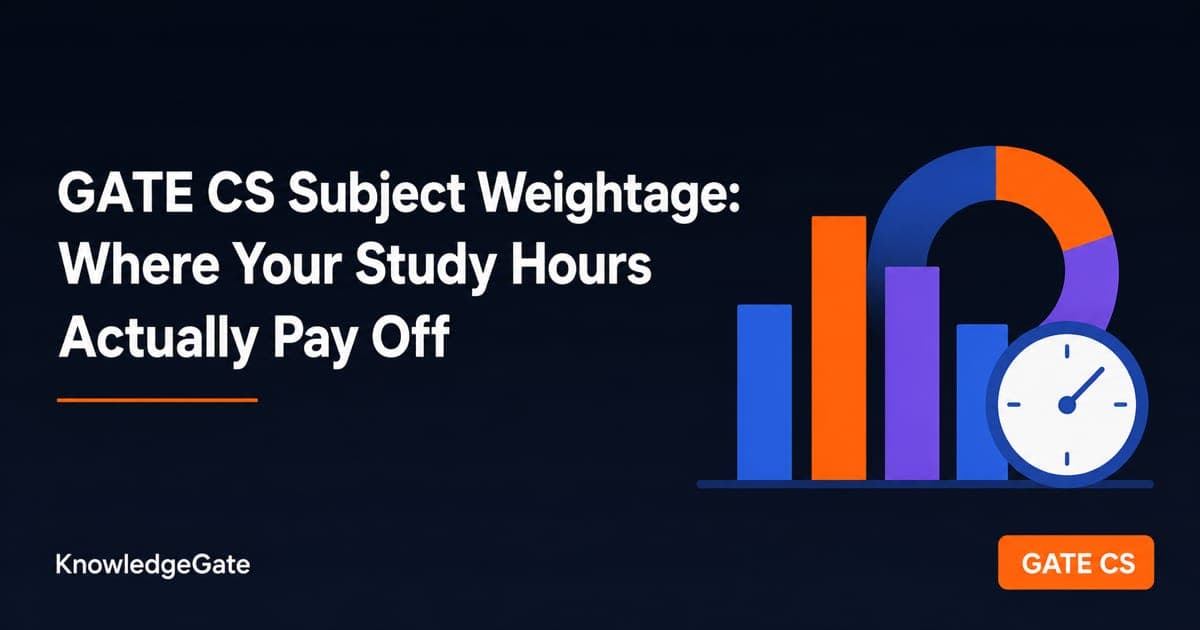
GATE CS Subject Weightage: Where Your Study Hours Actually Pay Off
Not every GATE CS subject rewards your hours equally. Here is a practical way to prioritise, grounded in how questions actually distribute across the syllabus.
Why Solving PYQs Beats Buying Another Question Bank
Every serious aspirant eventually asks: should I buy another question bank? Usually the answer is no. Solve the previous-year questions properly first. Here is why.
How to Prepare for GATE CS in 6 Months: A Realistic Plan
Six months is enough time to prepare for GATE CS well, if you spend it on the right subjects in the right order. Here is a realistic, week-by-week plan.