Resume for freshers: build a CS resume that clears the first screen
Your resume has one job, and it is not to impress. It is to survive the first screen: a recruiter spending seconds per resume, and often an automated filter before that. The resume that clears both is not the fanciest one, it is the clearest one.
KnowledgeGate Team
Exam prep & CS education
Updated 26 Jul 20265 min read
Your resume has one job, and it is not to impress. It is to survive the first screen: a recruiter spending a few seconds per resume, and often an automated filter before that. A CS fresher resume that clears both is not the fanciest one. It is the clearest one: projects a recruiter can find in the top half of the page, a stack line a parser can match, and no claim you cannot defend in the interview that follows.
Lead with projects, not an objective line
The single biggest upgrade a fresher can make is to delete the objective statement and lead with projects. "Seeking a challenging role in a reputed organisation" says nothing and every fresher writes it. A recruiter skims for evidence you can build things, and projects are that evidence.
Put a Projects section high on the page, above or right alongside education. For each project, give it a clear name, one line on what it does, and the stack you used. For a CS role the stack line is what gets matched, so name the language, the framework and the database, in the same words the job description uses. Two or three solid projects you can actually explain in an interview beat six half-finished ones you cannot. If a project is on GitHub, link the repository and check that its README has setup steps that actually work, because a project nobody can run is not evidence.
Write quantified, action-first bullets
The difference between a weak bullet and a strong one is specificity. Weak bullets describe responsibilities; strong bullets describe outcomes with a number.
Weak: "Worked on a web application for booking."
Strong: "Built a booking web app in React and Node handling 200+ test users, cutting manual scheduling time by roughly half."
Start each bullet with an action verb (built, designed, automated, reduced), name the technology, and attach a number wherever you honestly can: users, records, percentage improvement, response time. If you have no metric, describe the concrete scope instead. Never invent a number; a fabricated metric collapses the moment an interviewer probes it.
Place skills where they get read and matched
A Skills section should be scannable and honest. Group by category (languages, frameworks, tools, core CS subjects) rather than a single long comma list. Listing OS, DBMS, CN or OOP as a core subject invites exactly the OS, DBMS, CN and OOP questions freshers face in the round after the screen, so list only what you can defend. Everything on this line is fair game for questions.
Two rules keep it useful. First, put the skills the role asks for near the front, because both the recruiter and the automated filter look for them. Second, do not pad. "Familiar with" ten technologies you touched once reads worse than four you know well.
Respect the one-page rule
A fresher resume is one page. You do not yet have the decade of experience that justifies two, and a second page signals padding rather than depth. If it spills over, cut the weakest project, tighten every bullet to one line, and remove the school-level details nobody reads. The discipline of fitting one page forces you to keep only what earns its place.
Order the page for a fresher like this, keeping the skills block to two or three lines so your projects still land in the top half of the page:
Name and contact, with a working email, phone, and links to GitHub and LinkedIn.
Skills, grouped and role-relevant.
Projects, your strongest evidence, detailed.
Education, with your degree, institution and graduation year. Add your CGPA if it helps you.
Achievements, certifications or positions of responsibility, kept short.
Make it ATS-friendly
Many companies run resumes through an Applicant Tracking System before a human sees them, and a resume the parser cannot read is a resume that never gets shortlisted. Keep the formatting boringly safe.
Use a single-column layout. Multi-column and heavy-graphic templates confuse parsers and can scramble your text.
Stick to a standard font and standard section headings (Projects, Skills, Education) the parser expects.
Avoid tables, text boxes, images and icons for anything load-bearing. Put important text as plain text.
Save and send as PDF unless the application explicitly asks for another format.
Mirror the exact keywords from the job description where they are genuinely true of you, because that is what the filter matches against.
Clean formatting is not about looking plain. It is about being read correctly by both the machine and the human behind it.
Common resume mistakes that get freshers screened out
A few errors show up on fresher resumes again and again, and each is easy to fix once you know to look for it.
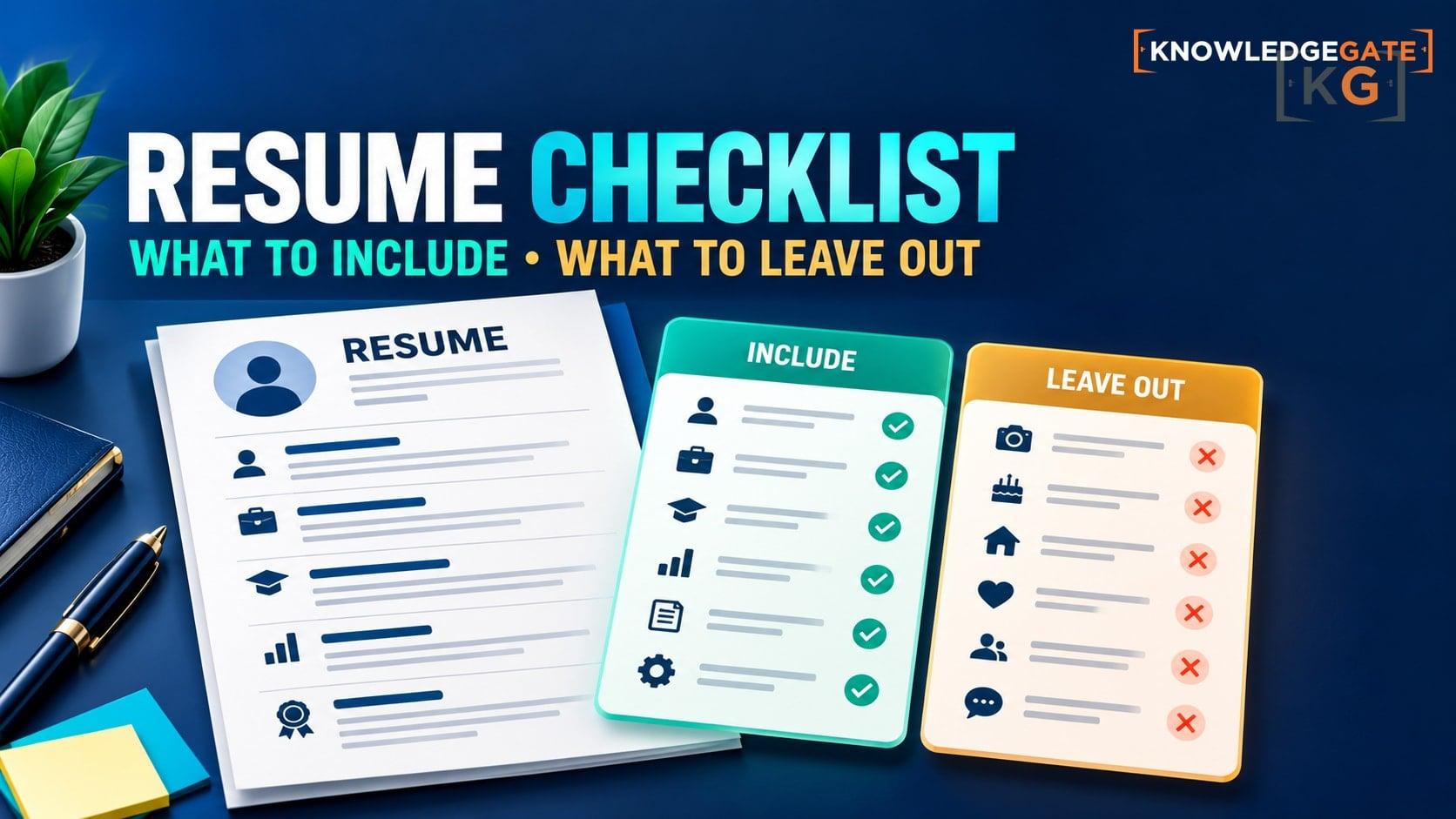
A photo, marital status or full address. None of these help a CS resume and they eat space a project could use.
Listing every course you ever took. Coursework is not a project. Show what you built with the knowledge instead.
Buzzword skills you cannot defend. Anything on the page is fair game in the interview, so a padded skills list is a trap you set for yourself.
Typos and inconsistent tense. They signal carelessness on the one document you had unlimited time to polish. Proofread it aloud, then have one other person read it.
Fixing these costs an afternoon and removes the reasons a resume gets discarded before its strengths are even read.
What actually gets a fresher resume shortlisted
The resumes that clear the first screen are not the prettiest. They are the ones where a recruiter can tell, in seconds, that the candidate builds real things and matches the role. Concrete projects, quantified bullets, a defensible skills list, one clean page, and formatting a parser can read. That is the whole game at the fresher stage.
Your next step
A resume gets you the interview; the next round decides the offer. Prepare both together. Our Resume and Interview Preparation course walks through building the resume and then handling the interview, with worked examples rather than templates. Once your resume is clearing the screen, prepare the round that follows with our HR interview questions guide, and work through the other resume and interview guides as you go.
Build the resume for the screen it has to pass, not for how it looks on your own screen. Clear, honest and one page. That is what gets the call.
Keep learning

Which Skill Sets Are in Demand for Tech Jobs?
Explore the technical and human skill combinations showing up across software, AI, data, cloud, and security roles—and how students can prove them with focused projects.
21 Oct 20265 min readPlacement Preparation
AI Is Changing Campus Hiring: How Students Can Show Their Skills
Make your technical skills visible in AI-assisted campus hiring with clear resume evidence, one explainable project, and a practical interview routine.
15 Oct 20265 min readPlacement Preparation
Resume Checklist: What Must Be Included and What Must Be Left Out
3 Oct 20264 min readPlacement Preparation
LDAP Explained: DNs, Bind, Search Filters, and a Developer Login Flow
Build one LDAP mental model from directory tree to login. Trace a service bind, escaped user search, password-verifying user bind, and group-based role check.
Updated 13 Aug 20265 min readPlacement Preparation