DSA & Algorithms
59 articles in this topic
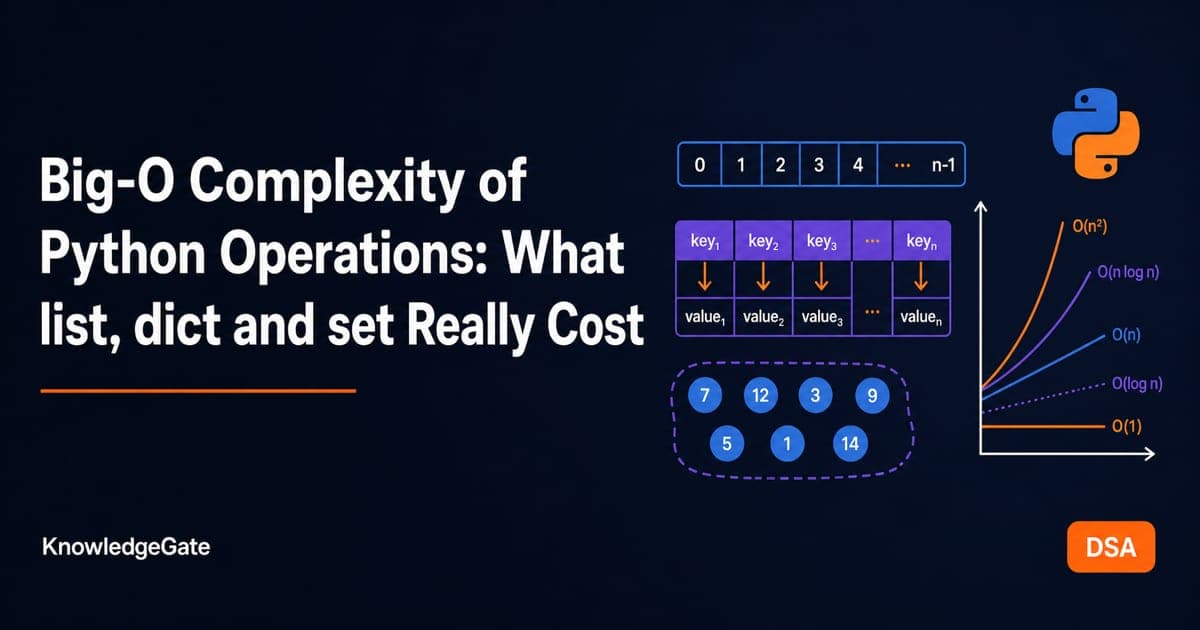
Big-O Complexity of Python Operations: What list, dict and set Really Cost
A compact guide to the real cost of everyday Python container operations, with one duplicate-detection example that shows how a list can turn linear work into quadratic work.
Updated 31 Aug 20265 min readDSA & Algorithms

MERN Stack Project Tutorial: Build an Exam-Prep App with Auth, CRUD, and Deployment
Build PrepTrack as a small but complete MERN project, with a protected answer flow, server-owned scoring, and a deployment you can explain in an interview.
Updated 29 Aug 20266 min readDSA & Algorithms
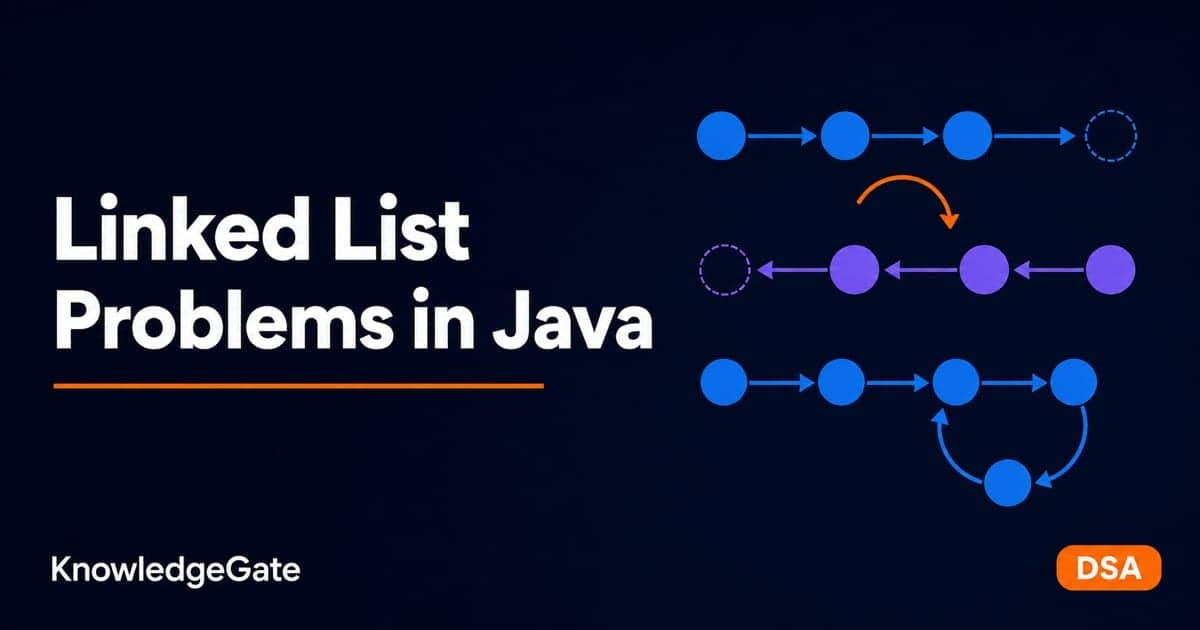
Linked List Problems in Java: Reversal, Cycle Detection, and the Interview Classics Traced
Trace the pointers behind in-place reversal and Floyd's cycle algorithm, then reuse the same habits for other linked list interview problems.
Updated 27 Aug 20266 min readDSA & Algorithms
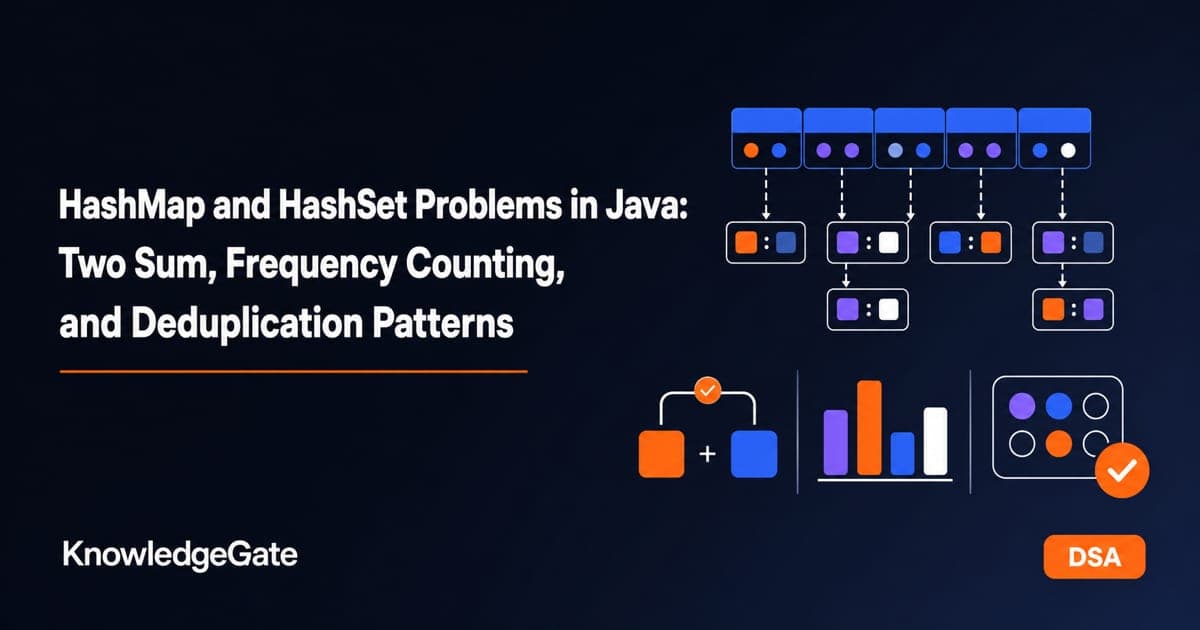
HashMap and HashSet Problems in Java: Two Sum, Frequency Counting, and Deduplication Patterns
Learn when a hash lookup replaces a nested scan, then apply one reusable Java toolkit to pairs, counts, first-unique values, and duplicate detection.
Updated 26 Aug 20265 min readDSA & Algorithms
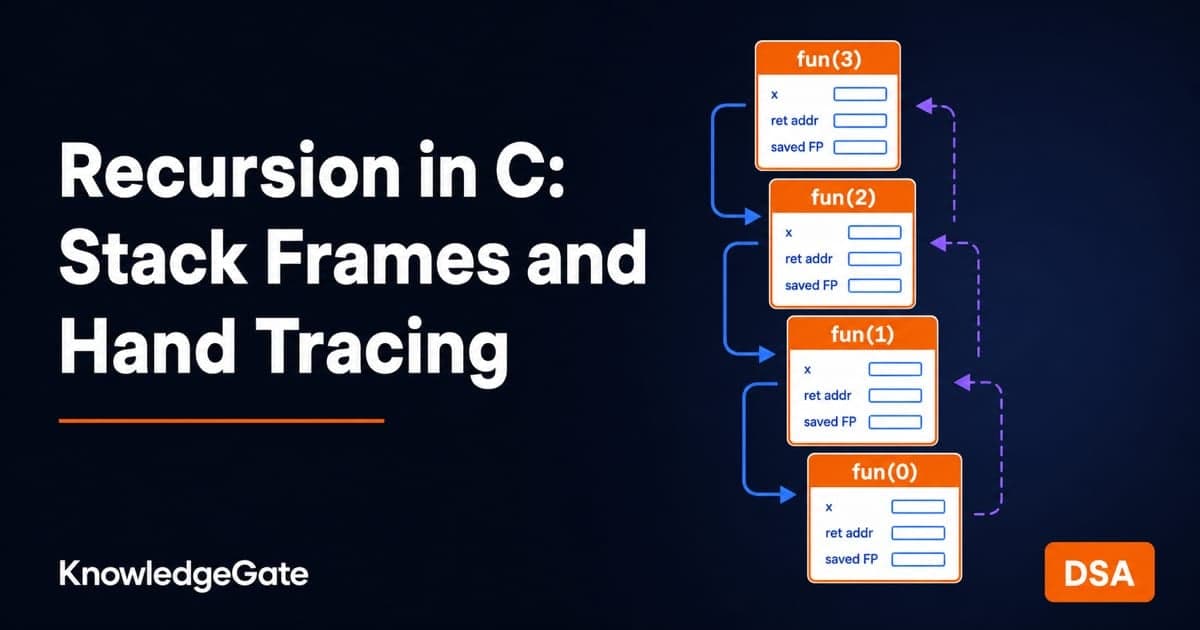
Recursion in C: Stack Frames, a Hand-Tracing Method and Solved GATE Questions
Trace recursive C programs without guessing. Follow factorial returns, prints on descent and unwind, Fibonacci call counts, and maximum stack depth.
Updated 24 Aug 20267 min readDSA & Algorithms

Planar Graphs and Euler's Formula for GATE: Planarity Checks, Matching and Vertex Covers Solved
Use Euler's formula and the correct planar edge bound on K4, K5 and K3,3. Then connect maximum matching to minimum vertex cover in a solved bipartite graph.
Updated 22 Aug 20265 min readDSA & Algorithms
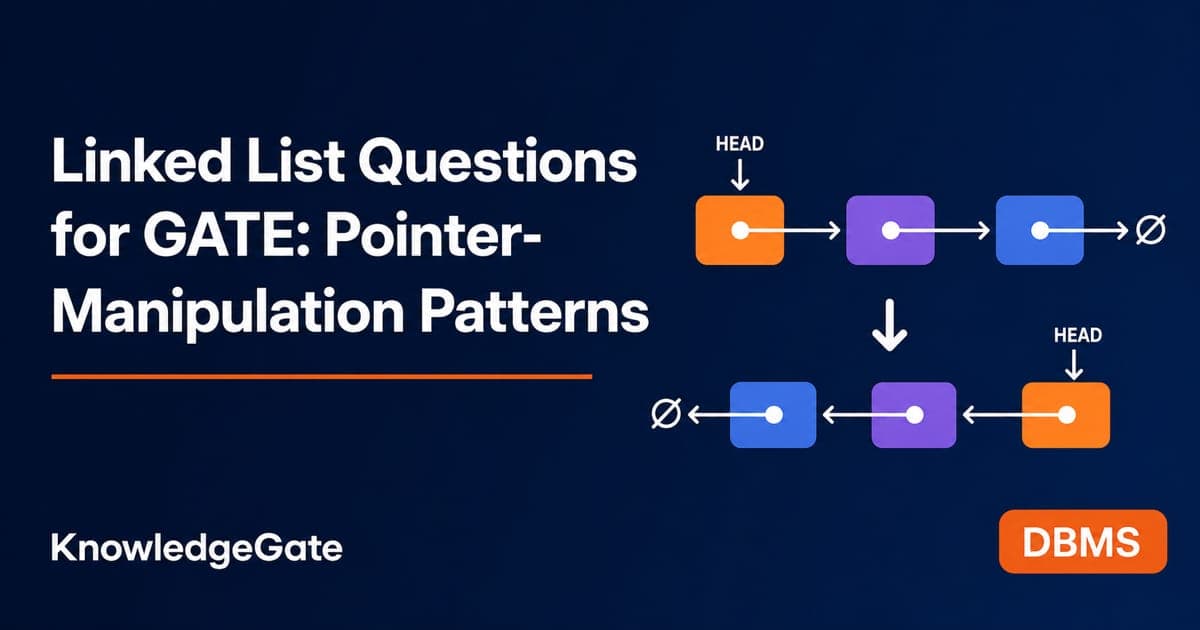
Linked List Questions for GATE: Pointer-Manipulation Patterns Solved Step by Step
Trace prev, curr and next through a complete reversal, then reuse the same discipline for middle-finding, cycle detection and safe deletion.
Updated 20 Aug 20267 min readDSA & Algorithms
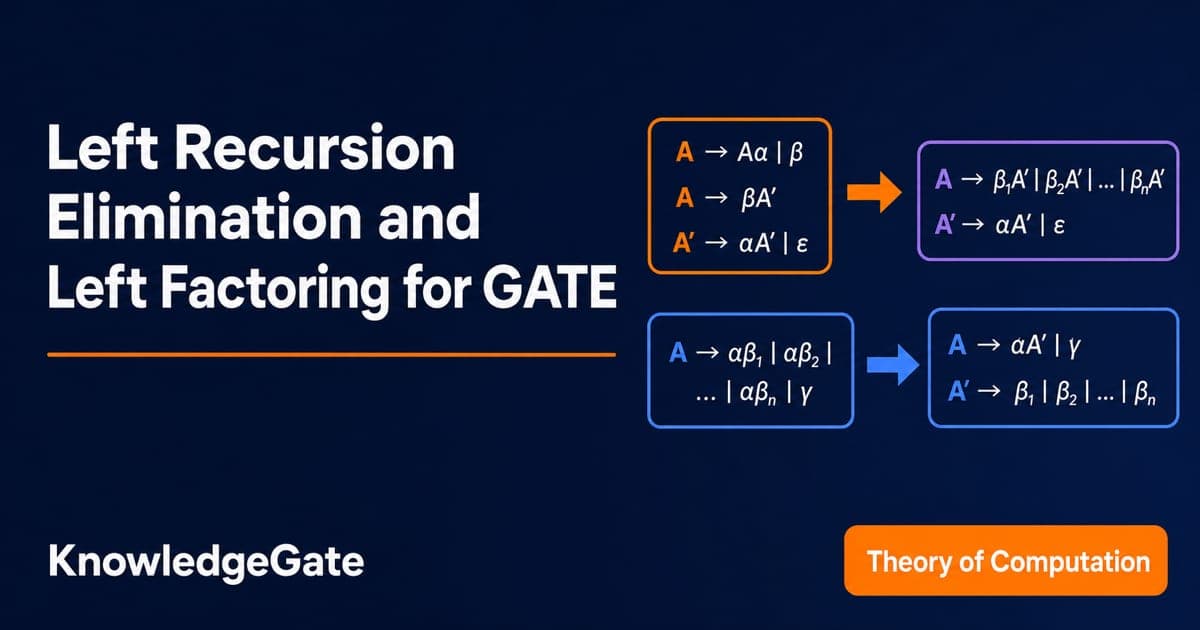
Left Recursion Elimination and Left Factoring for GATE: Grammar Transformation Drills
Transform immediate and indirect left recursion without losing epsilon, then left-factor a dangling-else grammar. Each change is traced and counted.
Updated 19 Aug 20267 min readDSA & Algorithms
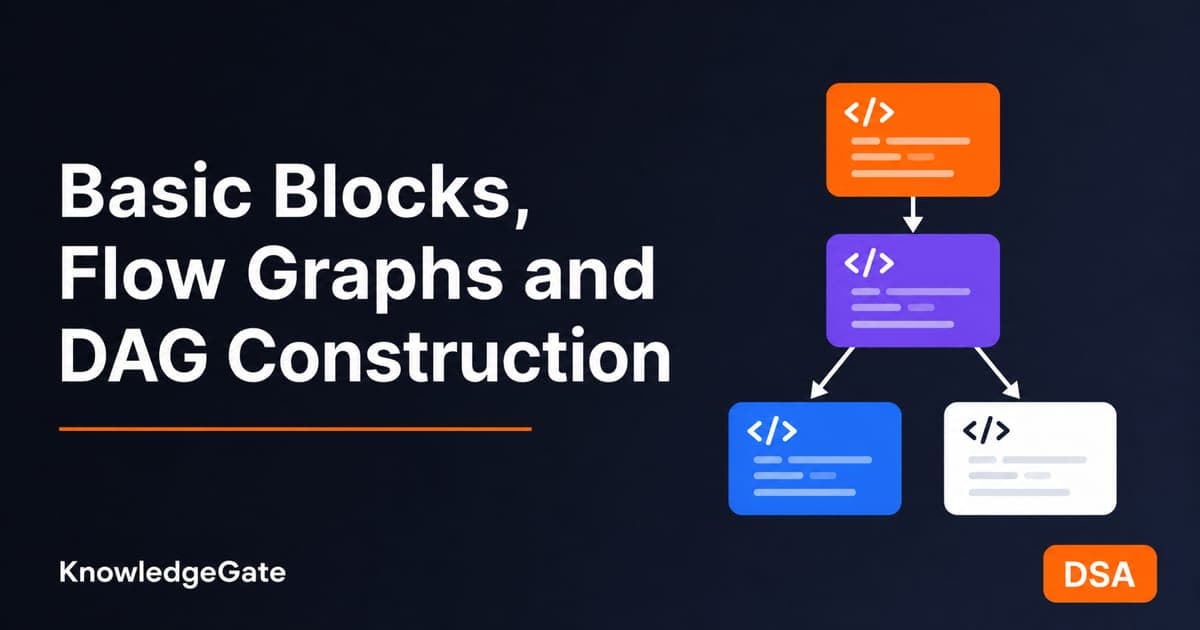
Basic Blocks, Flow Graphs and DAG Construction for GATE: Code Optimization Numericals
Partition three-address code by the leader rules, draw its control-flow graph, and construct a basic-block DAG without losing shared expressions or edges.
Updated 17 Aug 20266 min readDSA & Algorithms
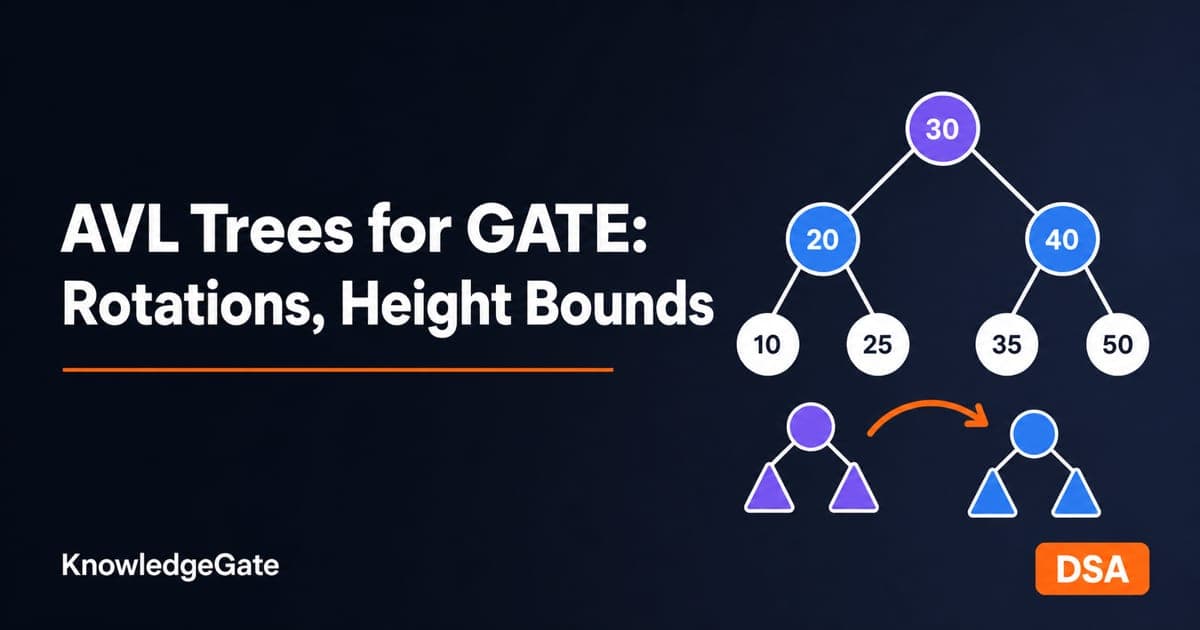
AVL Trees for GATE: Rotations, Height Bounds and Minimum-Node Numericals Solved
Choose LL, RR, LR or RL from the insertion path, then solve AVL height questions with the minimum-node recurrence and a consistent height convention.
Updated 15 Aug 20266 min readDSA & Algorithms
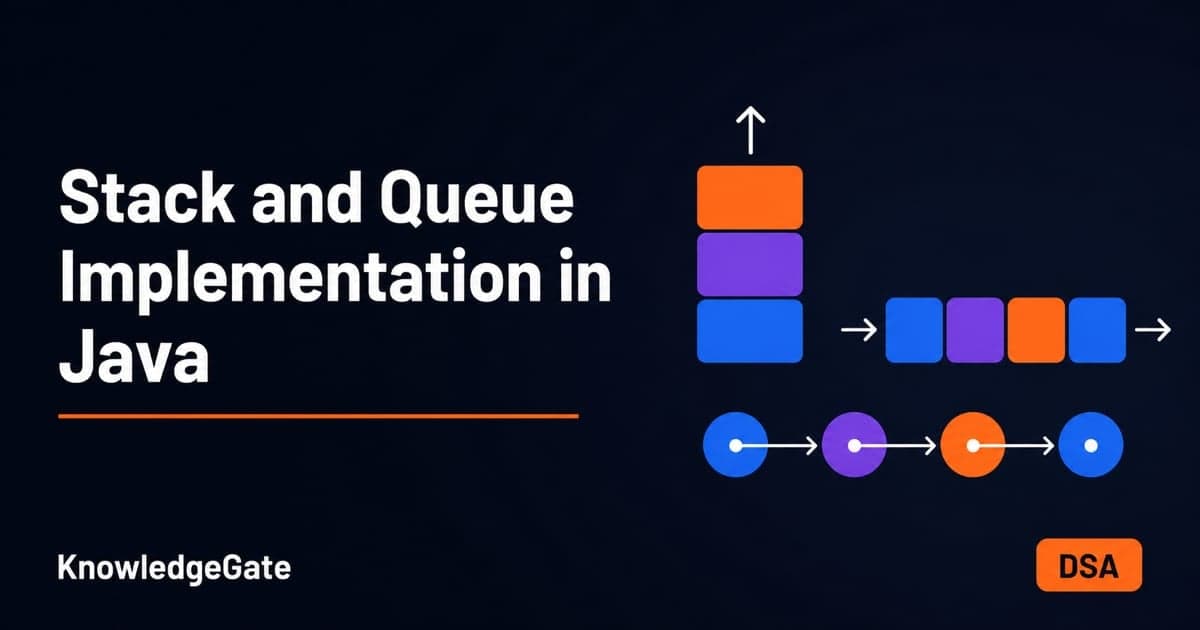
Stack and Queue Implementation in Java: Arrays, Linked Lists, and the Interview Problems That Use Them
Implement stacks and circular queues in Java, trace every pointer through wrap-around, and choose the right standard collection for real code.
Updated 12 Aug 20267 min read75 viewsDSA & Algorithms
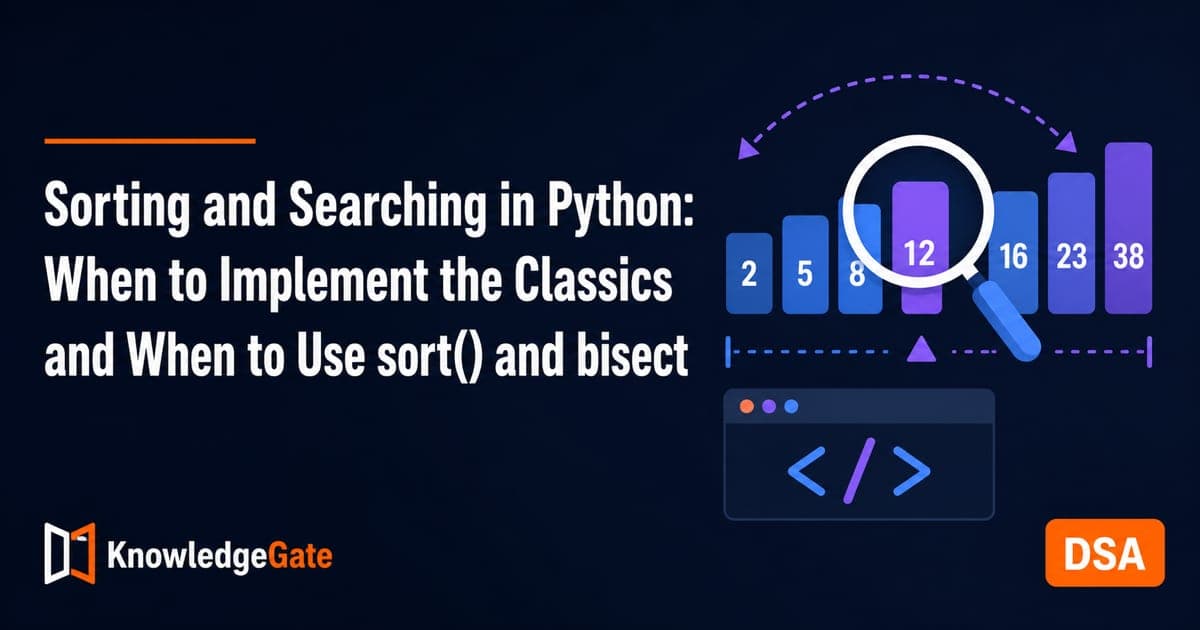
Sorting and Searching in Python: When to Implement the Classics and When to Use sort() and bisect
Learn when to write sorting and searching algorithms yourself, when Python's built-ins are the better choice, and how to explain the complexity of both.
Updated 10 Aug 20265 min readDSA & Algorithms