In a system, there are three types of resources: E, F and G. Four processes…
GATE · 2018 · CS · Computer Science & IT
In a system, there are three types of resources: E, F and G. Four processes P0, P1, P2and P3 execute concurrently. At the outset, the processes have declared their maximum resource requirements using a matrix named Max as given below. For example, Max[P2,F] is the maximum number of instances of F that P2 would require. The number of instances of the resources allocated to the various processes at any given state is given by a matrix named Allocation.
Consider a state of the system with the Allocation matrix as shown below, and in which 3 instances of E and 3 instances of F are the only resources available.
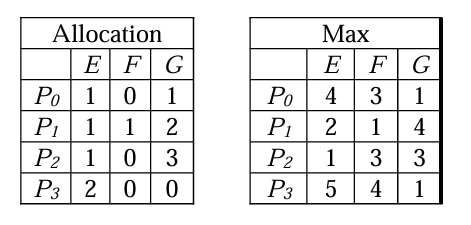
From the perspective of deadlock avoidance, which one of the following is true?
- A.
The system is in safe state.
- B.
The system is not in safe state, but would be safe if one more instance of E were available.
- C.
The system is not in safe state, but would be safe if one more instance of F were available.
- D.
The system is not in safe state, but would be safe if one more instance of G were available.
Attempted by 191 students.
Sign up free to check your answer
Sign up freeLoading lesson…