Consider the function 𝑓:ℝ→ℝ defined as follows: where 𝑐1 ,𝑐2∈ℝ. If 𝑓 is…
GATE · 2026 · CS · Set 1 · Computer Science & IT
Consider the function 𝑓:ℝ→ℝ defined as follows:
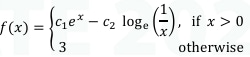
where 𝑐1 ,𝑐2∈ℝ.
If 𝑓 is continuous at 𝑥 = 0, then 𝑐1+𝑐2 = _________. (answer in integer)
Attempted by 48 students.
Sign up free to check your answer
Sign up freeLoading lesson…