For positive real numbers S and K, the function HK(S) is defined as: HK(S) =…
GATE · 2026 · CS · Set 1 · General AptitudeGATE · 2026 · ST · General Aptitude
For positive real numbers S and K, the function HK(S) is defined as:
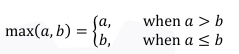
HK(S) = max(S - K, 0). The max function is defined as:
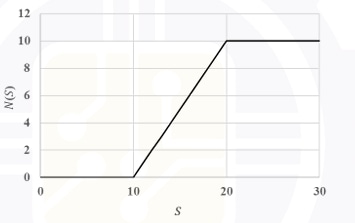
The graph below shows the plot of a function N(S) versus S.
N(S) can be expressed as _____.
- A.
𝐻10(𝑆)−𝐻20(𝑆)
- B.
𝐻10(𝑆)−2𝐻20(𝑆)
- C.
-𝐻10(𝑆)+𝐻20(𝑆)
- D.
𝐻15(𝑆)−𝐻20(𝑆)
Attempted by 49 students.
Sign up free to check your answer
Sign up freeLoading lesson…