Consider the C function foo and the binary tree shown. typedef struct node {…
GATE · 2023 · CS · Computer Science & IT
Consider the C function foo and the binary tree shown.
typedef struct node {
int val;
struct node *left, *right;
} node;
int foo(node *p) {
int retval;
if (p == NULL)
return 0;
else {
retval = p->val + foo(p->left) + foo(p->right);
printf("%d ", retval);
return retval;
}
}
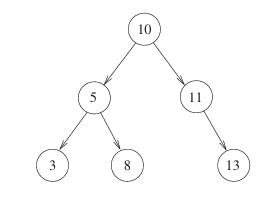
When foo is called with a pointer to the root node of the given binary tree, what will it print?
- A.
3 8 5 13 11 10
- B.
3 5 8 10 11 13
- C.
3 8 16 13 24 50
- D.
3 16 8 50 24 13
Attempted by 257 students.
Sign up free to check your answer
Sign up freeLoading lesson…