Consider an instruction pipeline with four stages (S1, S2, S3 and S4) each…
GATE · 2011 · CS · Computer Science & ITTPSC Computer/IT Posts · 2025 · Senior Informatics Officer · Section D
Consider an instruction pipeline with four stages (S1, S2, S3 and S4) each with combinational circuit only. The pipeline registers are required between each stage and at the end of the last stage. Delays for the stages and for the pipeline registers are as given in the figure.
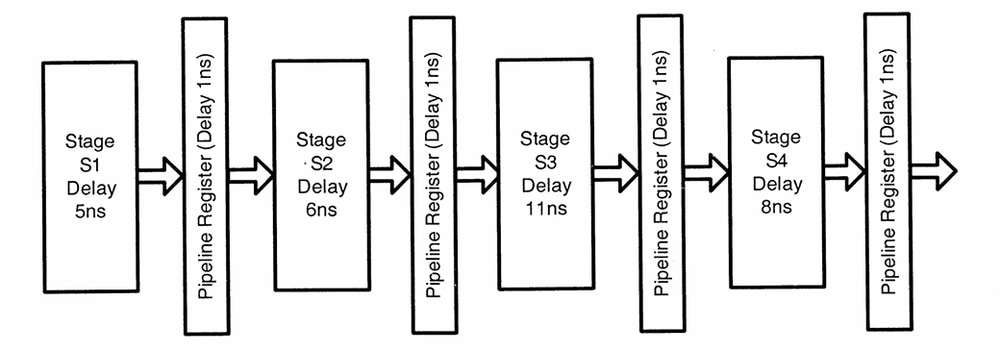
What is the approximate speed up of the pipeline in steady state under ideal conditions when compared to the corresponding non-pipeline implementation?
- A.
4.0
- B.
2.5
- C.
1.1
- D.
3.0
Attempted by 313 students.
Sign up free to check your answer
Sign up freeLoading lesson…