Each of the following questions consists of two sets of figures. Figures A, B,…
2024
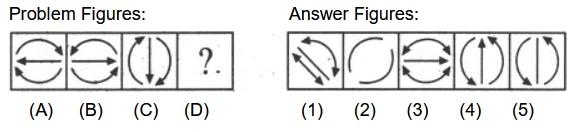
Each of the following questions consists of two sets of figures. Figures A, B, C and D constitute the Problem Set while figures 1, 2, 3, 4 and 5 constitute the Answer Set. There is a definite relationship between figures A and B. Establish a similar relationship between figures C and D by selecting a suitable figure from the Answer Set that would replace the question mark (?) in fig. (D).
Select a suitable figure from the 5 Answer Figures that would replace the question mark (?).
Answer: D. 4 — Concept: In figure-series (non-verbal) reasoning, when Figures A and B are given, first identify the single transformation rule that turns A into B — commonly…
- A.
1
- B.
2
- C.
3
- D.
4
- E.
5
Attempted by 6 students.
Show answer & explanation
Correct answer: D
Concept: In figure-series (non-verbal) reasoning, when Figures A and B are given, first identify the single transformation rule that turns A into B — commonly a reversal of direction, a rotation, or an addition/removal of an element. Apply that SAME rule to Figure C to determine the missing Figure D.
Compare Figures A and B: the circular arc, which shows one continuous rotation, reverses its direction (A rotates one way; B rotates the opposite way), and the straight arrow through the centre also reverses direction (A's arrow points one way; B's arrow points the opposite way). So the rule from A to B is: reverse every arrow's direction.
Figure C shows the same structure turned 90 degrees: a vertical arc rotating in one direction, with a central vertical arrow pointing downward.
Apply the rule found in step 1 to Figure C: the arc's rotation must reverse to the opposite direction, and the central arrow must reverse to point upward.
Among the Answer Figures, only Answer Figure (4) keeps the vertical arc-and-arrow structure of Figure C while reversing both the rotation direction and the central arrow to point upward — exactly what the rule demands.
Cross-check against the other Answer Figures:
Answer Figure (1) abandons the arc-and-central-arrow structure altogether, replacing it with diagonal double-headed arrows and a single outward arc — it is not derived from Figure C by any direction reversal.
Answer Figure (2) is a plain circle with no arrowheads at all, so it cannot show any rotation direction, reversed or otherwise.
Answer Figure (3) returns to the horizontal arrangement of Figures A/B but with each arc pointing outward at both ends — an outward-splitting pattern, not a vertical figure with a single reversed rotation.
Answer Figure (5) keeps the vertical arc arrangement but its central line carries no arrowhead at all, so it fails to reverse the central arrow as the rule requires.
Result: Answer Figure (4) satisfies the reversal rule exactly, so it is the correct choice.