Group the given figures into three classes using each figure only once.
2025
Group the given figures into three classes using each figure only once.
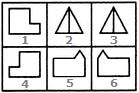
- A.
1, 4 ; 2, 3 ; 5, 6
- B.
1, 5 ; 2, 6 ; 4, 3
- C.
1, 6 ; 2, 3 ; 4, 5
- D.
1, 2 ; 3, 6 ; 4, 5
Attempted by 2 students.
Show answer & explanation
Correct answer: A
Two figures belong to the same class only when they are congruent -- every corresponding side length and angle matches exactly (identical size and shape), not merely proportional or similar -- no matter how a figure is rotated or reflected on the page. To classify a set of figures, first count each one's vertices, then confirm the corresponding side lengths and angles actually match before calling two figures identical.
Comparing the six figures by vertex count and outline shape:
Class | Figures | Why they match |
|---|---|---|
Class 1 | Figures 1 and 4 | Both are six-vertex outlines -- a rectangle with one square notch removed from a corner -- the two are mirror reflections of each other. |
Class 2 | Figures 2 and 3 | Both are the same isosceles triangle, split into two right triangles by a vertical median. |
Class 3 | Figures 5 and 6 | Both are five-vertex outlines -- a rectangle capped by a single triangular peak -- mirrored left-to-right. |
No other combination survives a vertex-count check: the two triangles (Figures 2, 3) have only three vertices, so neither can match a five-vertex or six-vertex figure; and the six-vertex stepped outlines (Figures 1, 4) have a different silhouette from the five-vertex house outlines (Figures 5, 6), so cross-pairing them always leaves a vertex-count mismatch.
So the figures split into exactly three classes: (1, 4), (2, 3) and (5, 6).