In the question given below, you are given a figure (X) followed by four…
2024
In the question given below, you are given a figure (X) followed by four alternative figures (1), (2), (3) and (4) such that figure (X) is embedded in one of them. Trace out the alternative figure which contains fig. (X) as its part. Find out the alternative figure which contains figure (X) as its part.
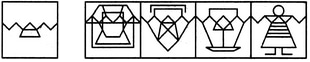
(X) (1) (2) (3) (4)
Answer: D. 4 — In an 'embedded figure' question, figure (X) counts as embedded in an alternative only when every one of X's lines - same shape, same size, same arrangement -…
- A.
1
- B.
2
- C.
3
- D.
4
Attempted by 50 students.
Show answer & explanation
Correct answer: D
In an 'embedded figure' question, figure (X) counts as embedded in an alternative only when every one of X's lines - same shape, same size, same arrangement - reappears unaltered as a sub-drawing inside that alternative. The alternative is usually dressed up with extra strokes drawn around this core block; those extra strokes have to be set aside mentally while checking whether the core block itself matches figure (X) line for line.
Figure (X) is a zig-zag fence line running left to right, and - right at the fence's middle peak - a plain triangle sitting directly on top of a trapezium, with the triangle's own slanted sides continuing the fence's rise and fall rather than being drawn separately.
The figure built from three overlapping trapeziums enclosing a small hexagon has no plain triangle resting on a trapezium anywhere inside it - a busier, differently-proportioned construction than figure (X).
The figure formed by a bracket sitting over a wide V has its central triangle crossed by two extra diagonal lines, so the plain, uncrossed triangle-on-trapezium block from figure (X) is not reproduced.
The goblet-shaped figure builds its cup from two overlapping triangles forming a diamond on a stem and base - a different construction from the single triangle sitting on a trapezium in figure (X).
The figure of a person keeps the fence line running into the shoulders, and right at the neckline a plain triangle sits directly on the striped bodice beneath it - the exact fence-and-triangle-on-trapezium block from figure (X), unchanged; the head, the lower stripes, and the legs are extra lines added around this block.
Tracing figure (X)'s fence-and-triangle-on-trapezium block directly onto the figure of the person lines it up exactly, with nothing left over and nothing missing, confirming the embedding; none of the other three alternatives preserve that block unaltered.
