Find out which of the figures (1), (2), (3) and (4) can be formed from the…
20242023
Find out which of the figures (1), (2), (3) and (4) can be formed from the pieces given in figure (X).
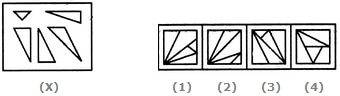
Answer: C. 3 — Answer: 3 Reasoning: The set of pieces shown in figure X can be arranged (using rotation and translation) to fill the third figure exactly without overlaps or…
- A.
1
- B.
2
- C.
3
- D.
4
Attempted by 283 students.
Show answer & explanation
Correct answer: C
Answer: 3
Reasoning: The set of pieces shown in figure X can be arranged (using rotation and translation) to fill the third figure exactly without overlaps or gaps. The number and shapes of the pieces correspond to the segments visible in the third figure, and their edges align to form the internal lines.
Piece-count and shape match: The third figure shows the same count of triangular and quadrilateral regions as the pieces available, so every piece can be used.
Edge and angle compatibility: The internal lines in the third figure coincide with edges that can be produced by placing the given pieces next to each other; required orientations are achievable by rotation.
Why the other figures fail: each of the other outlines either requires a piece of a different shape or angle, would force two pieces to overlap, or would leave a gap that no available piece can fill.
Practical check: cut out paper copies of the pieces from figure X and try assembling them into the third outline. This confirms the fit empirically and helps visualize why the other outlines cannot be formed.