
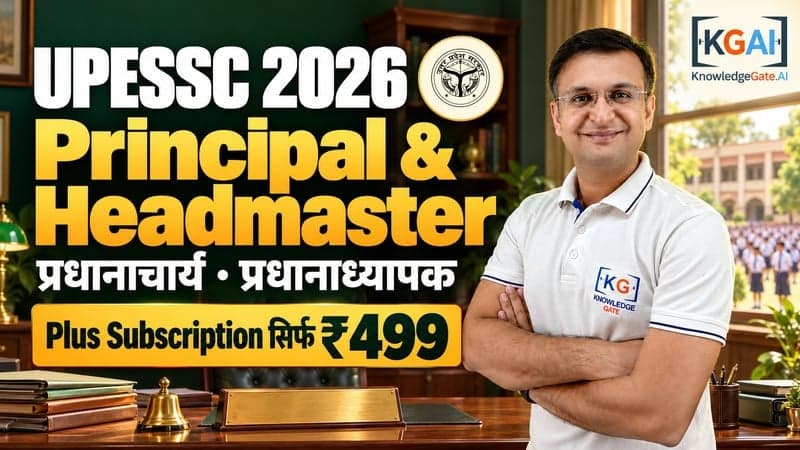
UPESSC Principal & Headmaster 2026 (प्रधानाचार्य / प्रधानाध्यापक)
(Complete Course)
Need help choosing this course?
Our counsellor will help with pricing, syllabus, and enrollment.
About UPESSC Principal & Headmaster 2026 (प्रधानाचार्य / प्रधानाध्यापक)
UPESSC प्रधानाचार्य व प्रधानाध्यापक 2026: 2,647 पद। 120 MCQ, 360 अंक, +3/−1। सामान्य अध्ययन, हिंदी, English, शिक्षा व विद्यालय प्रशासन।
Compare UPESSC Principal & Headmaster 2026 (प्रधानाचार्य / प्रधानाध्यापक) with all courses💡 हमारी सोच हर aspirant के पास limited resources होते हैं, फिर भी वह पूरी ईमानदारी से प्रयास करता है: पूरा effort, पूरा time। पर उसका ज़्यादातर time videos देखने में जाता है, और लगता है कि preparation अच्छी चल रही है। किस topic से कैसे questions आते हैं, उनकी difficulty क्या है और कौन से topics सच में important हैं, यह तब समझ आता है जब आप खूब सारे previous year questions solve करते हैं । ज़्यादातर students यहीं चूक जाते हैं, और अपने potential और caliber के हिसाब से exam में best perform नहीं कर पाते। KnowledgeGate पर हम इसी problem को solve करते हैं: course, subject, topic और subtopic, हर level पर भरपूर PYQs और practice questions solve करवाते हैं, ताकि exam की perfect understanding बने और मेहनत success में convert हो। 🤖 Platform आपकी कैसे मदद करता है Goal Slider: अपनी category (General/OBC/EWS/SC/ST) के हिसाब से target set करें, course customize करें और समझें कि target तक पहुँचने के लिए कितना content sufficient है। Problem Solving: हर subject, topic और subtopic पर भरपूर questions, हर एक का detailed solution। Leaderboard: अपनी rank देखें, और यह भी कि top aspirants क्या कर रहे हैं। Progress Monitor: subject-wise देखें कि कहाँ काम पूरा है और कहाँ अभी और काम बाकी है। Community: aspirants का social space: विचार, questions, polls, videos और comments। One-to-one chat: aspirants से सीधे बात करें, study group बनाएँ। Battles: game जैसी रोचक practice, दूसरे aspirants के साथ questions पर competition। Course Captain: आपका mentor और single point of contact: course, platform, confusion या feedback, हर बात के लिए। 📚 Course में क्या है 5 subjects, 87 topics और 635 subtopics में बँटा course। 8,000+ questions (PYQ + practice), हर question के solution के साथ। Notes: हर topic के notes, concept और revision के लिए।
Select Your Plan
Compare plansPlus includes
- Notes & PDFs · Download
- PYQs · Unlimited
- Practice Questions · Unlimited
- Video Solutions · 5 / day
- Test Series · All tests as per academic calendar
- Progress Monitor
What you get
- Validity
- Until 31 Mar 2027
Course Curriculum
Educational Administration / शैक्षिक प्रशासन
- Education Laws and Bodies of UP / उत्तर प्रदेश के शिक्षा कानून एवं निकाय
- Role of Principal and Headmaster / प्रधानाचार्य एवं प्रधानाध्यापक की भूमिका
- Academic Administration / शैक्षणिक प्रशासन
- Office Administration / कार्यालय प्रशासन
- Rights and Welfare Acts / अधिकार एवं कल्याण संबंधी अधिनियम
- School Financial Administration / विद्यालय का वित्तीय प्रशासन
- Education Schemes and Programmes / शिक्षा संबंधी योजनाएँ एवं कार्यक्रम
Development of Education / शिक्षा का विकास
- Cultural and Language Awareness / संस्कृति और भाषा परिचय
- Educational Policies, Acts and Administration / शैक्षिक नीतियाँ, अधिनियम एवं प्रशासन
- History of Indian Education / भारतीय शिक्षा का इतिहास
- Constitutional Provisions and Education Commissions / संवैधानिक प्रावधान और शिक्षा आयोग
- Indian Educational Thinkers / भारतीय शिक्षा विचारक
General Studies / सामान्य अध्ययन
- MS Office Applications
- Terms & Abbreviations
- Emerging Tech Trends
- Society, Law & Ethics
- Digital India and Online Services
- Computer Fundamentals
- Cyber Safety and Security
- Computer Software
- Operating System
- Computer Networks
- Word Processing (MS Word)
- Presentation Software (MS PowerPoint)
- Computer Hardware
- Internet and Web Services
- ICT Teaching and Learning
- मल्टीमीडिया / Multimedia
- डिजिटल समाज, नैतिकता और साइबर कानून / Digital Society, Ethics and Cyber Law
- उभरती प्रौद्योगिकियाँ / Emerging Technologies
- कोशिका: संरचना एवं कार्य / Cell: Structure and Function
- ऊष्मागतिकी एवं साम्यावस्था / Thermodynamics and Equilibrium
- भारत का भौतिक पर्यावरण / India: Physical Environment
- भारतीय राष्ट्रीय आंदोलन एवं स्वतंत्र भारत / Indian National Movement and Independent India
- Scientific Achievements and Research / वैज्ञानिक उपलब्धियाँ और अनुसंधान
- भारतीय संविधान / Indian Constitution
- भारतीय अर्थव्यवस्था / Indian Economy
- खेल एवं क्रीड़ाएँ / Games and Sports
- Current Affairs / समसामयिकी
- Environment / पर्यावरण
- State-Specific General Knowledge / राज्य विशेष सामान्य ज्ञान
- Awards and Personalities / पुरस्कार और व्यक्तित्व
- Use of Computers and Information Technology in Teaching Learning
- Teaching Aids and Educational Technology / शिक्षण सहायक सामग्री एवं शैक्षिक तकनीकी
- Agronomy and Farming Systems / शस्य विज्ञान एवं कृषि प्रणालियाँ
- Agrometeorology / कृषि मौसम विज्ञान
- Plant Protection / पादप संरक्षण
- Agricultural Economics and Extension / कृषि अर्थशास्त्र एवं प्रसार शिक्षा
- Indian Mural Painting / भारतीय भित्ति चित्रण
- Indian Architecture, Temple Sculpture and Bronzes / भारतीय स्थापत्य, मंदिर मूर्तिकला और कांस्य
- Art Criticism, Art Writing and Art Institutions / कला समीक्षा, कला लेखन और कला संस्थाएँ
- Biotechnology / जैव प्रौद्योगिकी
- Biomolecules, Polymers and Everyday Chemistry / जैव-अणु, बहुलक एवं दैनिक जीवन में रसायन
- Consumer Behaviour and Demand / उपभोक्ता व्यवहार एवं माँग
- National Income Accounting / राष्ट्रीय आय लेखांकन
- मुद्रा एवं बैंकिंग / Money and Banking
- Inflation and Monetary Policy / मुद्रास्फीति एवं मौद्रिक नीति
- Public Finance and Government Budget / लोक वित्त एवं सरकारी बजट
- International Economics / अंतर्राष्ट्रीय अर्थशास्त्र
- Economic Growth and Development / आर्थिक संवृद्धि एवं विकास
- Cultural and Language Awareness / संस्कृति और भाषा परिचय
- राष्ट्रीय पहचान और महत्वपूर्ण दिवस / National Identity and Important Days
- Books and Publications / पुस्तकें और प्रकाशन
- Geography as a Discipline and Geographical Thought / भूगोल: एक विषय एवं भौगोलिक चिंतन
- Atmosphere and Climate / वायुमंडल एवं जलवायु
- जैवमंडल, मृदा एवं पर्यावरण / Biosphere, Soils and Environment
- Natural Hazards and Disasters / प्राकृतिक संकट एवं आपदाएँ
- जनसंख्या, मानव विकास एवं सांस्कृतिक भूगोल / Population, Human Development and Cultural Geography
- Human Settlements / मानव बस्तियाँ
- संसाधन, कृषि, खनिज एवं ऊर्जा / Resources, Agriculture, Minerals and Energy
- Industries, Services, Transport and Trade / उद्योग, सेवाएँ, परिवहन एवं व्यापार
- प्रादेशिक एवं राजनीतिक भूगोल / Regional and Political Geography
- Prehistoric Cultures and the Harappan Civilisation / प्रागैतिहासिक संस्कृतियाँ एवं हड़प्पा सभ्यता
- Delhi Sultanate and the Deccan Kingdoms / दिल्ली सल्तनत एवं दक्कन के राज्य
- भक्ति एवं सूफी आंदोलन / Bhakti and Sufi Movements
- Mughal Empire and the Marathas / मुगल साम्राज्य एवं मराठा
- Food Science, Processing and Food Safety / खाद्य विज्ञान, प्रसंस्करण और सुरक्षा
- Resource and Household Management / संसाधन और गृह प्रबंधन
- संघ सरकार / Union Government
- Public Administration and Governance / लोक प्रशासन और सुशासन
सामान्य हिन्दी / General Hindi
- भाषा, लिपि और वर्ण
- वर्तनी, वर्ण-विन्यास, अनुस्वार, अनुनासिक, चंद्रबिंदु और ‘र’ के रूप
- संज्ञा और सर्वनाम
- पद-भेद और रूप-विकार
- लिंग, वचन, पुरुष और कारक
- काल, वाच्य, वाक्य और वाक्य-भेद
- वाक्य-विचार
- शब्द-विचार और शब्द-रचना
- संधि
- समास
- पर्यायवाची शब्द
- विलोम शब्द
- अनेक शब्दों के लिए एक शब्द
- शब्द-भंडार
- काव्यशास्त्र
- सामान्य अशुद्धियाँ
- लेखन, पत्रकारिता और प्रयोजनमूलक हिंदी
General English
- Vocabulary
- Noun
- Pronoun
- Adjectives
- Prepositions and Conjunctions
- Parts of Speech
- Direct and Indirect Speech
- Verbs and Tenses
- Conjunction
- Subject Verb Agreement (Verb Noun Agreement)
- Modals
- Sentence Structure and Common Errors
- Sentence Correction (Error Correction)
- Transformation of Sentences
- Determiner
- Adverb
- Verb
- Writing Skills
- Reading Comprehension
Instructors
Sanchit Jain
Frequently Asked Questions
एक लिखित paper: 120 objective questions, 2 घंटे, कुल 360 अंक। सही उत्तर पर +3 और गलत उत्तर पर −1 अंक। खण्ड-I सामान्य अध्ययन (30 प्रश्न), खण्ड-II सामान्य हिन्दी और General English (30 प्रश्न), खण्ड-III शिक्षा का विकास और विद्यालय प्रशासन (60 प्रश्न)। लिखित परीक्षा के बाद 40 अंकों का interview होता है। Exam date 7 जनवरी 2027 है; अंतिम जानकारी के लिए UPESSC की official सूचना देखें।
हाँ। Advt 08/2026 (प्रधानाचार्य, इंटर कॉलेज) और Advt 09/2026 (प्रधानाध्यापक, हाईस्कूल) दोनों का exam pattern, syllabus के 12 units और exam date एक जैसे हैं; फर्क बस कुछ शब्दों का है। इसलिए यह course दोनों पदों का पूरा syllabus cover करता है, और जहाँ भूमिका अलग है (जैसे प्रधानाचार्य बनाम प्रधानाध्यापक के दायित्व), वहाँ दोनों को साथ पढ़ाया गया है।
स्नातकोत्तर उपाधि (कम से कम 50% अंक) और NCTE मान्य B.Ed (प्रधानाध्यापक के लिए B.Ed या B.P.Ed), साथ में कक्षा 9 से 12 तक पढ़ाने का कम से कम 4 साल का अनुभव। प्रधानाचार्य के लिए हाईस्कूल के प्रधानाध्यापक के रूप में 4 साल, और प्रधानाध्यापक के लिए जूनियर हाईस्कूल के प्रधानाध्यापक के रूप में 4 साल का अनुभव भी मान्य है। आयु 1 जुलाई 2026 को 30 से 62 वर्ष। पूरी शर्तें UPESSC के विज्ञापन में देखें।
इन पदों के लिए यह पहली लिखित परीक्षा है; पहले की भर्तियाँ (2011 और 2013) interview के आधार पर हुई थीं, इसलिए इस exam का कोई असली previous year paper नहीं है। इसलिए course में खण्ड-III के questions official अधिनियमों, नियमावली, शासनादेशों और योजनाओं से बनाए गए हैं, और हर solution में उसका source लिखा है। सामान्य अध्ययन, हिन्दी और English के लिए UP TGT, PGT और दूसरी शिक्षक भर्ती परीक्षाओं के PYQs practice के रूप में मिलते हैं।
खण्ड-III में 60 प्रश्न यानी 180 अंक हैं, जो पूरे paper का आधा है, इसलिए इसे सबसे ज़्यादा समय दें। उ.प्र. इंटरमीडिएट शिक्षा अधिनियम 1921 और शिक्षा निकाय, प्रधानाचार्य/प्रधानाध्यापक की भूमिका, शैक्षणिक और कार्यालय प्रशासन, सेवा नियम, RTI और दूसरे अधिनियम, वित्तीय प्रशासन और शिक्षा योजनाओं को topic-wise पढ़ें, और हर topic के questions solve करके solution में दिए source से revise करें। शिक्षा के विकास (आयोग, नीतियाँ, शिक्षाविद्) के questions अलग subject में हैं।
KnowledgeGate offers dedicated Computer Science preparation courses and test series for several state and central teaching recruitments, including DSSSB, TPSC, RSSB, UPPSC, UP LT, MPPSC, KVS, NVS, EMRS, BPSC, and HPSC. Each exam has its own course built around that board's specific syllabus and pattern. Since every recruiting body sets its own eligibility and exam structure, it is best to open the specific exam page for the recruitment you are preparing for rather than relying on one general computer science course.
The courses under this category are structured around each exam's syllabus, so they work both for candidates preparing full-time and for those already teaching or working who are studying alongside their job. Recorded, structured content lets you go through the syllabus at your own pace, and where a test series is included, you can use it to check your preparation whenever it suits your schedule.
For the exams that have dedicated courses on KnowledgeGate — DSSSB, TPSC, RSSB, UPPSC, UP LT, MPPSC, BPSC, and HPSC — the courses are structured around that exam's computer science syllabus, and most are paired with a separate test series for practice. What exactly is included can vary by exam, so check the individual exam page for the specific course and test series available for that recruitment.
The course is structured as a syllabus-based preparation programme that can be worked through at your own pace via recorded content. This makes it usable both for candidates preparing full-time for UPPSC Polytechnic Lecturer recruitment and for those currently working who are studying alongside their job.
The course for either level is meant to build up the syllabus in a structured way first; the corresponding test series (BCI or SCI) is then meant for practicing under exam conditions once you have gone through the relevant topics. Using both together is how the two are designed to complement each other.
What Our Students Say
Real results, in our students' own words.